
Siding Installation & Replacement in St. Maries, Idaho
Siding replacement in St. Maries, ID by a James Hardie Preferred contractor. Honest advice on keeping or replacing old wood. Free estimates.
$1,000 Off
Your Complete Siding Replacement
Get a Free Estimate
FREE same-day estimates on all exterior projects.








Selling siding in a timber town is a different job, and St. Maries is still a timber town — the log trucks working through downtown settle any argument about that. A homeowner who has bucked, hauled, or graded lumber doesn't need a contractor to explain what water does to wood. So the conversation here skips the pitch and goes straight to the only question that matters on an old frame house: is the wood on your walls worth another paint cycle, or has it earned retirement?
Domex Construction will give you a straight answer either way. We're a James Hardie Preferred Contractor licensed in Idaho (RCE-66940), we also install LP SmartSide and vinyl, and we've told more than one St. Maries owner to keep their original cedar and spend the money on prep and paint instead. The estimate is free, and so is that opinion.
Keep It or Replace It — the Honest Version
A lot of the houses on the grid above the rivers went up in the early 1900s, and many still wear their first siding: old-growth cedar and fir, tight-grained boards you cannot buy at any lumberyard today. When that material is sound, replacing it is a downgrade. We tell owners to keep and repaint when the boards lie flat and tight, the failures are localized to a few courses or one wall, the trim is intact, and they can live with a repaint every several years.
Replacement earns its keep elsewhere. Some houses lost their original skin decades ago to hardboard or asphalt siding now failing everywhere at once. Others shed paint within a year or two of every repaint — usually moisture pushing through from behind, which no coating fixes. Chronic rot along the wall bottoms, patchwork from three different eras, or an owner simply done climbing ladders: those are replacement houses. A probe and a close look settle it, and that inspection is what our estimate visit is for.
The Grid Climbs a Hill, and the Weather Knows It
St. Maries is built on a slope above the meeting of the St. Joe and the St. Maries rivers, which means the same house plan weathers differently depending on where it sits and which way each wall faces. South- and west-facing walls take the full summer sun — paint chalks there first, old boards cup, and a dark factory finish has to be rated for the UV load. North walls on the shaded side of the hill hold winter damp for weeks: moss lines, peeling at the drip edges, soft spots behind downspouts. Houses higher on the grid catch more wind; the lowest streets sit in the damp air that pools along the rivers.
That changes detailing more than product. Clearances, flashing, caulk joints, and finish get specified wall by wall, because on this grid they genuinely differ from one side of the house to the other.
Where the River Damp Gets In
Two rivers meet at this town, and the valley they share holds moisture — fog in the cold months, humid air off the water, snow lingering against foundations on the shaded streets. All of it concentrates in the bottom two feet of your walls. Skirt boards and the lowest siding courses wick meltwater and splash-back, and nearly every rot repair we make in Benewah County starts there: bottom courses, water table trim, and the corners where a downspout has been dumping for thirty years.
The fix is mostly discipline. Bottom edges held to manufacturer clearance above grade and hardscape instead of buried in it, kick-out flashing where roofs meet walls, gutters that actually carry water away, and sealed cuts on every board living in the splash zone. Cheap to do during installation, expensive to retrofit after.
Fiber Cement and LP SmartSide, for Owners Done With Paint
When a St. Maries house does need new siding, two materials come up most. James Hardie fiber cement doesn't absorb the valley damp and doesn't care about freeze-thaw, which suits the shaded lower streets and any wall that stays wet into spring; its ColorPlus factory finish is the practical answer for owners whose main complaint is the repaint cycle. LP SmartSide is engineered wood — it looks right on a timber-town house, takes an impact without cracking, and runs in long boards that suit the big, simple wall planes on older homes here. Its one demand is craft: every cut edge has to be sealed in the field, and most failed LP we've seen failed at exactly that detail.
Vinyl still has a place on tight budgets, and we install it without apology. For an owner planning to stay, though, the math usually favors the premium materials — more money up front, decades of paint labor back. Which one fits your house depends on your worst wall, and the walkthrough will tell us which wall that is.
What Changes the Price
Every quote we write is fixed, not a per-square guess, so it helps to know the levers. Wall height matters more here than in flat towns — hillside houses often stand a full story taller on the downhill side, and that's staging and ladder time. Layers matter: plenty of local homes carry asphalt or hardboard over the original wood, and every layer adds tear-off labor and disposal. Hidden repair matters most, which is why our contracts spell out rot-contingency terms in writing before work starts. Window and trim count, material choice, and factory finish round out the list; steep, narrow streets on the grid can add material-handling time, and we'll flag it up front.
The Job, Start to Finish
- Walkthrough. We probe the suspect wood, check what's under the current siding, and map which walls take sun, shade, and splash. You get a keep-or-replace opinion on the spot.
- Written spec. Material, finish, trim package, flashing details, and contingency terms on paper — the document that keeps a bid honest.
- Permits. Inside city limits the paperwork runs through City of St. Maries permitting; rural parcels go through Benewah County. We file either one.
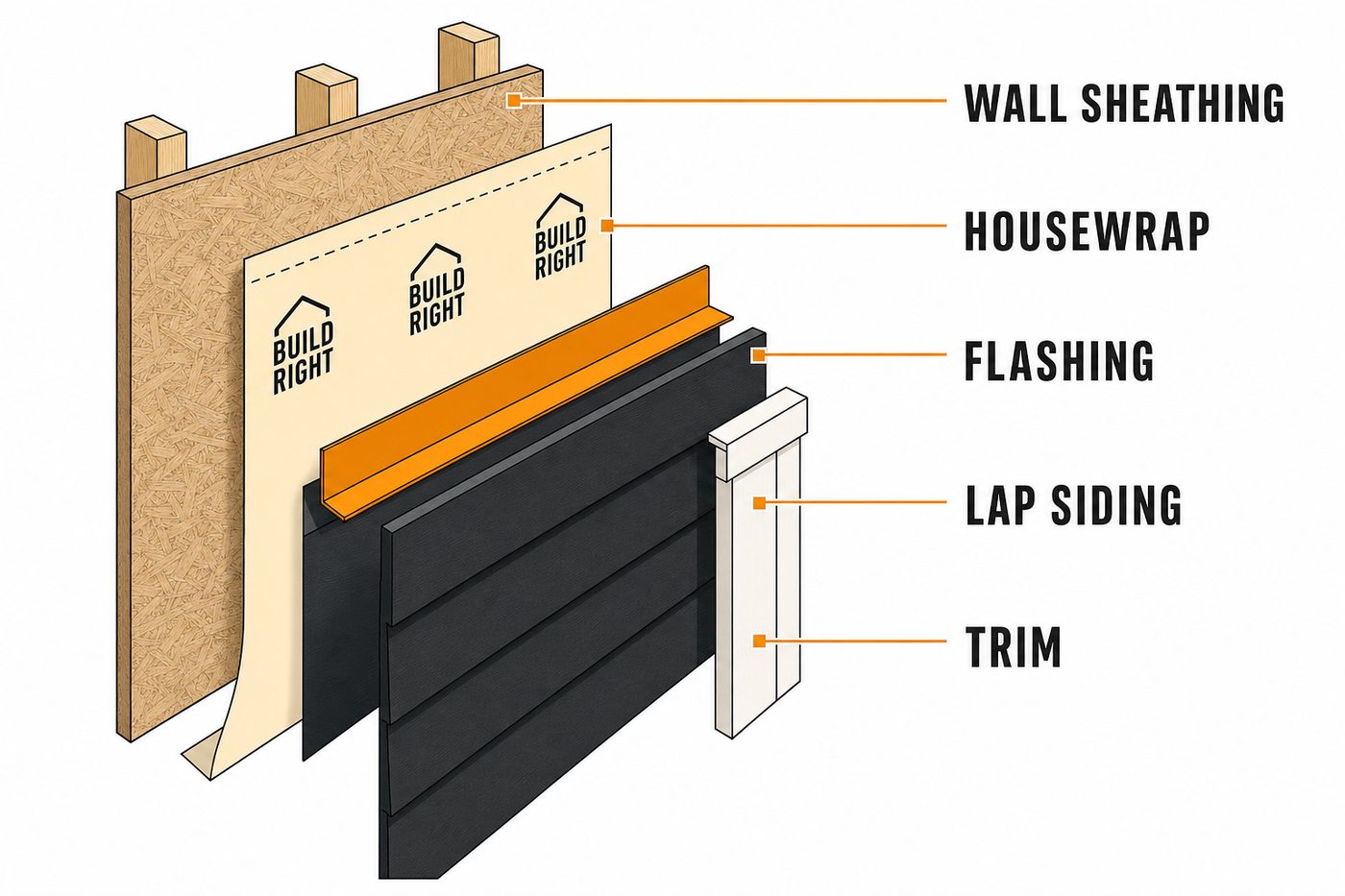
- Tear-off and repair. Old layers come off, sheathing gets repaired, and the house gets modern wrap and flashing before a single new board goes up.
- Install and cleanup. Siding hung to manufacturer spec, penetrations sealed, site left clean — a habit this town notices — and a final walk around the house with you.
When We Can Start and How Long It Runs
Summer dates book earliest, so spring calls get the best choice of windows; fall and winter installs are workable here, with paint and caulk sequenced around temperature. The install itself runs from under a week on a small single-story to two or three weeks on a tall hillside home with layered tear-off. Surprises under old siding are the usual schedule-stretcher, and the probing we do at the estimate exists to keep those rare.
St. Maries Siding Questions
Is my original cedar worth saving?
If the boards are flat, tight, and mostly rot-free, usually yes. The failures that argue for replacement are moisture coming from behind the wall, not paint wearing off the front of it.
Hardie or LP for this valley?
Damp, shaded, slow-drying walls favor Hardie. Walls that take hits — ice off a steel roof, an errant firewood round, gravel — favor LP. Most houses here could go either way on two walls and have a clear answer on the other two.
Do I need a permit to re-side in St. Maries?
Work in town goes through City of St. Maries permitting; parcels out toward Santa, Fernwood, or up the St. Joe run through Benewah County. Filing and inspections are part of our scope, not yours.
What do you usually find under old siding here?
On layered houses: the original wood, often saveable sheathing, no house wrap, and rot concentrated at bottom courses and below windows. We plan for it in the contract instead of discovering it in your invoice.
Can siding go on in winter?
Yes. Boards install fine in cold; coatings and sealants wait for their temperature windows, and we sequence the job so nothing goes on out of spec.
You're based near Spokane — do you really cover St. Maries?
We run Benewah County jobs in dedicated crew blocks, so your project gets consecutive working days, not leftover afternoons between closer jobs.
A License You Can Look Up
Domex Construction holds Idaho license RCE-66940 — verify it through the Idaho Contractors Board — plus Washington DAVYDCI833NC, and carries full insurance. Nine years in business, 32 years of combined crew experience, and a workmanship warranty you're welcome to ask about at the estimate. From St. Maries we serve all of Benewah County: Plummer, Fernwood, Santa, and the riverfront places up the St. Joe River corridor.
Want a straight answer on your walls before the next paint cycle? Free on-site estimates across St. Maries and Benewah County. Give us a call or request an estimate online.
More from Domex in St. Maries: Window Replacement in St. Maries · Custom Decks in St. Maries · Custom Home Builder in St. Maries · Siding Installation — Spokane hub