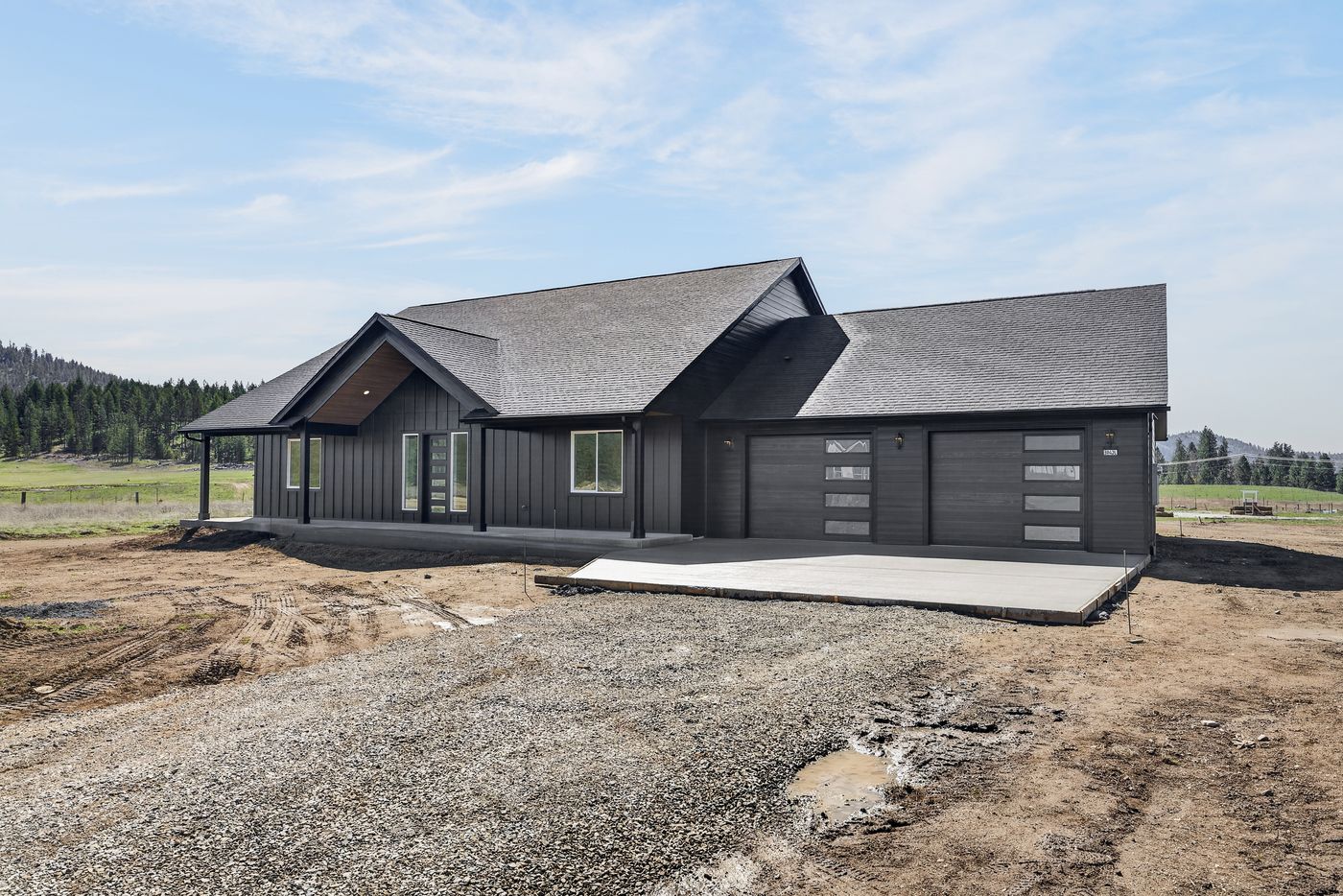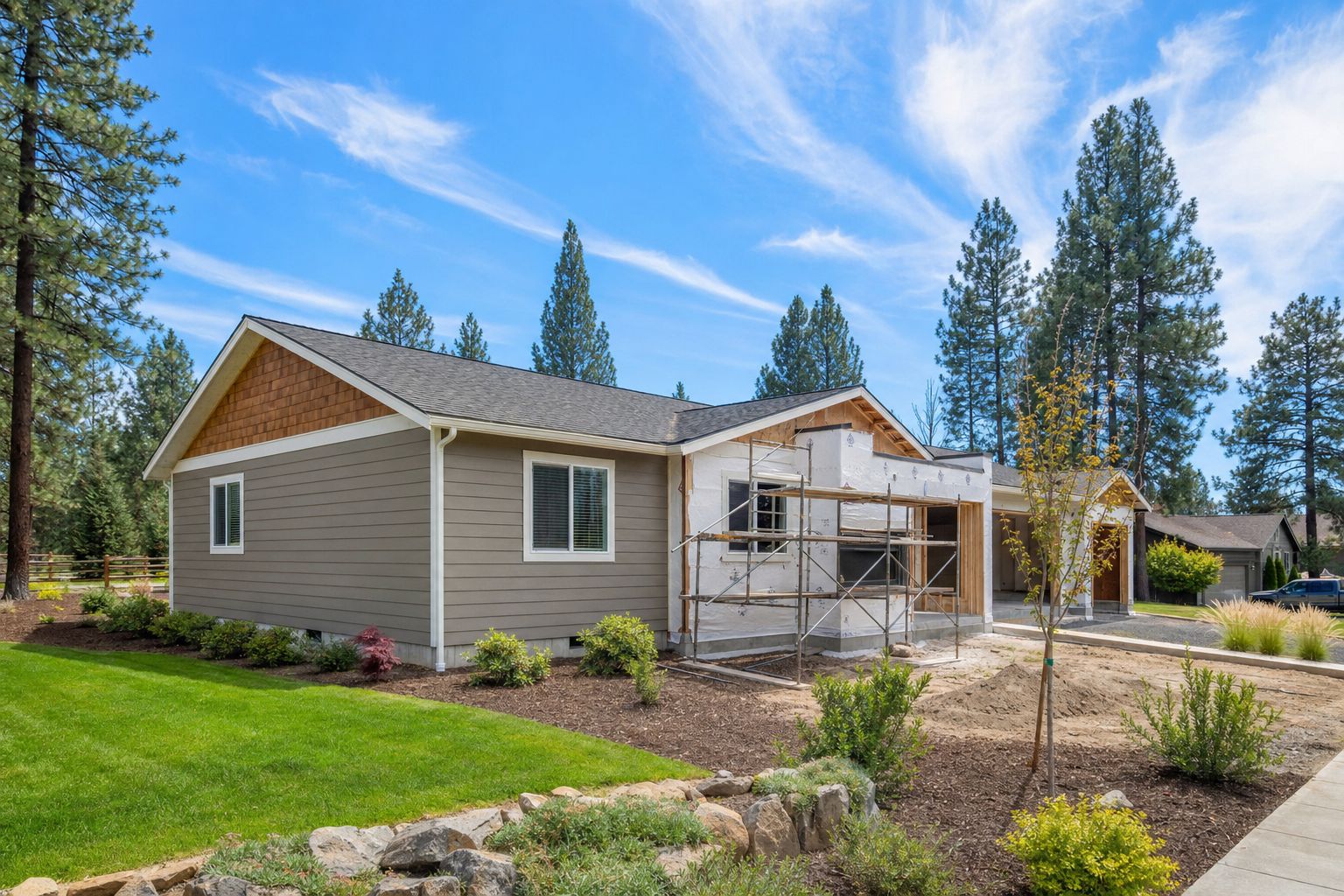

Siding Installation & Replacement in Newman Lake, WA
Siding installation & replacement in Newman Lake, WA by a Hardie Preferred contractor. Multi-era lake homes done right. Free estimates.
$1,000 Off
Your Complete Siding Replacement
Get a Free Estimate
FREE same-day estimates on all exterior projects.








The siding jobs we do at Newman Lake almost never start as siding jobs. They start with a call about one bad spot — a soft corner under a bedroom window, or a piece of trim that dropped off the gable sometime in March. We come out to fix it, open up eighteen inches of wall, and find ourselves looking at four renovations at once: cottage framing from the fifties, plank sheathing, an addition hung off the back in the seventies with nothing but tar paper scraps behind its siding, and a patch of OSB from a later door move. One small repair tells the whole story of the house, and the conversation shifts from patching a hole to planning a wall.
That layered history is what separates this lake from a subdivision three miles west. Newman Lake sits in the northeast corner of the Valley, close against the Idaho line, and it's near enough to downtown Spokane — about twenty-five minutes — that its summer cottages turned into year-round homes generations ago. Nobody tore them down; owners added on and kept commuting. Domex Construction re-sides those layered houses, along with the lake's 80s–2000s view homes and its newer custom builds, under Washington contractor license DAVYDCI833NC. We're a James Hardie Preferred Contractor and install LP SmartSide and vinyl as well.
What a Tear-Off Turns Up on This Lake
Walls that grew in stages don't fail in one place — they fail at the seams between stages. Where a seventies addition ties into the original cottage, two sheathing materials meet, and they hold and release moisture at different rates. The oldest sections usually have no weather-resistive barrier at all; siding was nailed straight over the boards, which a three-season cottage could get away with because nobody heated it through January. A year-round home is a different machine. Warm indoor air pushes moisture outward through the wall every cold day, and with no wrap and no drainage path, the sheathing absorbs whatever gets past the paint.
We probe suspect walls during the estimate for exactly this reason. A bid built from the driveway prices the siding; a bid built with a moisture meter and an awl prices the wall. Our written specs state substrate-repair and rot-contingency terms before work starts, because on a converted cottage the layers always hide something — and a contractor who didn't price for it gets to renegotiate mid-job.
Lake Air on One Side, Timber Shade on the Other
Many Newman Lake houses carry two separate moisture problems on opposite walls. The water-facing side takes lake humidity plus doubled sun — direct and reflected off the surface — so paint chalks faster, caulk joints cycle harder, and bottom courses near grade stay damp well into spring. The uphill side sits under fir and pine on a slope that blocks afternoon light, and those shaded walls dry slowly after every storm. We find the green film, the blistered paint, and the punky spots on the tree side more often than the lake side, because homeowners watch the view wall and forget the one facing the hill.
The cure is detailing more than product: correct clearances above grade and roofing, kick-out flashing where rooflines die into walls, back-caulked trim, sealed field cuts — minutes during installation, nearly impossible to retrofit afterward.
Picking a Siding by House Era
The lake's housing sorts into three groups, and the material logic follows the group.
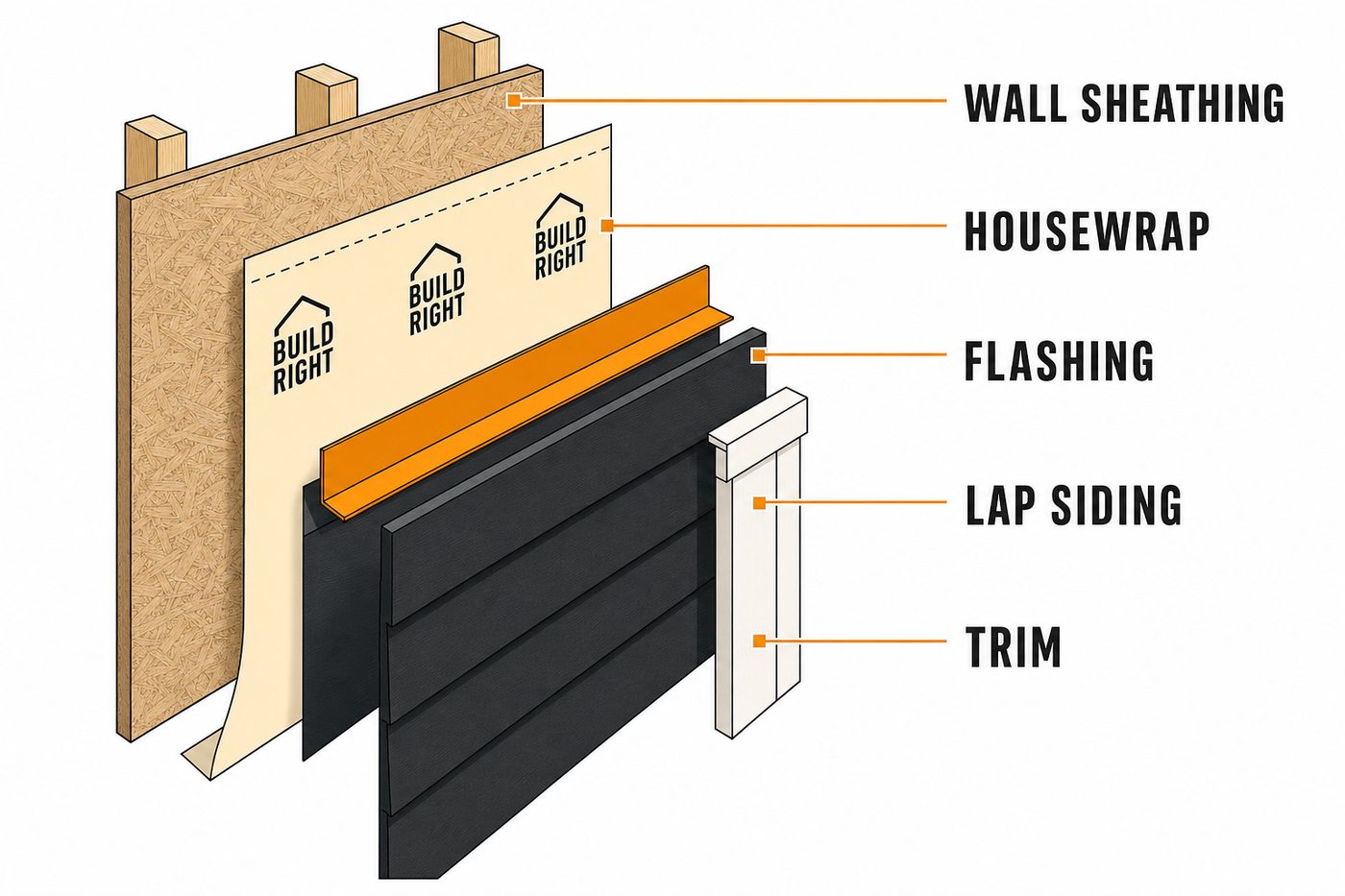
Converted cottages with additions get the strongest case for fiber cement. James Hardie boards don't absorb the moisture these walls generate, ColorPlus factory finishes hold up on high-exposure waterfront elevations, and a full re-side is the one chance the oldest walls will ever get at a proper wrap and flashing package underneath.
The 80s–2000s lakeview homes often wear original hardboard or first-generation vinyl reaching the end of its run. These are clean candidates for either Hardie or LP SmartSide. LP's longer boards mean fewer field joints on the big simple gables this era loved, and engineered wood shrugs off the knocks of firewood, ladders, and yard carts better than fiber cement does.
Newer custom builds mostly bring us additions, garages, and shops, where matching an existing fiber-cement profile and color is routine work for a Hardie-focused crew.
Vinyl still earns its place on budget-driven projects and outbuildings, and we'll say plainly where it falls short on a shaded, damp, or hard-sun lakefront wall.
Cost Drivers Specific to Newman Lake
Wall area, story count, and material choice set the baseline anywhere. What moves the number at this lake is access. Genuinely steep waterfront lots mean scaffold legs on ground that falls away, material carried down stairs instead of rolled off a trailer, and staging planned so the lawn and shoreline plantings survive the project. Narrow shared lanes limit where a dump trailer can park. Add the substrate unknowns of a multi-era wall, and two houses with identical square footage can price very differently. We quote a fixed number after walking the property, with contingency terms stated in writing rather than implied.
Five Stages, Start to Finish
- Walkthrough and probing. We check every elevation, meter the suspect areas, and note where roofs, grades, and trees load moisture onto walls.
- The written spec. Everything named: product line, color, trim, flashing approach, and the contingency terms — the document that keeps mid-project surprises from becoming mid-project arguments.
- Permitting through Spokane County. Newman Lake is unincorporated, so the paperwork runs through the county, not a city desk. We file it and build the inspection points into the schedule.
- Tear-off and correction. Old layers off, sheathing repaired and unified, wrap and flashing installed as one continuous system across every era of the wall — the invisible work that decides how long the visible work lasts.
- Installation and walkaround. Boards hung to manufacturer spec, every penetration sealed, the site cleaned, and a final review of each elevation together.
When the Work Happens
Summer and early fall calendars fill first, so spring estimates get the widest choice of install windows. On site, a modest single-story runs several days; a large or heavily corrected multi-era home can take a couple of weeks. Cold-weather installs are workable — fiber cement hangs fine in winter, though sealants and paint need warmer days we sequence around — and county inspections land where the permit schedule puts them.
Questions We Hear Around the Lake
Who issues the permit for a re-side at Newman Lake?
Spokane County — the lake community is unincorporated, so there's no city building department involved. Domex handles filing and inspection scheduling.
Can you re-side just the addition so it matches the rest of the house?
Often, yes. Matching profile and color is straightforward with current Hardie and LP lines. We'll also tell you honestly when the original section is close enough to failure that doing half now costs more than doing it all once.
One wall looks bad and the rest look fine. Repair or full replacement?
We'll meter and probe before answering. On single-era homes, a one-wall repair can be a legitimate fix. On converted cottages, a failing wall is usually the first symptom of a wrap-and-flashing problem the other walls share.
Do the oldest walls really have no house wrap?
Frequently, yes. Pre-1960s cottage construction here often ran siding straight over plank sheathing — normal practice for seasonal buildings, and the main reason we recommend full tear-off over layering new siding on top.
Hardie or LP SmartSide for a waterfront wall?
For damp, shaded, or high-exposure walls, fiber cement is our usual call. Where impact resistance or long clean board runs matter more, LP argues well. Most houses here could justify either; the walkthrough settles it for yours.
Can you work on a steep lot without wrecking the yard?
Yes — it's planned, not improvised. Scaffold placement, carry paths, debris handling, and trailer position all get decided at the estimate, and protecting the slope and shoreline plantings is part of the spec.
We're both at work in Spokane all day. Do we need to be home?
No. Exterior work proceeds without anyone home, and most of our lake clients are commuters. We'll set a rhythm of photos and end-of-day notes so you see progress from the office.
How long from first call to finished walls?
Estimate to spec is quick; the county permit and material lead times set the start date; then several days to a few weeks on site depending on correction work.
Licensing and the Ground We Cover
Domex Construction is licensed in Washington (DAVYDCI833NC — verifiable through the state L&I contractor lookup) and Idaho (RCE-66940), and fully insured. Nine years in business, thirty-two years of combined crew experience, and a workmanship warranty you should ask us about at the estimate. From Newman Lake we work Otis Orchards, Liberty Lake, Millwood, and the whole East Valley, and we cross the Idaho line daily for jobs toward Post Falls and Coeur d'Alene.
Curious what's behind your siding? Free on-site estimates across Newman Lake and the East Valley — call.
More from Domex in Newman Lake: Window Replacement in Newman Lake · Custom Decks in Newman Lake · Custom Home Builder in Newman Lake · Siding Installation — Spokane hub