
Siding Installation & Replacement in Pullman, Washington
Siding replacement in Pullman, WA by a Hardie Preferred contractor. Built for Palouse wind and sun, rentals and family homes. Free estimates.
$1,000 Off
Your Complete Siding Replacement
Get a Free Estimate
FREE same-day estimates on all exterior projects.








Pullman stacks its housing on four steep hills — College, Military, Pioneer, Sunnyside — and each slope points a different face at the weather. The same house plan can be in fine shape on a sheltered Pioneer Hill side street and chalked, cupped, and cracked at the crest of Sunnyside, because a top-of-hill wall takes Palouse wind and full afternoon sun with nothing but wheat between it and the horizon. On our estimates here we walk the compass before we walk the tape: which wall faces the open ground, which one hides from it, and which one sits two feet off a cut slope catching every splash and snowdrift.
Domex Construction re-sides both halves of this town — the hard-used rental blocks around WSU and the owner-occupied streets further out — under Washington contractor license DAVYDCI833NC. We're a James Hardie Preferred Contractor and we also install LP SmartSide and vinyl, which matters in Pullman because the right product genuinely differs from one building, and one wall, to the next.
One Roofline, Four Kinds of Weathering
Walk around almost any hillside house in Pullman and you'll read four different histories on four walls. The south and west faces take the brunt of hot, dry summers — big daily temperature swings that fatigue caulk joints, fade finishes, and slowly distort lighter vinyl panels. The windward face, usually looking out over open country, gets pressure-driven rain and sideways snow forced up under laps and into butt joints; this is the wall where we find water staining on sheathing that looked fine from the street. The sheltered downhill face often ages slowest — and then the wall facing the slope cut, on lots carved into the hill, sits close to grade where drifting snow piles against the bottom courses and roof runoff splashes back all winter.
This is why a one-spec-fits-all bid undersells a Pullman house. Clearances, flashing details, joint treatment, and sometimes the material itself should change wall by wall, and a quote that hasn't looked at each exposure is guessing.
Portfolio Buildings and Family Homes Pencil Out Differently
A large share of Pullman housing is student rental, and rental siding lives a rough life: decades of turnover, bikes and furniture against the walls, patch-on-patch maintenance because no repair ever felt urgent enough to become a re-side. We quote that market on its own terms. For a landlord, the case for tearing off tired hardboard and hanging fiber cement is mostly arithmetic — a cladding that shrugs off impacts, a factory finish that pushes the next paint cycle out a decade or more, and an exterior that stops generating maintenance calls between tenants. Batching helps the numbers further: siding two or three buildings in one mobilization costs meaningfully less per square than doing them years apart.
Owner-occupied projects on Military Hill or the newer streets at the edge of town run on different priorities — color and trim decisions you'll live with for thirty years, tighter detailing around entries and gables, and often window replacement folded into the same opening of the wall. Same crew and same installation standard either way; what shifts is what the building needs to earn back.
The Siding That's Reaching the End Here
Most of what we tear off in Pullman falls into two piles. The first is mid-century original material — 1950s–70s houses wearing wood clapboard or shakes under many layers of paint, with failures concentrated at nail heads, bottom edges, and anywhere gutters have overflowed for years. The second, and the bigger volume, is hardboard from the 70s through the 90s: composite siding that swells at butt joints and bottom edges once its factory seal is breached, then holds that moisture against the wall. On rentals it's usually been patched and painted past the point of honesty. Tear-off on these houses regularly exposes sheathing repairs, which is why our contracts spell out rot-repair terms in writing before anyone swings a hammer — a bid that's silent on rot isn't cheaper, it's just vaguer.
Choosing the Cladding for This Climate
James Hardie fiber cement is our default recommendation for exposed Pullman walls. It doesn't expand and contract much through the Palouse's big temperature swings, it doesn't feed on moisture, and the ColorPlus factory finish holds up under the UV load of a treeless horizon. Wind is an installation question more than a product question — correct nailing schedule and joint detailing are what keep any lap siding quiet at 40 mph.
LP SmartSide earns its place on walls that take abuse — engineered wood resists impact better than fiber cement, comes in long lengths that reduce seams on big simple rental elevations, and installs fast. Its cut edges must be sealed in the field; skip that and the Palouse freeze-thaw shoulder seasons will find the shortcut.
Vinyl still has a lane, mostly budget-driven rental work. We'll install it honestly: heavier-gauge panels, correct locking and fastening so wind can't rattle or unzip a course, and a frank warning that dark colors on south and west exposures age fastest here.
What Moves a Pullman Siding Number
Wall area and height set the base, and height is sneaky on these hills — a "single-story" house with a walkout basement is a three-story wall on the downhill side, with the staging that implies. From there: tear-off layers, the rot repair mentioned above, window and trim count (every opening is flashing labor), material and finish choice, and access on tight hillside lots. Multi-building rental packages bring the per-square cost down. We don't publish dollar figures because these variables swing too far; the walkthrough and written quote are free.
Five Stages, Start to Finish
- Walkthrough estimate. Every wall, every exposure, probing suspect hardboard rather than eyeballing it.
- Written spec. Product, color, trim package, flashing details, and rot terms — on paper, comparable against any other bid.
- Permit. Re-side work in city limits runs through City of Pullman permitting; we file and schedule it.
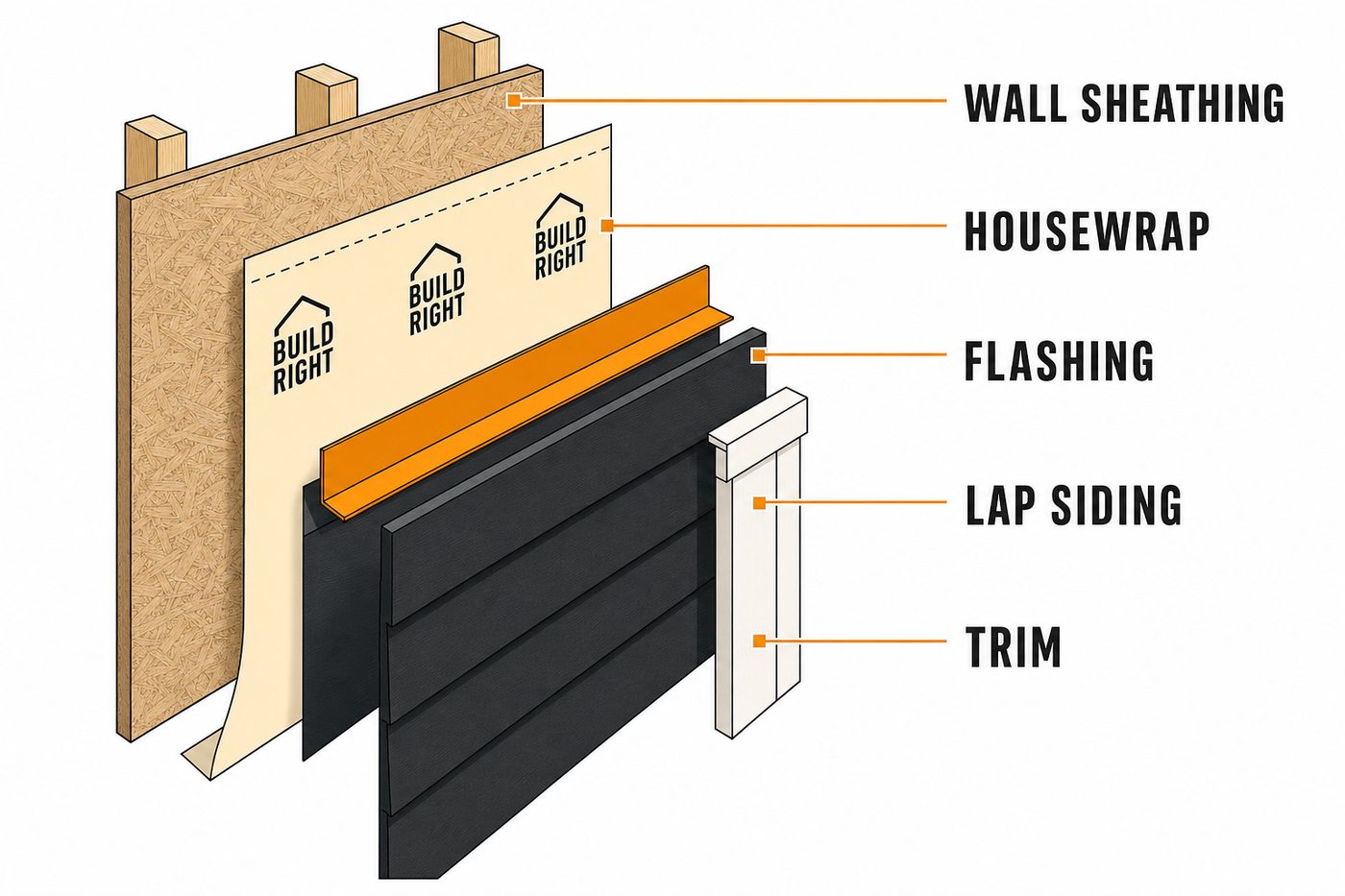
- Tear-off and wall prep. Old cladding off, sheathing repaired, wrap and flashing detailed for wind-driven moisture and snow-line clearance.
- Installation and walkaround. Manufacturer-spec fastening, sealed penetrations, full cleanup, and a wall-by-wall review with you.
How Scheduling Works From Spokane
Straight answer: Pullman is about 75 miles from our base, and we don't pretend otherwise. We run Palouse work in efficient multi-project trips — your job is scheduled alongside other Pullman, Moscow, and Colfax projects so drive time spreads across several customers instead of landing on your invoice. The trade is a committed calendar block rather than drop-by-tomorrow availability. Spring estimates get first pick of summer install windows; cold-season installs are workable, with caulk and coating steps sequenced around temperature.
Pullman Siding Questions
My hardboard is only bad on one or two walls. Can you re-side just those?
Yes, and on rentals it's sometimes the right economic call. Expect a visible finish difference against the old material, and know that the remaining walls are on the same clock.
Do I need a permit to re-side inside city limits?
Re-siding in Pullman goes through the City of Pullman's permit office. We handle the filing and any inspections as part of the job.
What's the most durable siding for a student rental?
Fiber cement or LP SmartSide, with LP getting the nod where impact is the main threat and Hardie where you want the longest repaint cycle. Builder-grade vinyl is what most of these buildings are failing out of.
Does the wind up here require special installation?
It requires correct installation — full nailing schedules, proper joint and edge details, rated trim attachment. Most wind damage we repair traces to shortcuts, not to the product.
Can you install siding in winter?
Yes. Fiber cement and engineered wood hang fine in the cold; sealants and touch-up coatings have temperature floors we plan around.
Will you match my neighbor's Hardie color?
Usually, yes — ColorPlus lines are consistent, and we can confirm the color from a sample before ordering.
Is it worth doing windows at the same time?
If your windows are within a few years of replacement, combining the projects gets better flashing integration at every opening and one mobilization instead of two. We do both.
Licensing and Where We Work
Domex Construction holds Washington contractor license DAVYDCI833NC (verifiable through Washington L&I) and Idaho license RCE-66940, is fully insured, and brings nine years in business with 32 years of combined crew experience. Ask about our workmanship warranty at your estimate. From Pullman we serve the wider Palouse — Moscow across the state line, Colfax, the town of Palouse, Albion, and the farm properties between them.
Want a wall-by-wall read on your siding before the next windy season? Estimates are free. Give us a call or request an estimate online.
More from Domex in Pullman: Window Replacement in Pullman · Custom Decks in Pullman · Custom Home Builder in Pullman · Siding Installation — Spokane hub