
Siding Installation & Replacement in Moscow, Idaho
Siding replacement in Moscow, Idaho by a Hardie Preferred contractor: century homes, hardboard-era ranches, campus rentals. Free estimates.
$1,000 Off
Your Complete Siding Replacement
Get a Free Estimate
FREE same-day estimates on all exterior projects.








Moscow set its architectural standard early. The homes that went up around Fort Russell in the 1890s and early 1900s — lap siding with tight reveals, deep window casings, sawn shingles in the gables — are still standing on their tree-lined blocks a century and a quarter later, and the whole town quietly measures new work against them. Few towns of 26,000 care this much about their old housing, and a siding contractor here needs to respect that before opening a tape measure.
Domex Construction re-sides homes across Moscow — the century homes near downtown, the professor-built ranches from the mid-1900s, and the rental stock ringing the University of Idaho — under Idaho contractor license RCE-66940, as a James Hardie Preferred Contractor with 9 years in business and 32 years of combined crew experience.
The Century-Home Conversation: Preserve or Replace
On a Fort Russell-era house, the first question isn't which siding to buy. It's whether the original cedar or fir should come off at all. Old-growth lap siding, kept painted, can outlive most of what's sold today, and if a wall is sound our honest advice may be a repair-and-repaint scope rather than replacement. We'd rather keep a good wall than sell a new one.
Replacement earns its place once rot, cupping, or repeated paint failure shows the wood is done — and then the job becomes matching, not just installing. Reveal width is the detail people feel without naming: a 1905 house sided in a modern 7-inch exposure looks wrong from the street even to someone who can't say why. We spec profile-matched fiber cement — smooth-faced Hardie lap set to the original reveal, with trim sized so the window casings still sit proud of the field the way the builder intended. Corner boards, frieze trim, and gable shingle patterns get reproduced, not simplified. Done this way, a re-side reads as a well-kept original.
The Hardboard Years: Moscow's Mid-Century Blocks
The ranches and split-levels that filled in around the older core through the 1950s–70s — many built for university faculty — carry a different problem. Many wear hardboard from the era when it was the default, and hardboard has a known failure sequence: bottom edges wick water, boards swell at the butt joints, nail heads rust and telegraph through paint, and the lowest courses go soft first. If your paint won't hold along the bottom two feet of a wall, the board underneath has usually already taken on moisture.
These houses are straightforward candidates for full replacement. Their walls are simpler than the Victorians' — longer runs, fewer trim interruptions — so fiber cement or LP SmartSide goes on efficiently. The payoff is real on the Palouse: drifting snow piles against north and east walls through winter, and a bottom course that doesn't absorb meltwater is the difference between a 30-year wall and a 15-year one.
Rentals Near Campus: Durable Wins
Closer to the University of Idaho the calculation shifts again. Rental owners need siding that shrugs off bikes leaned against walls, moves tenants in and out without drama, and doesn't demand a paint crew every six years. Sentiment about original materials matters less; cost per year of service matters more.
For those properties we usually run one of two directions. LP SmartSide takes impact better than anything else we hang — a real advantage with constant foot traffic around a house. Hardie with ColorPlus factory finish costs more up front but ends the repaint cycle for a long time, which changes the math for an owner holding the property a decade or more. Quality vinyl still has a place on tight-budget units.
Material Choices, Matched to the House
Moscow re-sides mostly come down to three products, and the housing stock above is the honest sorting mechanism. James Hardie fiber cement is the pick where appearance and moisture performance lead: it doesn't move through freeze-thaw, holds crisp paint lines on ornate trim, and its smooth profiles are what make century-home matching possible. LP SmartSide leads on impact resistance and comes in long lengths that reduce seams on the wide, plain walls of mid-century ranches. Vinyl remains the budget workhorse, best on simple rental elevations where trim detail is minimal. All three are rated for this climate; the differences show up in how each handles Moscow's hot, dry summers (UV and paint life), wind-driven winter snow (bottom-edge moisture), and the particular walls of your house.
What Moves the Price in Moscow
Two identical-square-footage bids here can land far apart, and the spread is usually explainable. Layered tear-off is the big one on older blocks — plenty of century homes carry original wood under asbestos-cement shingle under a later skin, and each layer adds labor and disposal (the asbestos layer needs proper handling). Trim complexity is next: reproducing casings, frieze boards, and gable details on a 1900s house is finish carpentry, not just siding. Hidden sheathing repair, story count and roofline complexity, material and finish choice, and access on tight tree-lined lots each move the number from there. We quote a fixed price after walking the house, with rot-contingency terms written into the spec so a surprise behind the old siding doesn't become a mid-job negotiation.
Five Steps From Estimate to Final Walkthrough
- Walkthrough and probing. We check suspect walls, note original details worth reproducing, and talk through preserve-versus-replace honestly. Estimates are free.
- Written specification. Product, profile, reveal, trim package, flashing details, and contingency terms on paper before you sign anything.
- Permitting. Re-side work in city limits runs through City of Moscow permitting. We file it and build the inspection points into the schedule.
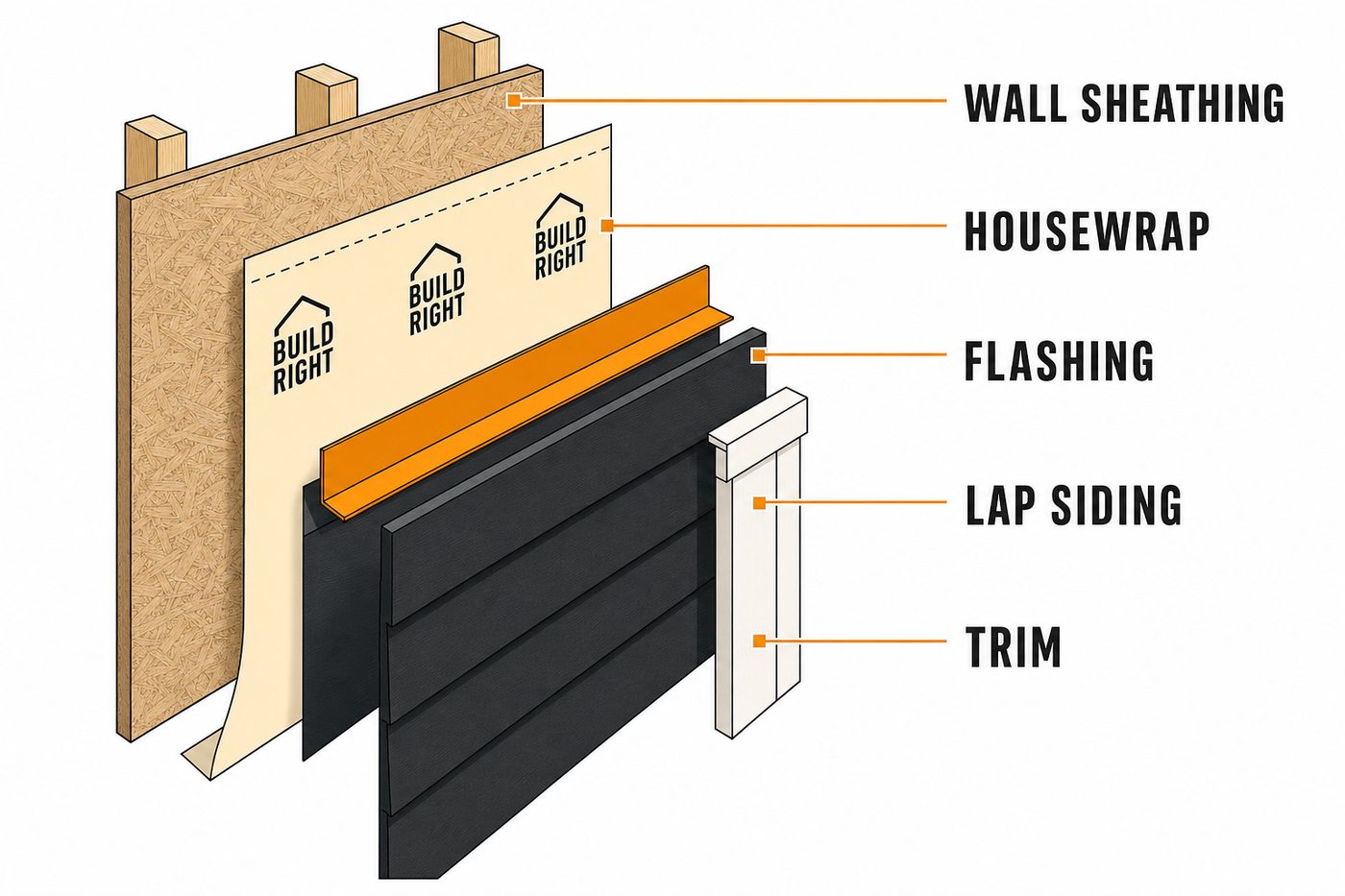
- Tear-off and wall correction. Old layers off, sheathing repaired, weather barrier and flashing detailed for drifting snow and meltwater at the bottom courses.
- Installation and review. Siding hung to manufacturer spec — which is what keeps Hardie and LP warranties valid — then a wall-by-wall walkthrough with you.
Scheduling a Re-Side on the Palouse
Summer and early fall book first, and the dry heat of a Moscow July is good siding weather — long days, stable substrate, fast caulk and paint cure. Spring estimates get the best choice of install windows. Cold-season installs work too: boards hang fine in winter, with sealants sequenced around temperature windows. Wind is the scheduling wildcard — Palouse gusts can pause work with long boards on staging — so we build slack days into multi-week jobs rather than promising a calendar we might not keep. Most single-story homes run several days; a large two-story with full trim reproduction can take a few weeks.
Questions We Hear From Moscow Homeowners
Can you match the original siding profile on my old house?
Usually, yes. Smooth fiber cement comes in exposures that can match most original reveals, and trim gets rebuilt to original dimensions. Bring us a photo and we'll tell you how close we can get.
My house near downtown might have historic significance. Does that change the project?
It changes the design conversation more than the construction. We spec materials and profiles that keep the character intact, and we'll flag anything needing city review before work starts.
There's old asbestos shingle under my current siding. Is that a problem?
It's common on pre-war Moscow homes and it's manageable — it requires proper handling and disposal during tear-off, which we account for in the quote rather than discovering mid-job.
Is it worth replacing hardboard siding that still looks okay?
Look along the bottom edges and butt joints. If they're swollen or the paint there keeps failing, moisture is already in the board and repainting only buys time. If it's genuinely flat and dry, painting can be the right move.
What's the best siding for a rental property near campus?
LP SmartSide for impact durability, or ColorPlus Hardie to eliminate repainting. Which one wins depends on how long you plan to hold the property; we'll run both numbers at the estimate.
Do I need a permit to re-side my house in Moscow?
Work inside city limits goes through City of Moscow permitting, and we handle the filing and inspections as part of the job.
Can siding go on during winter?
Yes. Installation proceeds in cold weather; sealants and coatings wait for their temperature windows, which we schedule around. Winter booking often means shorter lead times.
Will you replace a few rotten boards instead of the whole wall?
We do repairs, and on sound century-home walls repair is often our recommendation. If much of a wall is failing, replacement usually costs less per year of service — we'll show you the line.
Licensed for Idaho, Built for the Palouse
Domex Construction holds Idaho contractor license RCE-66940 — verifiable through the Idaho Contractors Board — plus Washington license DAVYDCI833NC, and carries full insurance. Ask about our workmanship warranty at your estimate; it stands alongside the manufacturer warranties on Hardie and LP products.
From Moscow we work across the Palouse: Pullman, Genesee, Troy, Potlatch, and the farm properties between them.
Thinking about your walls before the next winter of drifting snow? Free on-site estimates across Moscow and the Palouse. Give us a call or request an estimate online.
More from Domex in Moscow: Window Replacement in Moscow · Custom Decks in Moscow · Custom Home Builder in Moscow · Siding Installation — Spokane hub