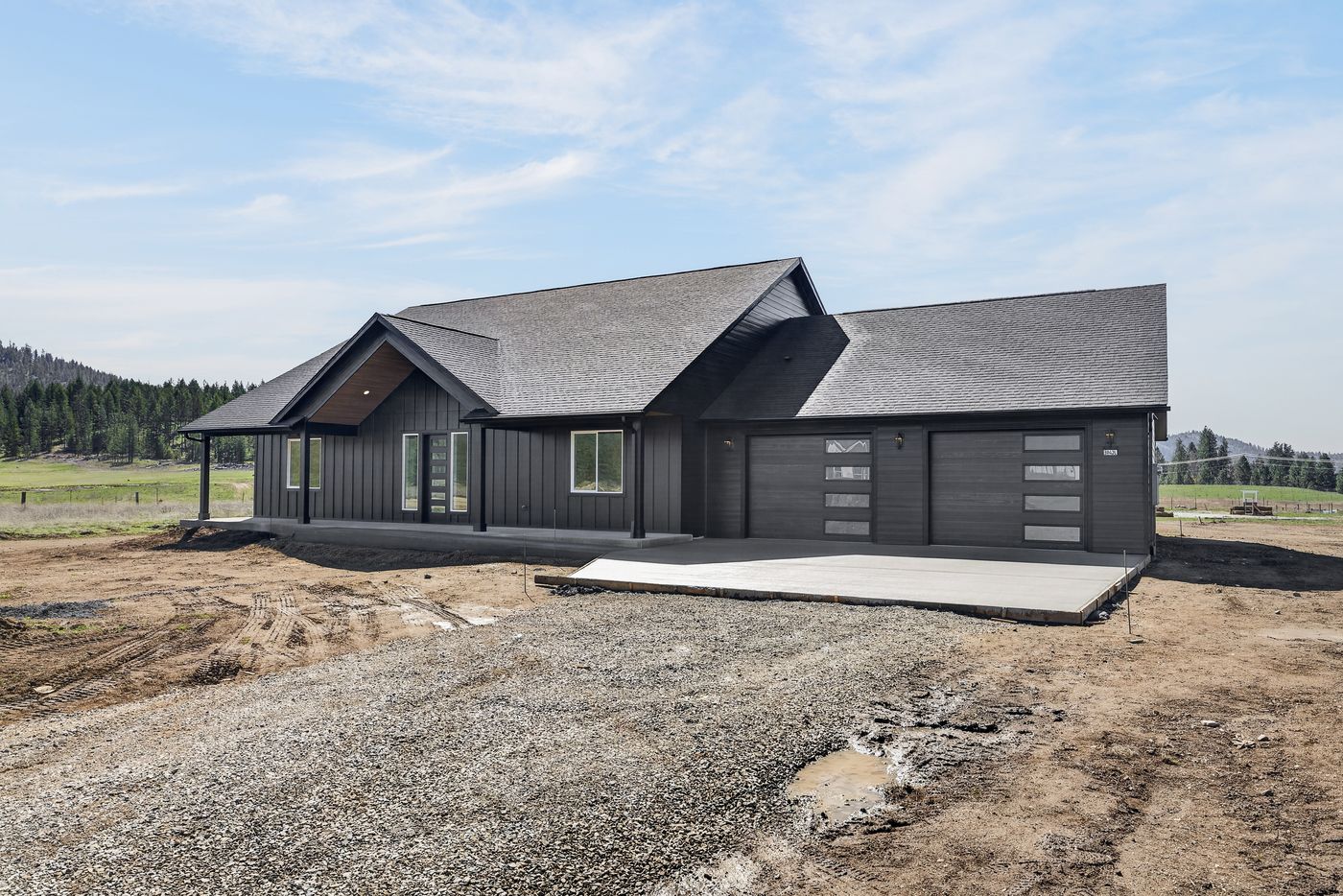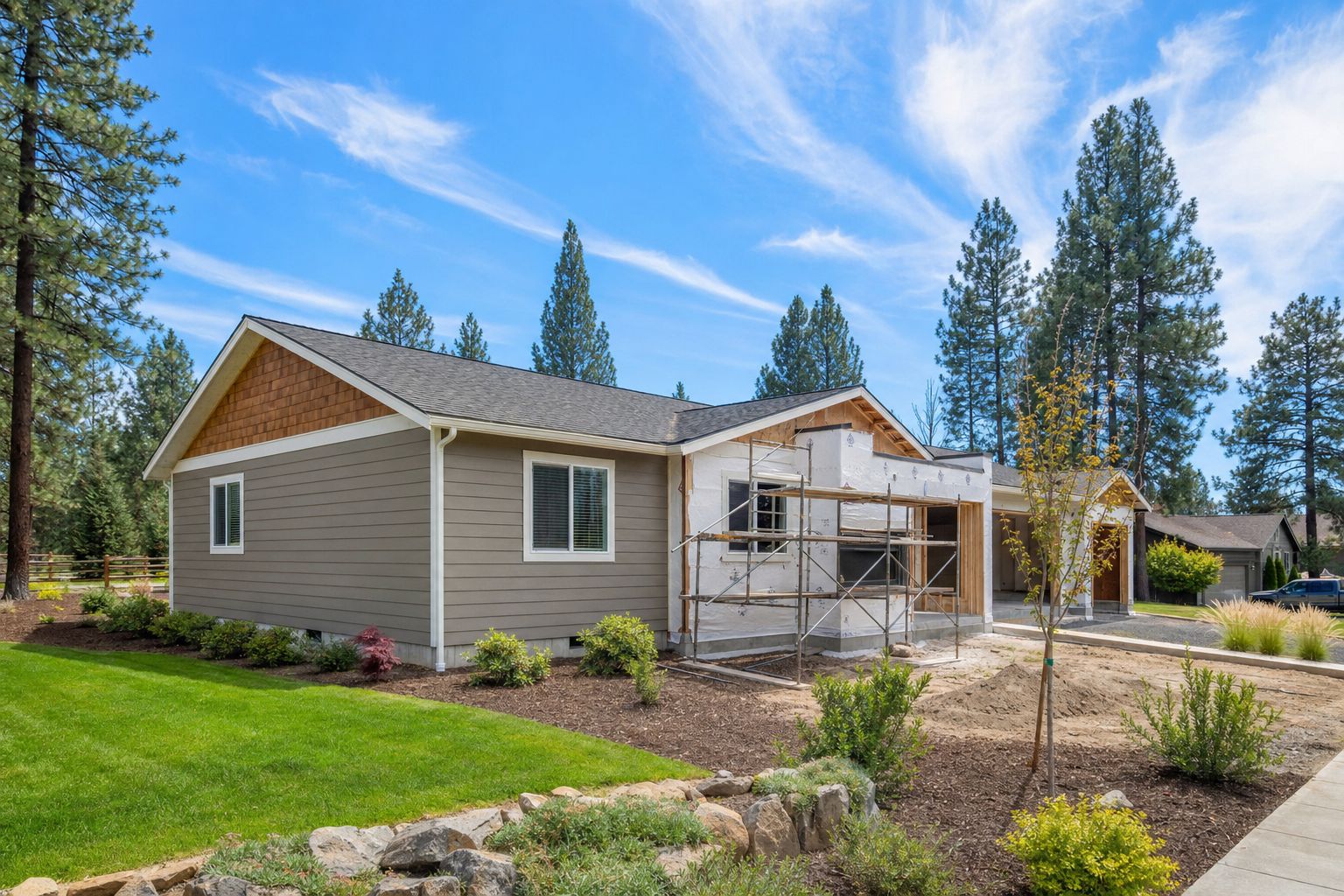

Siding Installation & Replacement in Nine Mile Falls, WA
Fire-aware siding installation in Nine Mile Falls, WA. James Hardie Preferred contractor serving Suncrest, Tumtum & Seven Mile. Free estimates.
$1,000 Off
Your Complete Siding Replacement
Get a Free Estimate
FREE same-day estimates on all exterior projects.








Embers travel. In a wind-driven fire they fly well ahead of the flame front and come down on whatever will hold them — needle litter in a gutter, firewood stacked against a wall, the curled bottom edge of a failing hardboard lap. Nine Mile Falls is ponderosa country along the Spokane River canyon, and most homeowners here already think about defensible space: limbed trees, raked needles, cleared gutters. The wall itself tends to get less thought. Siding is the largest surface an ember can come to rest against, and what that surface is made of belongs on the same checklist as the thinning and the screened vents.
Domex Construction re-sides homes along this whole corridor — river cottages, 1970s–90s mid-slope houses, newer view builds toward Suncrest — under Washington contractor license DAVYDCI833NC. We're a James Hardie Preferred Contractor and we also install LP SmartSide and vinyl, which mostly means we can argue for the material your walls need, not the only one on our truck.
Siding as Part of the Fire Plan
Straight talk first: no cladding fireproofs a house. In most wildfire losses, embers get in through vents, roof debris, decks, or fuels stored against the structure long before any wall burns through. Anyone selling siding as fire protection on its own is overselling.
What cladding choice does is close one pathway. Fiber cement — the James Hardie product line we install most — is sand, cement, and cellulose fiber. It doesn't ignite from ember contact and it doesn't feed a fire. The alternatives fare worse: vinyl softens and sags off the wall at temperatures far below open flame, exposing the sheathing, and aged hardboard with lifted laps gives an ember a ledge of dry wood fiber to lodge against and smolder.
The detailing matters as much as the board. On forested lots we keep code clearance between the bottom course and grade so needle duff can't bank against the wall, run metal flashing where decks meet the house, and keep trim tight at the soffit line where rising heat would look for an opening. None of this is alarmism — for fifty weeks a year it's simply a durable, low-maintenance wall. In a bad smoke-season week, it's one pathway your house no longer offers.
Wind Off the Water, Damp Under the Canopy
The Spokane River widens into Lake Spokane behind the Nine Mile dam, and its canyon moves weather with real force. View walls facing the water take sun plus glare bounced off it, so paint chalks and color fades fastest there, and shoulder-season storms drive rain at those same walls hard enough to find any open joint. Freeze-thaw cycling through October–November and February–April then works that water like a wedge.
Walk around to the tree side of the same house and the problem inverts. Ponderosa canopy holds shade-side walls damp weeks longer than open exposure, needles pack in behind trim and hold moisture against end cuts, and the paint fails green and soft instead of bleached and chalky. We often find both on one home: a faded but sound south wall, and a shaded north wall you can push a probe into.
The Hardboard Years
A large share of Nine Mile Falls and Suncrest housing went up between the 1970s and the 1990s, which was the hardboard and T1-11 era, and those materials are now aging out on schedule. The failure mechanics are consistent: bottom edges wick water and swell, swollen fiber sheds its paint, and the lap slowly dissolves from the drip line up. Nail heads pull through softened board. Butt joints open and cup. Where a roofline dies into a wall without a kick-out flashing — a detail routinely skipped in that era — decades of concentrated runoff have usually rotted a stripe you can trace from the shingles down. And on the quiet, tree-facing walls, woodpeckers treat old hardboard as easy digging.
Isolated damage can be repaired. But once swelling and paint failure show up on multiple walls, patch-and-paint becomes a subscription, and the math starts favoring full replacement with a material that doesn't absorb water in the first place.
Choosing the Replacement Material
For most wooded parcels here the conversation narrows quickly. Fiber cement with Hardie's ColorPlus factory finish handles the full local menu: it won't ignite, doesn't swell through freeze-thaw, keeps its color under water-glare UV far longer than field paint, and woodpeckers ignore it. That combination is why it's our default recommendation between the river and Suncrest.
LP SmartSide earns its place on walls that take impact — falling branches, gravel thrown from a plowed drive — because engineered wood absorbs hits fiber cement can crack under, and its longer boards mean fewer joints on big, simple walls. It's a treated wood product, though: cut edges must be field-sealed, and on the ignition-resistance question it doesn't make fiber cement's case. Vinyl remains the budget path, and we install it honestly labeled as such — expect fade on water-facing exposures and know its behavior in heat.
What Moves the Number
We quote fixed prices after walking the house, not per-square guesses, and a few variables do most of the moving. Wall area and story count set the base. Tear-off findings are the wild card — hidden rot around openings and along drip lines adds correction work, so our contracts state contingency terms up front instead of springing them mid-job. Window and door count adds flashing labor at every opening. Material and finish level move it the direction you'd expect. And slope access is a real line item on this corridor: staging a wall that stands over a grade drop takes crew time a flat lot never asks for.
The Job, Step by Step
- Walkthrough and probing. Every wall, every suspect spot, with attention to drip lines and shade sides. You get our material recommendation and the reasons, free.
- Written spec. Exact product, color, and trim choices plus the flashing approach — with rot-contingency language in writing before you sign.
- County permit. Nine Mile Falls is unincorporated and sits close to where Spokane County meets Stevens County; your parcel decides which one issues the permit, and we confirm that and file it.
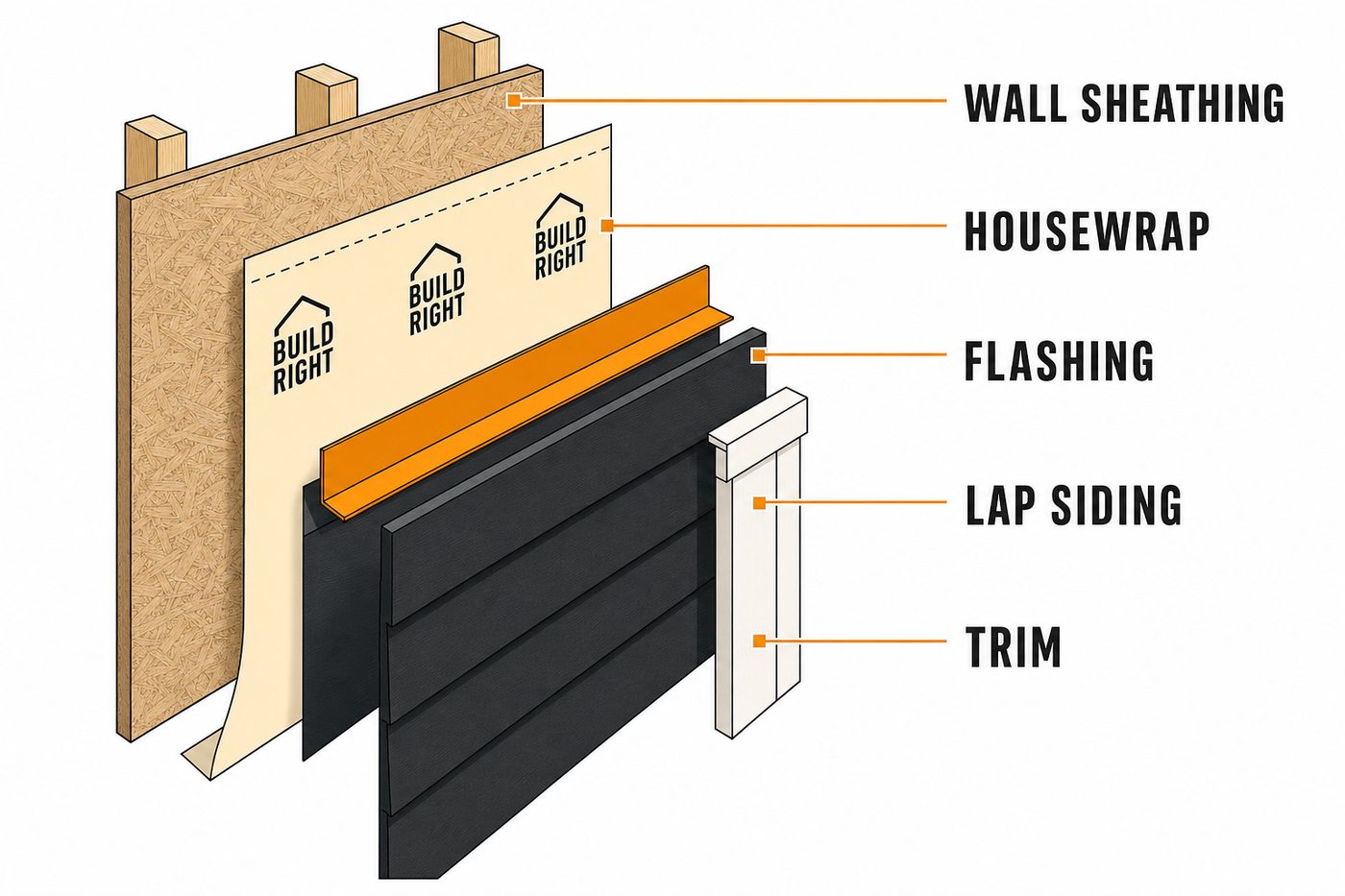
- Tear-off and correction. Old cladding off, damaged sheathing replaced, then wrap and flashing built for wind-driven rain — with ember-resistance clearances kept at grade.
- Installation and walkaround. Boards to manufacturer spec, penetrations sealed, the site cleaned up, and a final walk with you around every elevation before we call it finished.
Where the Calendar Comes In
Summer and early fall fill first, so spring estimates get first pick of install slots. The work itself takes a few days on smaller single-story homes and up to two weeks on larger or more complicated ones; when a schedule stretches, it's almost always because tear-off exposed more repair than the wall let on. Cold months are workable — fiber cement hangs fine in winter, and we sequence caulking and touch-up coatings into their temperature windows. August smoke weeks look grim but don't stop exterior work. County inspections get slotted into the schedule by us, not chased by you.
Asked Around Nine Mile Falls
Will fiber cement siding fireproof my house?
No, and we won't tell you otherwise. It removes one ignition pathway — a big, wall-sized one — but vents, roof litter, decks, and stored fuels matter as much. Think of it as one solid line in a longer plan.
Which county handles my permit?
Depends which side of the Spokane–Stevens line your parcel sits on. We check the parcel, file with the right county, and manage the inspections either way.
Only two of my walls look bad. Do I need a full re-side?
Sometimes not — isolated hardboard failure can be repaired. We probe all four walls before answering, because the shaded sides often hide damage the sunny sides advertise.
Can anything be done about woodpecker holes?
Patching works until the bird comes back, and on wood-fiber siding they usually come back. Fiber cement ends the cycle — they don't work it.
Does glare off the lake really age siding faster?
Yes — water-facing walls get direct UV plus reflection, and it shows in chalking years ahead of other exposures. Factory finish holds color meaningfully longer there than field paint.
Should windows be replaced at the same time?
If yours are close to needing it, one project means cleaner flashing integration at every opening and a single mobilization. We install windows too — one crew, one schedule.
Licensed for This Side of the County Line
Domex Construction holds Washington contractor license DAVYDCI833NC (verifiable through the Washington L&I contractor lookup) and Idaho RCE-66940, and carries full insurance. Nine years in business, 32 years of combined crew experience, and a workmanship warranty you should ask us about at the estimate. Our siding crews work Suncrest and Tumtum up the lake, Seven Mile down the river, and northwest Spokane.
Want a straight answer on how much life your hardboard has left? Estimates are free anywhere from the dam to Suncrest. Give us a call or request an estimate online.
More from Domex in Nine Mile Falls: Window Replacement in Nine Mile Falls · Custom Decks in Nine Mile Falls · Custom Home Builder in Nine Mile Falls · Siding Installation — Spokane hub