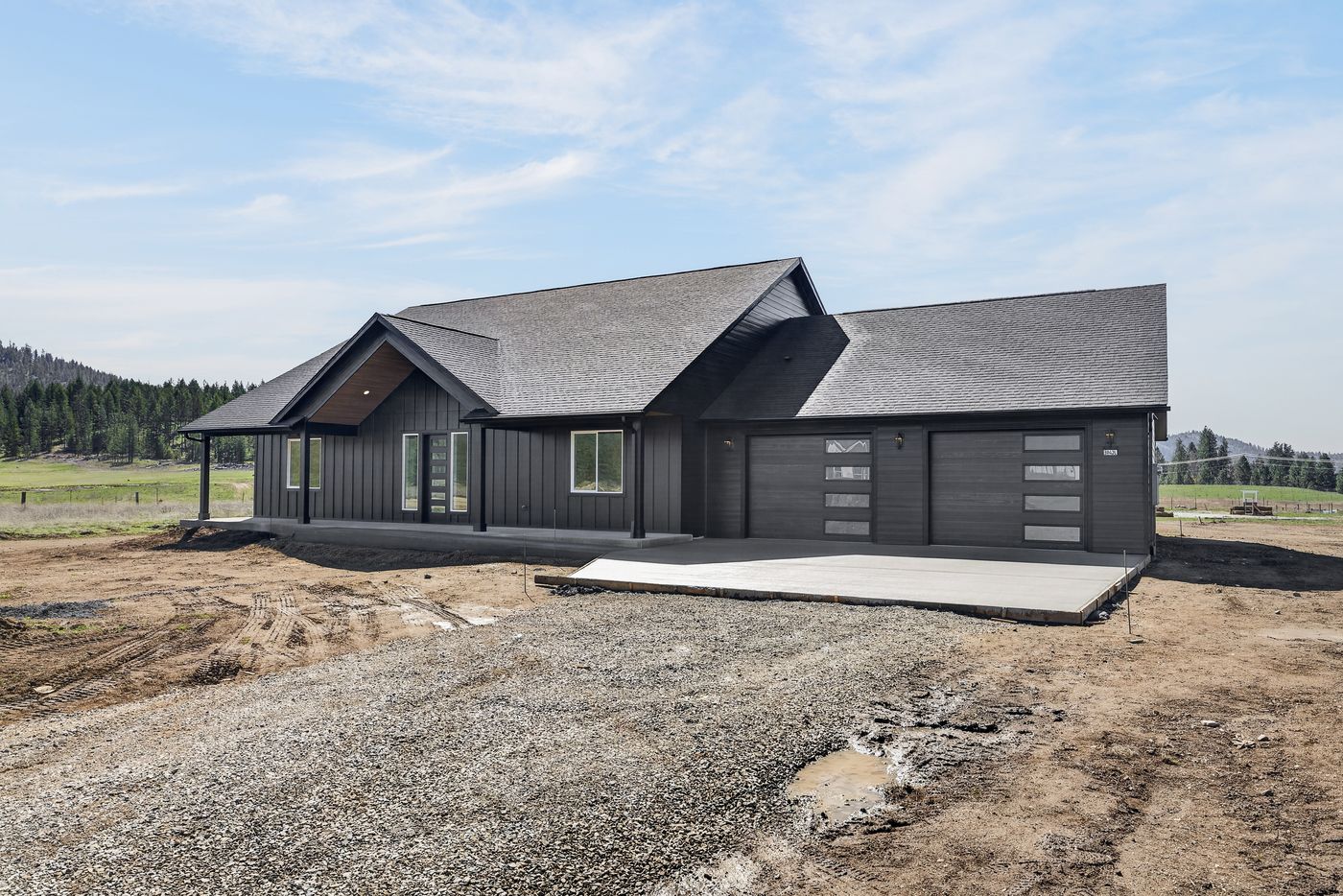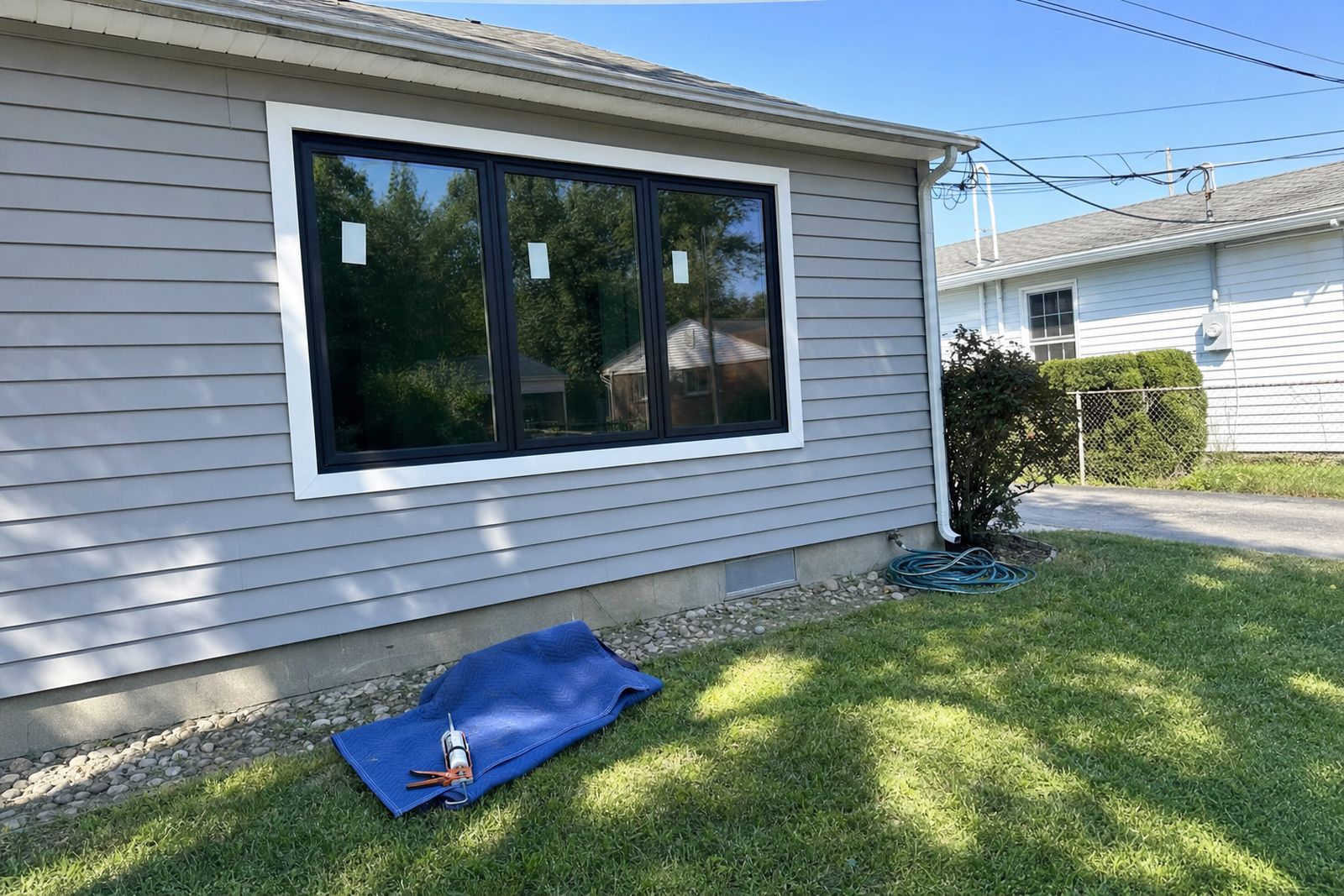

Window Replacement in Spokane
Spokane window replacement sized to a heating climate: insert or full-frame, vinyl to fiberglass. Licensed WA crews. Request a free estimate online.
$1,000 Off
Your Complete Siding Replacement
Get a Free Estimate
FREE same-day estimates on all exterior projects.








Compare Window Frame Materials
The two frames we quote most for Spokane replacements.
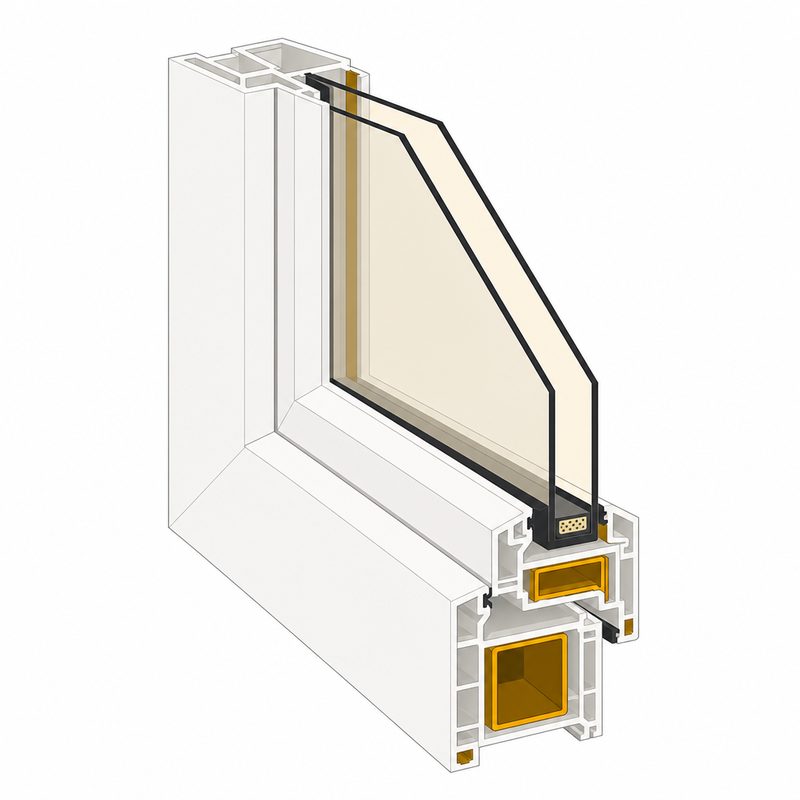
Vinyl Frames
Best For: Whole-home replacements on a budget
Insulation: Very good multi-chamber frames
Color: White & tan standard; limited darks
Maintenance: None beyond washing
Lifespan: 20 to 30+ years
Cost: $$
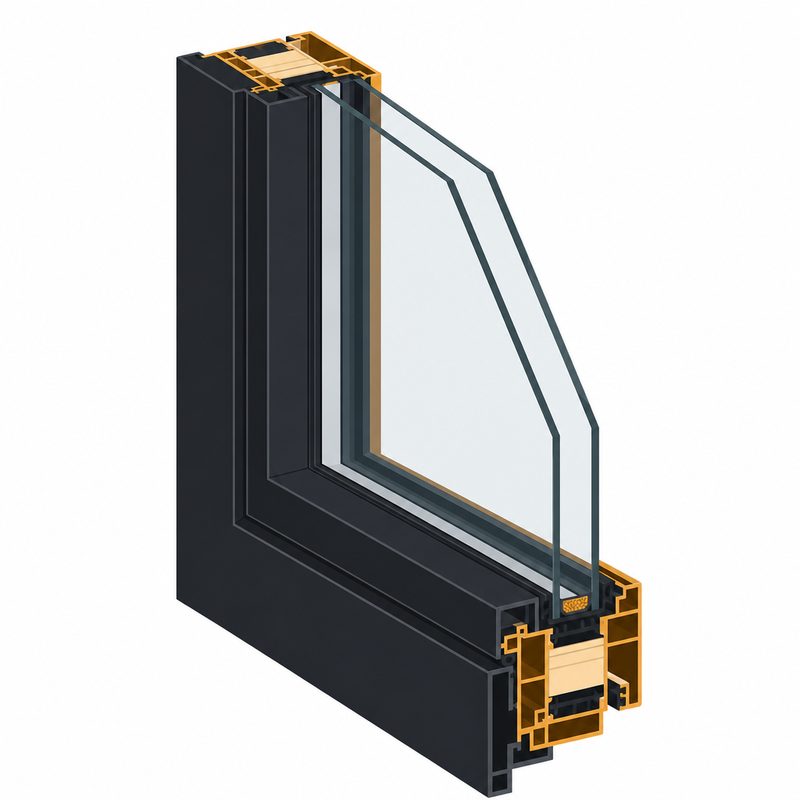
Fiberglass Frames
Best For: Dark colors & big openings
Insulation: Excellent, with slimmer frames
Color: Paintable, holds dark factory colors
Maintenance: Minimal; repaintable later
Lifespan: 30 to 50 years
Cost: $$$
We install all of the above and will tell you which fits your house, honestly.
By February, a lot of older Spokane houses have a chair nobody sits in. It's the one by the big window — the reading chair, the good-light spot — and it gets quietly abandoned around Thanksgiving because sitting there feels like sitting beside an open cooler. Nothing is visibly broken. The glass is simply cold, the cold glass chills the room air touching it, and that chilled air slides down the pane and pools across the floor in a draft you can feel on your ankles with every window in the house latched.
That chair is how many of our window calls begin. Other times it's fog sealed between two panes, ice on the inside track of a slider, or a January gas bill that finally demands an explanation. Domex Construction replaces windows across Spokane — nine years in business, 32 years of combined crew experience, Washington license DAVYDCI833NC — and we treat window work here as its own discipline: Spokane asks more of glass than most cities do — subzero snaps, 90s-to-100s Julys, and a stretch of smoke in between.
What Failing Windows Do, Physically
A window doesn't fail all at once; it fails in ways you learn to live with, so it helps to name the mechanisms.
Cold glass steals heat two ways. Your body radiates warmth toward any cold surface it faces, which is why the seat by the window feels chilly even in still air. Then convection takes over: room air cools against the pane, falls, and pulls warm air in behind it — a slow conveyor dumping your furnace's output against single-strength glass. Spokane's winters rack up serious heating-degree days, and that meter runs from October to April.
Condensation is the second signal. Water beading on the room side of the glass means the interior surface has dropped below the dew point — common on old single panes and on aluminum frames, which conduct cold straight through the metal. In Shadle and across the post-war northeast, the original aluminum sliders do this every winter; the ice in the bottom track thaws each afternoon and refeeds the rot in the sill below. Fog between the panes is a different diagnosis: the insulated glass unit has lost its seal, its gas fill is long gone, and the unit is now two pieces of glass doing the work of one. Five Mile Prairie and Indian Trail are full of this right now — the first-generation builder vinyl from the 90s and 2000s used IGUs that are all reaching seal failure on roughly the same schedule.
Pre-war houses fail differently. On the South Hill, in Browne's Addition, and through the Perry District, original double-hungs ride in frames with hollow weight pockets on both sides — two uninsulated chases built into the wall at every window — and a century of settling has racked many openings out of square, so sashes no longer meet their stops. Those windows leak air around themselves as much as through the glass.
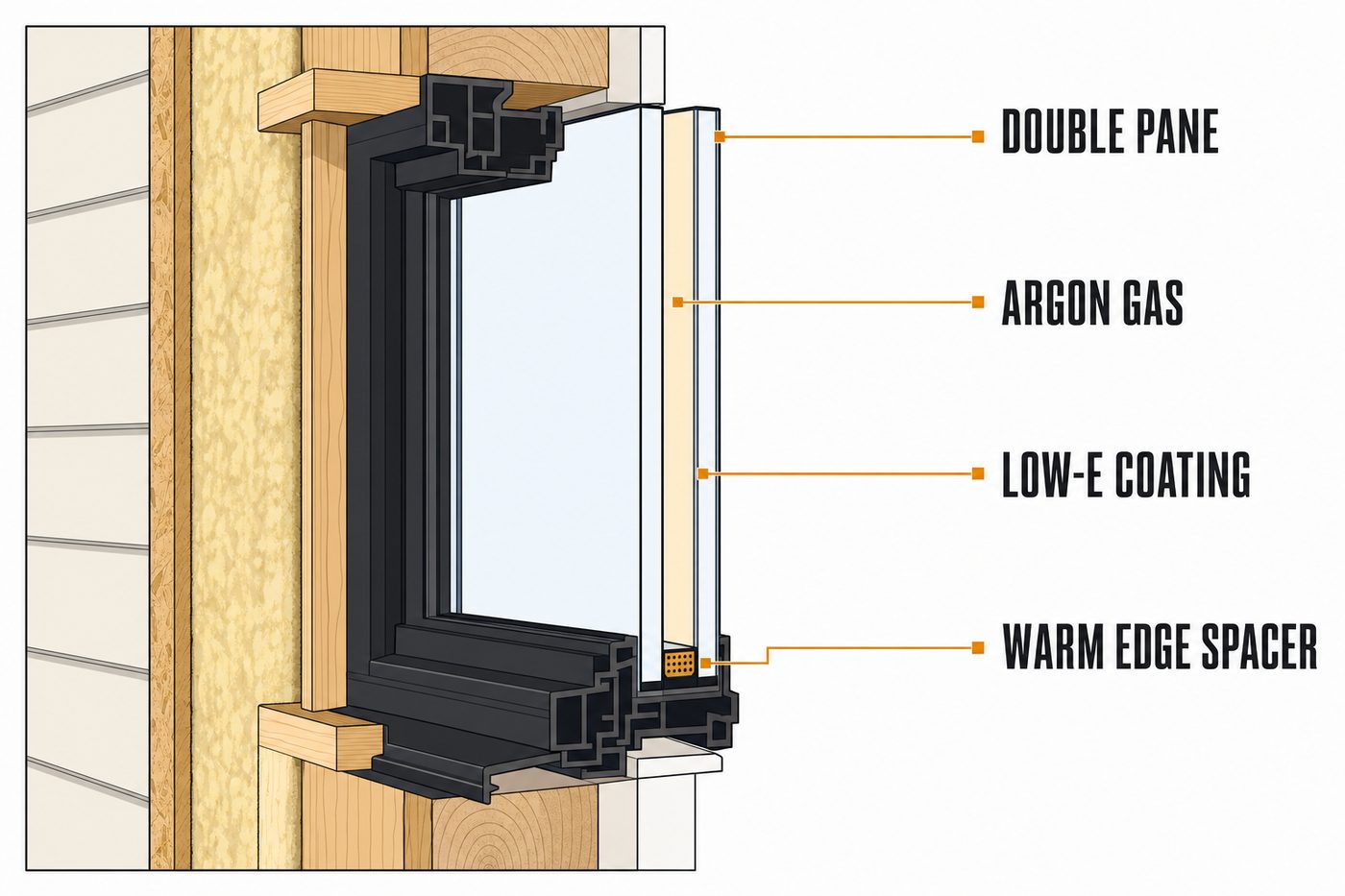
Glass Packages for a Heating Town
Most of a replacement window's performance lives in the glass, so this is where a Spokane buyer should slow down.
U-factor is the number that matters most here. It measures how fast heat escapes through the whole assembly — lower is better — and in a heating-dominated climate it outranks every other rating on the label.
Low-E coatings come in versions, and the choice is orientation work. A low-solar-gain coating knocks down summer heat on big west-facing glass that bakes through July and August. A high-solar-gain coating does the opposite — it lets winter sun through to warm the room while still blocking heat from escaping — which can be the right call on unshaded south glass in a climate with our heating load. One coating on every side of the house is simpler for the supplier, not better for you.
Gas fills and spacers finish the package. Argon between panes slows conductive loss; warm-edge spacers keep the glass perimeter warmer, which is exactly where winter condensation starts. And triple-pane deserves a genuine look in Spokane — on north walls, bedrooms, and anywhere near a street, the third pane earns its cost in heat retention and quiet.
There's an August argument for tight windows, too. During smoke weeks, the goal is to close the house and let filtration do its work — but filtration only wins if outside air isn't leaking in around thirty-year-old sashes faster than the filter can clean it. Modern units with continuous weatherstripping and low air-infiltration ratings let a Spokane house actually seal up when the air quality index climbs.
Insert or Full-Frame, Neighborhood by Neighborhood
Every window estimate in this city turns on one decision: insert or full-frame. An insert (sometimes called a pocket install) leaves your existing frame and interior trim in place and sets a new, slightly smaller unit inside it. A full-frame replacement strips the opening to the rough framing, so the new window arrives with new flashing, new insulation around the perimeter, and new trim. Inserts cost less and go faster; full-frame fixes everything, including the things you can't see. The right answer usually tracks the age of the house.
On the South Hill, Browne's Addition, and Perry District stock, we lean full-frame. Dropping an insert into a racked, settled 1915 opening preserves the out-of-square geometry, shrinks the glass, and leaves those hollow weight pockets uninsulated behind the casing. Full-frame lets us square the opening, pack the pockets, flash to modern standards, and replicate the original trim profiles so the house still reads as itself from the street.
In Shadle and the post-war northeast, openings are typically square and sound, and the failure is the aluminum unit itself — so this is where inserts and simple full-unit swaps shine. The check we make first is the sill under that icy track — decades of condensation may have done damage an insert would seal in.
Up Five Mile and Indian Trail, fogged builder vinyl sometimes needs only new glass, and we'll say so when it's true. But when the frames themselves have warped or their corner welds have opened, a glass swap is money into a dying unit, and insert replacement into the sound openings of a 1990s house is quick, clean work. In Hillyard, where railroad-era homes meet real budgets, we'll walk the line between the openings worth full-frame money and the ones an insert serves honestly; in Kendall Yards and newer infill, calls tend to be upgrades rather than wholesale replacement.
Vinyl, Fiberglass, or Wood-Clad Frames
Vinyl is the workhorse: the best insulation per dollar, no finish to maintain, and modern extrusions are far stiffer than the 90s frames we remove. Its limit is thermal movement — dark-colored vinyl on a west wall in a 100-degree Spokane July expands and contracts hard, so color and exposure belong in the decision, not just the catalog.
Fiberglass moves at nearly the same rate as glass itself, which keeps seals tight through our wide winter-to-summer temperature spread. It's paintable, thin-framed (more glass per opening), and priced between vinyl and wood. For a long-term home here, it's frequently our recommendation.
Wood-clad — wood inside, aluminum or fiberglass skin outside — is the material for pre-war houses where interior character matters: real wood profiles inside, a maintenance-free skin facing the weather. It costs the most and earns it in the right rooms.
From Measure to Final Check
- On-site assessment. We check every opening individually — square, sill condition, sash operation, IGU seals — because one house often needs two different answers. You get a fixed written number, free.
- The spec, in writing. Window line, frame material, glass package per orientation, and install method per opening, on paper. Bedrooms get checked against egress requirements now, not on install day.
- Permitting. Window replacement inside city limits runs through the City of Spokane; unincorporated addresses permit through Spokane County, and the two offices treat window work differently. We determine which applies to your address and file it.
- Installation. Openings are done one at a time — removed, prepped, flashed, set, foamed, and sealed — so the house is never open overnight. A typical whole-house replacement runs a few days.
- Walkthrough. Every sash operated, every lock thrown, labels off, glass cleaned, and warranty paperwork handed over.
Where the Budget Actually Goes
Opening count drives cost more than window size does — each opening carries its own removal, flashing, sealing, and trim labor. Install method is the next lever: full-frame costs meaningfully more than insert. Frame material and glass upgrades stack from there, and second-story openings add staging time. Two honest ways to spend less: phase the project by elevation, starting with the north and west walls where winter losses are worst, or pair windows with a re-side — when siding comes off, full-frame windows flash directly to the exposed sheathing, and one mobilization covers both trades. If you're weighing the whole exterior, our Spokane siding contractor page covers that side of the project. Homeowners east of the city line can start with our Spokane Valley window replacement page.
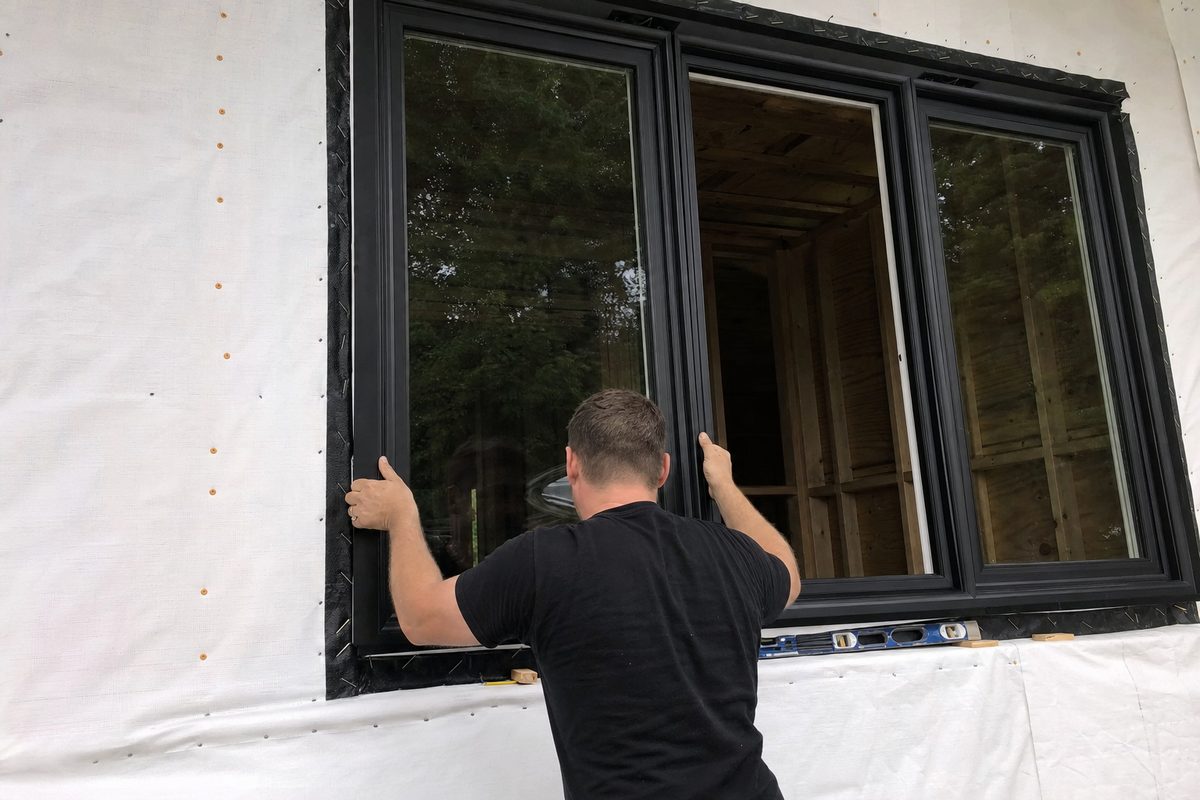
A full-frame replacement set into a flashed opening, the way the manufacturer drew it.
Spokane Window Replacement FAQs
There's fog between my panes — do I need whole new windows?
Not always. If the frame is sound, a new IGU can be set into the existing sash. If the frame has warped or the window is 90s builder vinyl, glass-only repair is money into a failing unit. We'll tell you which case yours is.
Do I need a permit to replace windows in Spokane?
Often, yes — especially when opening sizes change or bedrooms are involved. City of Spokane addresses permit through the city; unincorporated addresses go through Spokane County. We confirm which applies and handle the filing.
What U-factor should I look for here?
The lowest your budget reaches. Spokane's heating season is long, so U-factor (heat loss) matters more than solar heat gain numbers. We spec to Northern-climate efficiency standards and will walk you through the label math.
Can windows be installed in winter?
Yes. We work one opening at a time, so each room is exposed briefly, and cold-weather sealants are rated for the job. Winter scheduling usually means a shorter wait.
Will new windows help during smoke season?
Noticeably. Most smoke enters through air leakage, and old sashes leak around their perimeters. Tight modern units let you close the house and rely on filtration during August–September smoke weeks.
Is triple-pane worth it in Spokane?
More often than in mild climates. The added cost buys real heat retention here, plus sound reduction. We usually price it for north-facing and bedroom windows and let you decide wall by wall.
Insert or full-frame — how do I know which I need?
Condition of the existing frame decides it. Square, rot-free openings take inserts well; settled pre-war frames, rotted sills, and warped builder vinyl call for full-frame. We assess every opening; many houses get a mix.
I have original wood windows in a 1920s house. Replace or restore?
Worth an honest conversation. Restoration plus storm windows preserves character but not much efficiency; full-frame wood-clad replacement with replicated trim keeps the look and fixes the performance. The answer depends on the windows' condition and your tolerance for maintenance.
How long does whole-house window replacement take?
Most homes run two to four days on site. Full-frame jobs and houses with many openings run longer than insert jobs; the schedule is in your written spec before we start.
Licensing, Verification, and Service Area
Domex Construction carries Washington contractor registration DAVYDCI833NC — you can verify it in about a minute through the Washington State Department of Labor & Industries "Verify a Contractor" tool, which shows registration, bond, and insurance status for any contractor. We're also licensed in Idaho (RCE-66940) and fully insured. From Spokane we install windows across the metro and a 100-mile radius, including Spokane Valley, Liberty Lake, Cheney, Deer Park, and North Idaho.
If there's a chair in your house nobody sits in past Thanksgiving, we'd like to look at the window next to it. Give us a call or request an estimate online — the assessment is free, and the spec is written so you can compare it against anyone's.