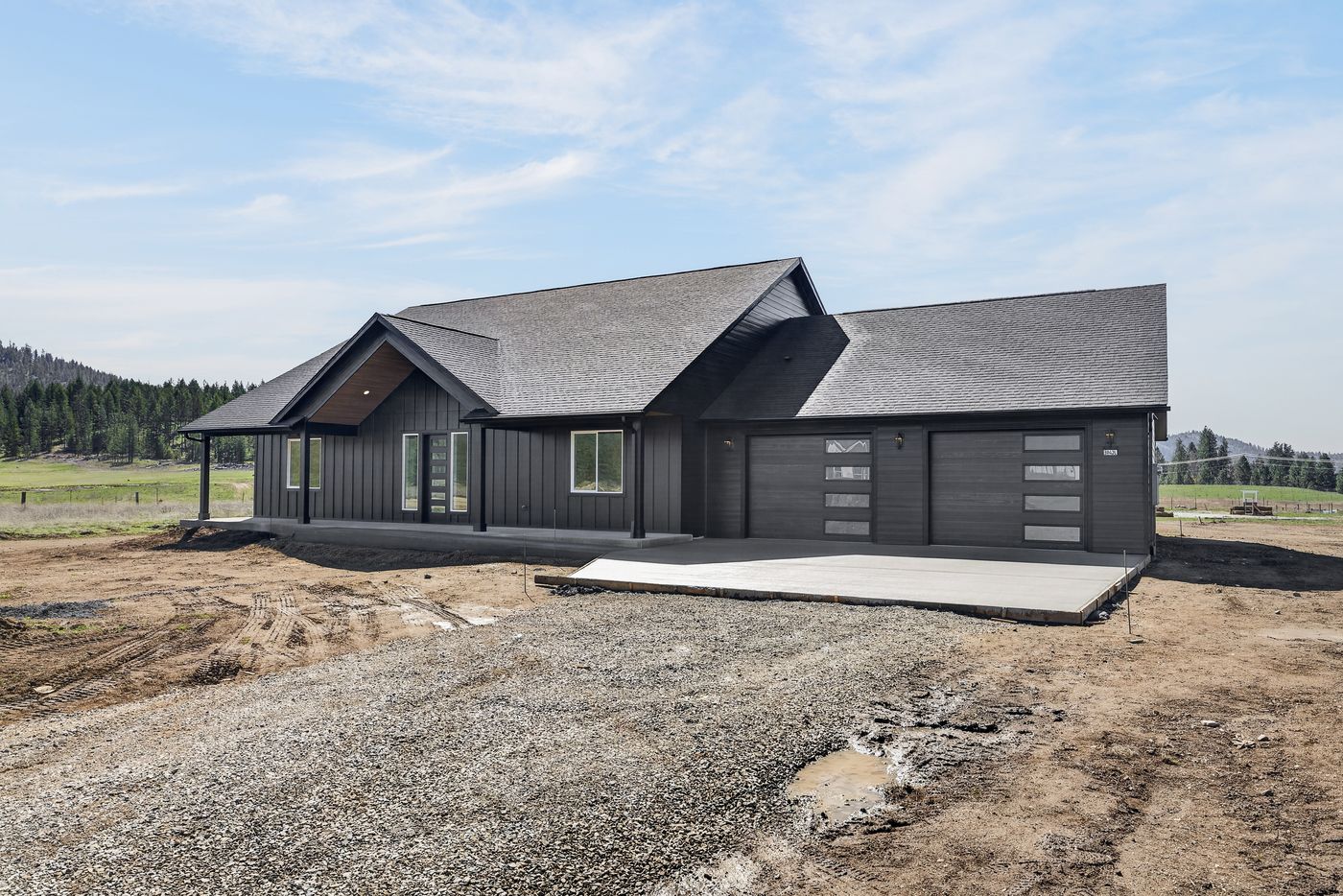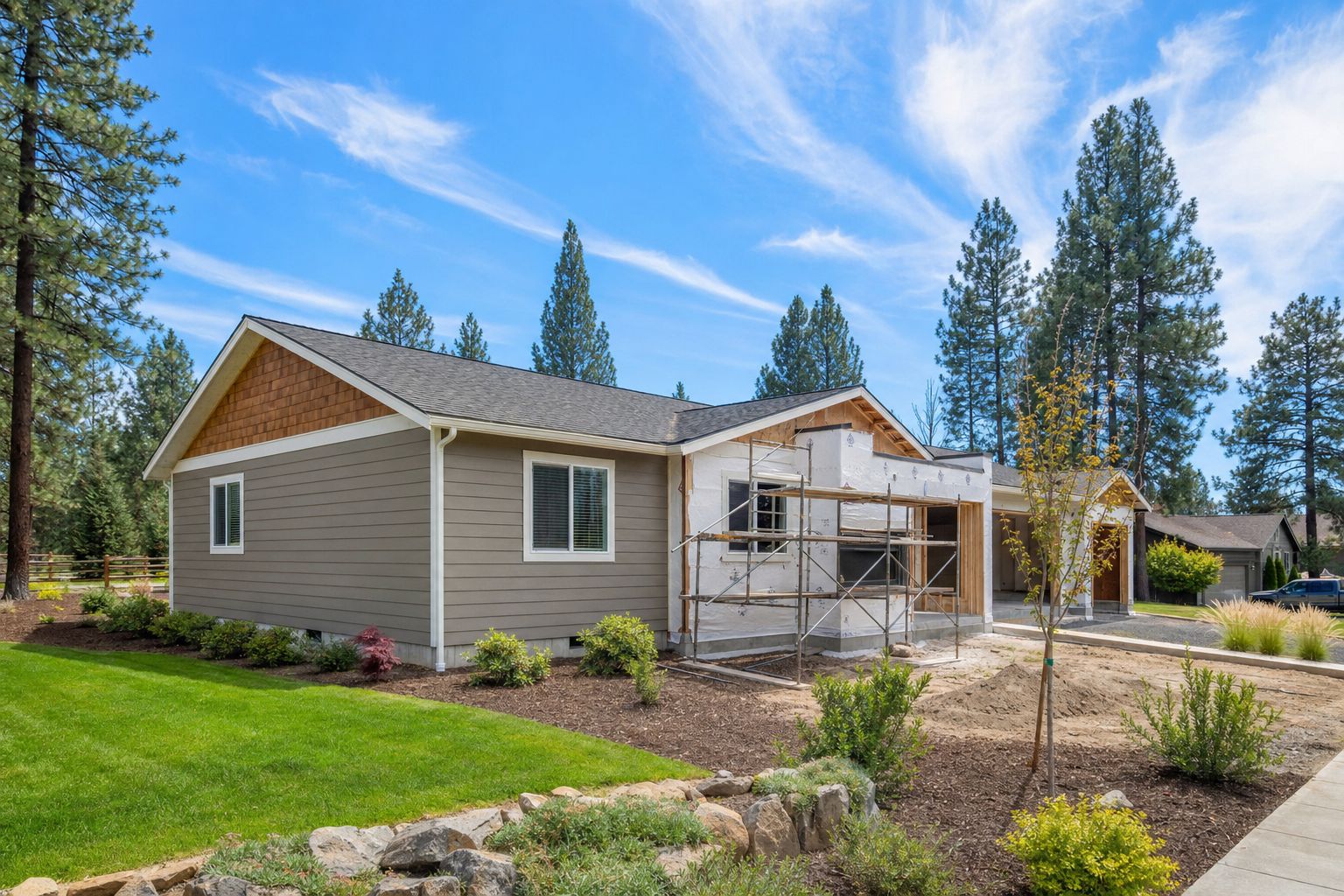

Siding Installation & Replacement in Ritzville, Washington
Siding installation & replacement in Ritzville, WA built for high-UV, dry-country sun. James Hardie Preferred contractor. Free estimates.
$1,000 Off
Your Complete Siding Replacement
Get a Free Estimate
FREE same-day estimates on all exterior projects.








Ritzville is the sunniest, driest corner of our map. Spokane gets around 17 inches of precipitation a year; out here where I-90 meets US-395, the total drops closer to 11, the summer sun runs hotter and lasts longer, and the wind carries wheat dust instead of lake moisture. On most of the territory Domex works, siding fails from water. In Ritzville it fails from light.
That one fact reorders every decision on a re-side — which materials earn their price, which finishes survive, and which walls of your house deserve the closest look. Domex Construction runs siding crews down the I-90 corridor from Spokane, licensed in Washington (DAVYDCI833NC) and fully insured, and every Ritzville estimate starts the same way: walking your walls in person, free.
Sun Damage Reads Differently Than Water Damage
Walk around a Ritzville house and the walls tell you their compass directions. The north face often looks a decade younger than the south face, because ultraviolet exposure — not rain — is doing the aging here.
On painted wood, UV breaks down the binders in the paint film first. The pigment stays but stops holding together, and you get chalking: drag a hand across the wall and it comes away powdered. Chalked paint has quit protecting the wood, and in this dust and wind the film erodes fast once it starts.
On vinyl, the sun cooks the plasticizers out of the panel. New vinyl flexes; twenty-year-old south-wall vinyl in Adams County snaps. We see the cracks radiate from fastener heads, usually discovered during a cold January week when someone bumps the wall or hail comes through. Fade is the visible half of the same process — a dark south-facing vinyl wall here drops shades in under ten years while it's going brittle.
Heat swing finishes the job. A 100-degree afternoon followed by a cool high-desert night moves every board and panel daily, all summer. Caulk joints open, face-nailed boards work loose, and the sealants that would last fifteen years in Seattle bake out early. The fix isn't panic — it's materials and finishes rated for it, with the south and west walls detailed like they're the whole job. Mostly, they are.
The Wheat-Boom Houses Around Downtown
Ritzville's historic core is the real thing — a National Register downtown of brick storefronts, ringed by the frame houses that went up when this was one of the busiest wheat-shipping points in the country. Those early-1900s houses are the most interesting siding work in town.
Most carry original drop siding or cedar under many layers of paint, and a fair number picked up a skin of hardboard or vinyl somewhere in the 1960s–80s. Tear-off on these homes routinely exposes two or three eras at once: shiplap sheathing, no house wrap, trim that was proportioned for the original siding profile and got buried by the overlay. Getting a period house right means restoring those proportions — deeper window casings, proper corner boards, a reveal that matches what the house was built with — while putting a modern weather barrier and flashing package underneath. Fiber cement takes historic profiles well, which is one reason it's our usual recommendation near the core.
The mid-century blocks between downtown and the highway are simpler: ranches wearing first-generation hardboard and vinyl that has reached the end of its rope in this sun. Past the city limits, farmsteads add scope — house, shop, outbuildings, all catching unbroken wind — and we quote those as one mobilization when it makes sense.
Factory Finish vs. the Repaint Treadmill
Here's the honest math that matters more in Ritzville than anywhere else we work. Field-applied paint on a south or west wall in this sun starts chalking well ahead of the schedule you'd get in Spokane, let alone the coast. Owning a painted wood or fiber-cement house here means budgeting for repaints on a shorter cycle — forever.
James Hardie's ColorPlus finish is applied and baked on in the factory, in controlled conditions, with UV-resistant coats that outlast anything brushed on a wall in August. On Ritzville jobs it's the upgrade we push hardest: the finish that's cosmetic in a wet climate is doing protection duty in this one. LP SmartSide's ExpertFinish option makes a similar case for engineered wood, and it takes impact — plow gravel, wind-thrown debris — better than fiber cement does.
Vinyl deserves a straight answer too. Modern vinyl carries far better UV stabilizers than the panels we tear off, and in lighter colors it remains the budget-sensible option for some houses. But dark vinyl on a south exposure here is a product asked to do the one thing it does worst — we'll say so at the estimate, not after it fades.
What Sets the Price on a Ritzville Re-Side
We give fixed written quotes after the walkthrough, not phone estimates off square footage. The variables that move the number: wall area and stories, first. Then tear-off depth — a wheat-boom house wearing an overlay means two layers off and disposal for both. Substrate repair is usually lighter here than in wet country, but sun-split boards and dried-out sheathing at the weather walls still turn up. Trim and opening count matter, because every window is flashing labor. Material and finish choice moves it — factory-finished fiber cement or engineered wood costs more up front than vinyl and earns it back in skipped repaints. In-town access is easy; farm parcels add travel and sometimes staging, and outbuildings add scope you can phase.
How We Run the Job
- Walkthrough and straight talk. We check every exposure, note where the sun has done its work, and tell you what we'd install and what we'd skip. Free, no pressure.
- Spec on paper. Product, finish, trim package, flashing details, and repair-contingency terms in writing before you sign anything.
- Permits handled. In-town projects go through City of Ritzville permitting; rural parcels run through Adams County. We file and track both.
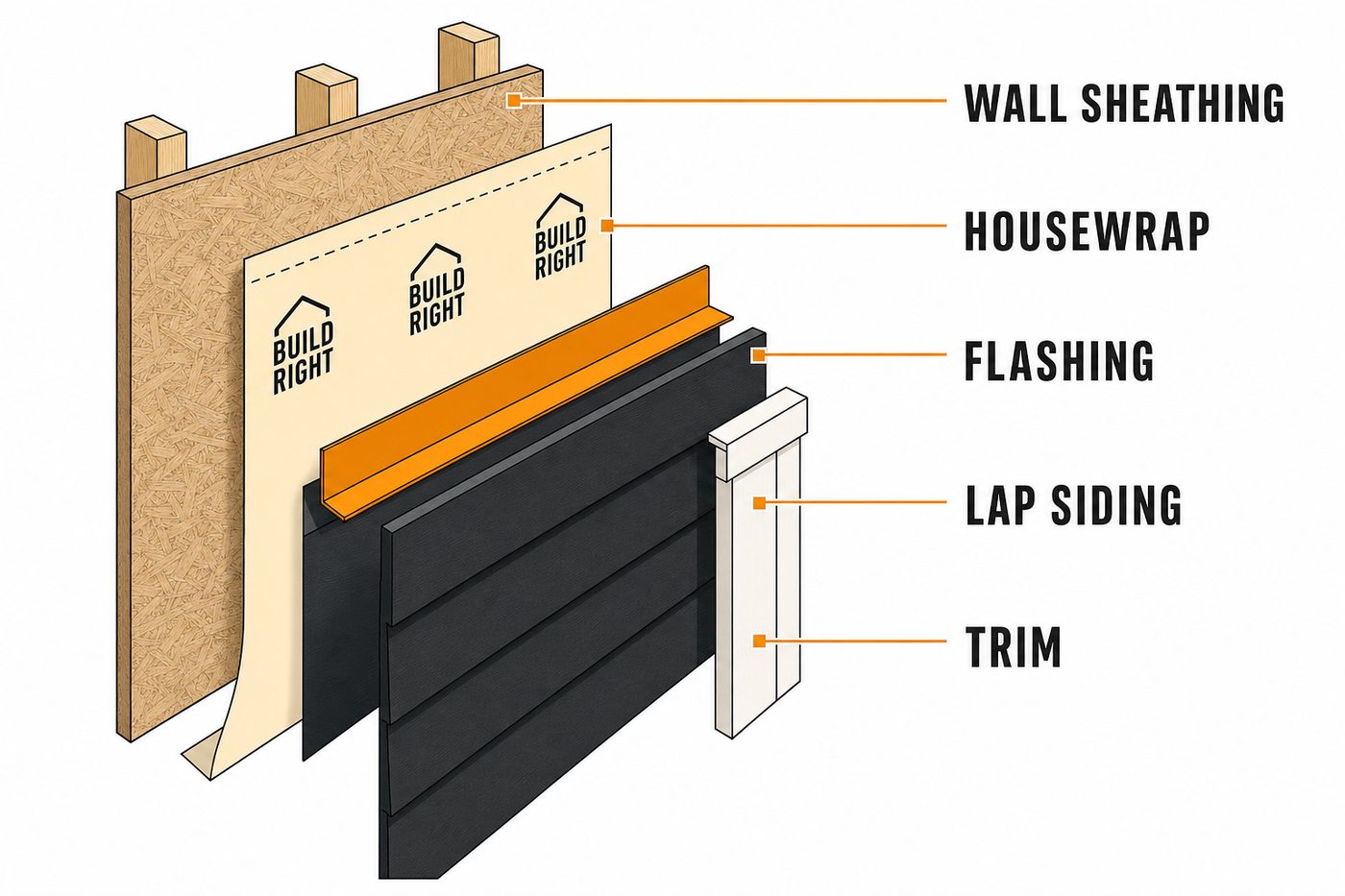
- Tear-off and prep. Old layers off, sheathing repaired, modern wrap and flashing installed — the part of the job you never see and mostly paid for.
- Install and final walk. Siding hung to manufacturer spec so the finish warranties hold, joints sealed with UV-rated sealant, site cleaned, and a wall-by-wall review with you.
Booking Windows and Build Time
A typical Ritzville house runs several days to about two weeks depending on size, layers, and trim complexity. Summer scheduling here is its own skill: crews start early on triple-digit days, and caulks and touch-up coatings have an upper temperature limit as well as a lower one — we sequence around both. Wind days slow the handling of long boards more than they stop work. Cold-season installs are entirely workable and often book faster. Spring estimates get first pick of summer and fall slots.
Ritzville Siding Questions
Which siding lasts longest in this sun?
Factory-finished fiber cement is the strongest all-around answer for UV, heat swing, and wind-blown grit. Engineered wood with a factory finish is close behind and tougher against impact.
Is vinyl siding a mistake here?
Not automatically. Light-colored modern vinyl on a modest budget is defensible. Dark vinyl on south and west exposures is the combination we advise against — fade and brittleness show up early.
Can I just repaint my 1910 house instead of re-siding?
If the wood is sound, sometimes yes — and we'll say so. But repaints buy fewer years here than owners expect, and if the walls carry no weather barrier, a re-side fixes the century-old problem instead of repainting over it.
Will new siding keep the historic look near downtown?
Yes. Fiber cement comes in profiles and reveals that match early-1900s drop siding, and we rebuild trim proportions instead of burying them.
Who issues the permit?
Inside city limits, City of Ritzville. Outside, Adams County. Either way the filing is ours to handle, not yours.
Does the wind and dust change the installation?
It changes the sealant selection and the schedule more than the system. We use UV- and movement-rated sealants and plan long-board work around wind days.
Can you side the shop and outbuildings too?
Yes — farmstead packages are common for us, and pricing them as one mobilization usually beats doing the buildings piecemeal.
Do you actually cover Ritzville from Spokane?
Yes — a straight hour down I-90. We block Adams County jobs into committed crew windows so projects run consecutively, not in visits.
Licensed for This Side of the State
Domex Construction has 9 years in business and 32 years of combined crew experience, and is a James Hardie Preferred Contractor — the installation standard that keeps Hardie's product coverage intact. Washington license DAVYDCI833NC (verifiable through L&I), fully insured, and ask us about our workmanship warranty at the estimate.
Featured Nearby Project
From Ritzville we serve Sprague, Lind, Washtucna, the rest of Adams County, and the I-90 corridor between Spokane and the Columbia Basin.
Want a straight answer on what this sun has done to your siding? Free on-site estimates across Ritzville and Adams County. Give us a call or request an estimate online.
More from Domex in Ritzville: Window Replacement in Ritzville · Custom Decks in Ritzville · Custom Home Builder in Ritzville · Siding Installation — Spokane hub