
Siding Installation & Replacement in Osburn, Idaho
Siding replacement in Osburn, Idaho by a Hardie Preferred contractor. Built for shade-side walls and Silver Valley snow. Free estimates.
$1,000 Off
Your Complete Siding Replacement
Get a Free Estimate
FREE same-day estimates on all exterior projects.








The first thing most Osburn homeowners notice is the paint. On the wall that faces away from the sun — usually the north side, the one the valley keeps in shadow from October into March — the finish goes chalky, then cracks, then lets go along the bottom edges of the boards. The caulk joints at the corners and window trim open up a season or two later. By the time someone finally presses a thumb into the siding and feels it give, the hardboard behind the paint has been taking on meltwater for years.
That sequence — paint, then caulk, then the board itself — is the standard siding story in the Silver Valley, and it shapes how we scope every Osburn estimate. Domex Construction replaces siding across the valley under Idaho license RCE-66940. We're a James Hardie Preferred Contractor, we also install LP SmartSide and vinyl, and estimates are free.
Why the Shade Wall Goes First
Osburn sits on the floor of a narrow valley, mid-way between Kellogg and Wallace on I-90, and the geometry of that valley matters more than the thermometer. Through the heart of winter, the sun stays low behind the ridgeline for much of the day, so a north-facing wall can go weeks without direct light. Snow shoveled off the walk or shed off the roof piles against that wall and stays; the wall never gets the drying cycle the sunny side of the same house gets between storms.
Paint is a sacrificial layer. On a wall that stays damp and freezes most nights, it wears through in a fraction of its rated life. Once the coating fails, water reaches the material itself. Hardboard — and much of Osburn was re-clad in hardboard through the '70s and '80s — drinks it at every unsealed edge, swells, and softens from the bottom course up. Freeze–thaw cycling through the long shoulder seasons pries the damage wider every year.
The south wall of the same house can look a decade newer. Houses here fail one wall at a time, which is why an Osburn siding conversation often starts with one wall and ends with an honest map of the whole house: what needs work now, what can wait, and in what order.
The Walls Osburn Homes Are Carrying
Osburn is the quiet residential middle of the Silver Valley — around fifteen hundred people, no tourist strip, streets of mining-era cottages and mid-century houses from the decades the mines ran around the clock. Footprints are modest, rooflines simple, and the siding history usually comes in layers: original wood, hardboard or T1-11 over it in the '70s or '80s, sometimes '90s vinyl over that. Underneath, the older homes carry plank sheathing and little or no weather barrier — walls that survived by breathing and drying, with every added layer making that harder.
Because homes here stay in the same hands for decades, the owner usually knows the house's whole story — who re-sided it, when the back addition went on, where the roof used to leak. Tell us at the walkthrough. We'll probe the right spots during the estimate instead of discovering them on day two of tear-off, and the written quote gets more honest for it.
Buying Siding Once
Osburn isn't a flip market. People here fix their houses to keep them, and that changes the material math. Over another twenty or thirty years of ownership, the cheapest siding installed twice costs more than the right siding installed once — and means living through two projects instead of one.
For a shaded, snow-loaded wall on a house you intend to keep, fiber cement is the strongest case we can make. James Hardie boards don't absorb meltwater and don't move with freeze–thaw, and a ColorPlus factory finish pushes repainting far into the future — worth a lot on a wall where paint is the first thing to die. LP SmartSide earns its place on walls that take impact — ice coming off a steel roof, gravel thrown from a plowed street — and its long boards suit the plain, straight wall planes common on mid-century houses. Vinyl is the honest budget option and we install it well, but on a cold shade wall it turns brittle exactly when roof ice arrives, and an owner who's staying put will likely outlive it.
Most Osburn houses don't need an exotic answer — usually fiber cement on the weather walls, trim done right, and flashing that respects where the snow sits. We'll tell you which material your house argues for, wall by wall.
What Sets the Price
Square footage sets the base, and Osburn's modest footprints work in your favor — a one-story house with simple gables keeps labor contained. What moves the number is what's on the wall now and what's under it. Two or three layers of old siding mean more tear-off and disposal. Softened sheathing on the shade side means repair before anything new hangs. Window and trim count adds detail hours, because every opening is flashing work, not just board work. Material choice shifts the total too: fiber cement and LP cost more than vinyl up front and usually repay it across a long ownership horizon. We quote a fixed price after walking the house, with repair contingencies stated in writing rather than surprising you mid-job.
The Job, Step by Step
- Walkthrough. We inspect every wall, probe the suspect spots — bottom courses and trim on the shade side first — and listen to what you know about the house.
- Written spec. Material, color, trim package, flashing details, and repair contingency terms on paper before you commit.
- Permitting. Re-side permits in town run through the City of Osburn. We file and schedule inspections; you don't chase paperwork.
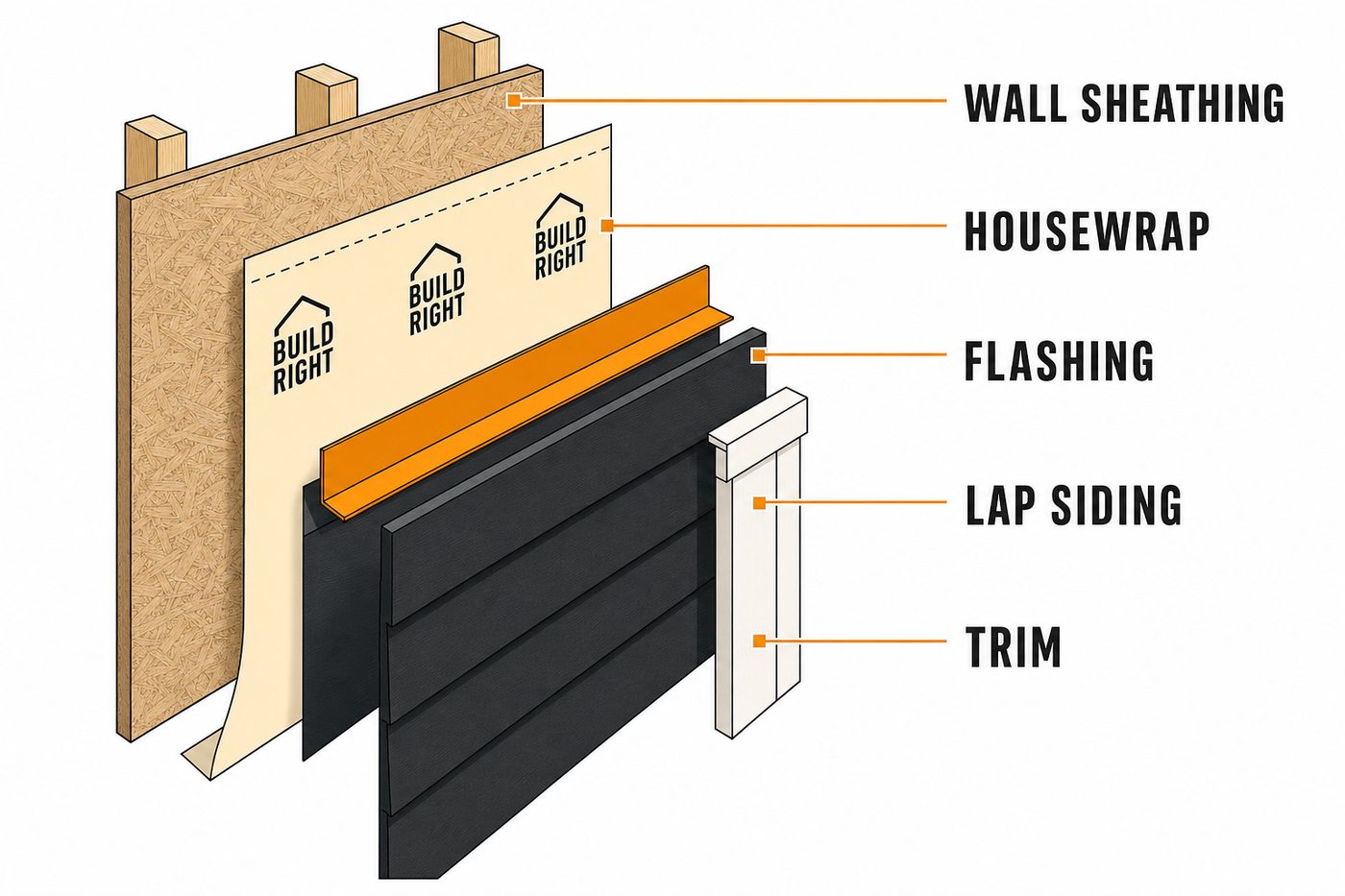
- Tear-off and correction. Old layers come off, sheathing gets repaired, and modern wrap and flashing go on — the invisible stage that decides how long the visible one lasts.
- Install and walkaround. Boards hung to manufacturer spec, joints and penetrations sealed, the site cleaned, and a wall-by-wall review with you before we call it finished.
Scheduling Around Valley Weather
Summer and early fall book first, so a spring estimate gets the best choice of install windows. The work runs from a few days on a small single-story to about two weeks on a larger or many-layered house; tear-off surprises are the usual reason a schedule stretches, which is why we probe up front. Cold-season installs are workable — fiber cement hangs fine in winter, while caulk and coatings have temperature windows we sequence around. If the north wall is already soft, waiting for perfect weather costs more than working around imperfect weather.
Osburn Siding FAQs
Can you replace just the north wall?
Yes — in Osburn it's a common request. One trade-off to know: an exact color match to weathered siding is rarely possible, so single-wall jobs look best corner to corner. Many owners phase the house over a few years, worst wall first.
Is my hardboard worth repairing instead of replacing?
A few bad boards on an otherwise dry wall, repair buys time. Bottom courses swelling across the shade side, patching is paying twice — the wall has a moisture pattern, not a bad board.
Do I need a permit to re-side in Osburn?
Work inside city limits goes through the City of Osburn. We handle the filing and inspections as part of the job.
What will you find under my siding?
On pre-war cottages, usually plank sheathing with no wrap; on mid-century homes, boards or early sheet goods, sometimes with a second siding layer over the original. We price what probing shows, with written contingencies for what it can't.
Is fiber cement worth the extra cost over vinyl here?
On a house you're keeping, usually yes. The shade-wall conditions that kill paint and hardboard also age vinyl fast, and fiber cement's indifference to meltwater and freeze–thaw is precisely what those walls need.
Can siding go on in winter?
The boards can. Sealants and coatings wait for their temperature windows, so winter jobs get sequenced rather than skipped. Lead times are usually shorter, too.
Should windows be replaced at the same time?
If they're within a few years of needing it, yes — flashing and trim integrate better and cheaper with the wall open. We install windows as well, so it's one crew and one schedule.
Is a small Osburn house too small a job for you?
No. The valley's modest homes are core work for us, not filler between big jobs.
Licensed in Idaho, Working the Whole Valley
Domex Construction has 9 years in business and 32 years of combined crew experience, most of it in exactly this climate. We're licensed in Idaho (RCE-66940, verifiable through the Idaho Contractors Board) and Washington (DAVYDCI833NC), fully insured, and a James Hardie Preferred Contractor. Ask about our workmanship warranty at your estimate.
From Osburn we serve the whole Silver Valley — Kellogg, Wallace, Silverton, and the smaller communities along the I-90 corridor between them.
Ready for eyes on that north wall? Free on-site estimates valley-wide. Give us a call or request an estimate online.
More from Domex in Osburn: Window Replacement in Osburn · Custom Decks in Osburn · Custom Home Builder in Osburn · Siding Installation — Spokane hub