
Custom Deck Builders in Osburn, Idaho
Custom deck builders in Osburn, Idaho. Snow-rated framing, careful ledger work on older homes, long-life decking. Free design estimates.
$1,000 Off
Your Complete Siding Replacement
Get a Free Estimate
FREE same-day estimates on all exterior projects.








Osburn's houses were built for work. The cottages went up in the mining boom years and the tidy mid-century blocks followed while the valley ran three shifts — and in both eras, a yard was for the woodpile, the truck, and the garden, not for sitting in. Practically nobody framed a deck onto a miner's house in 1955.
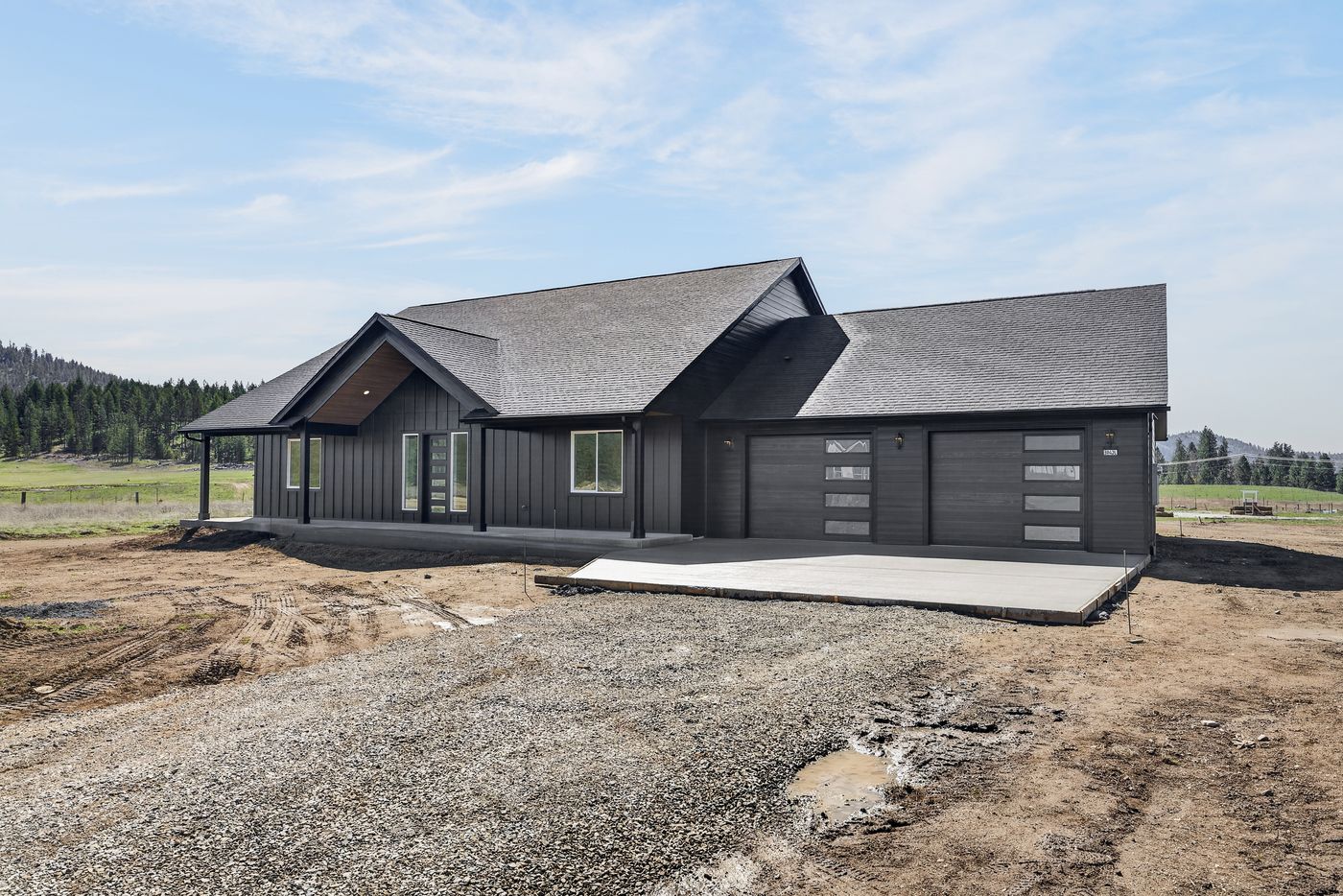
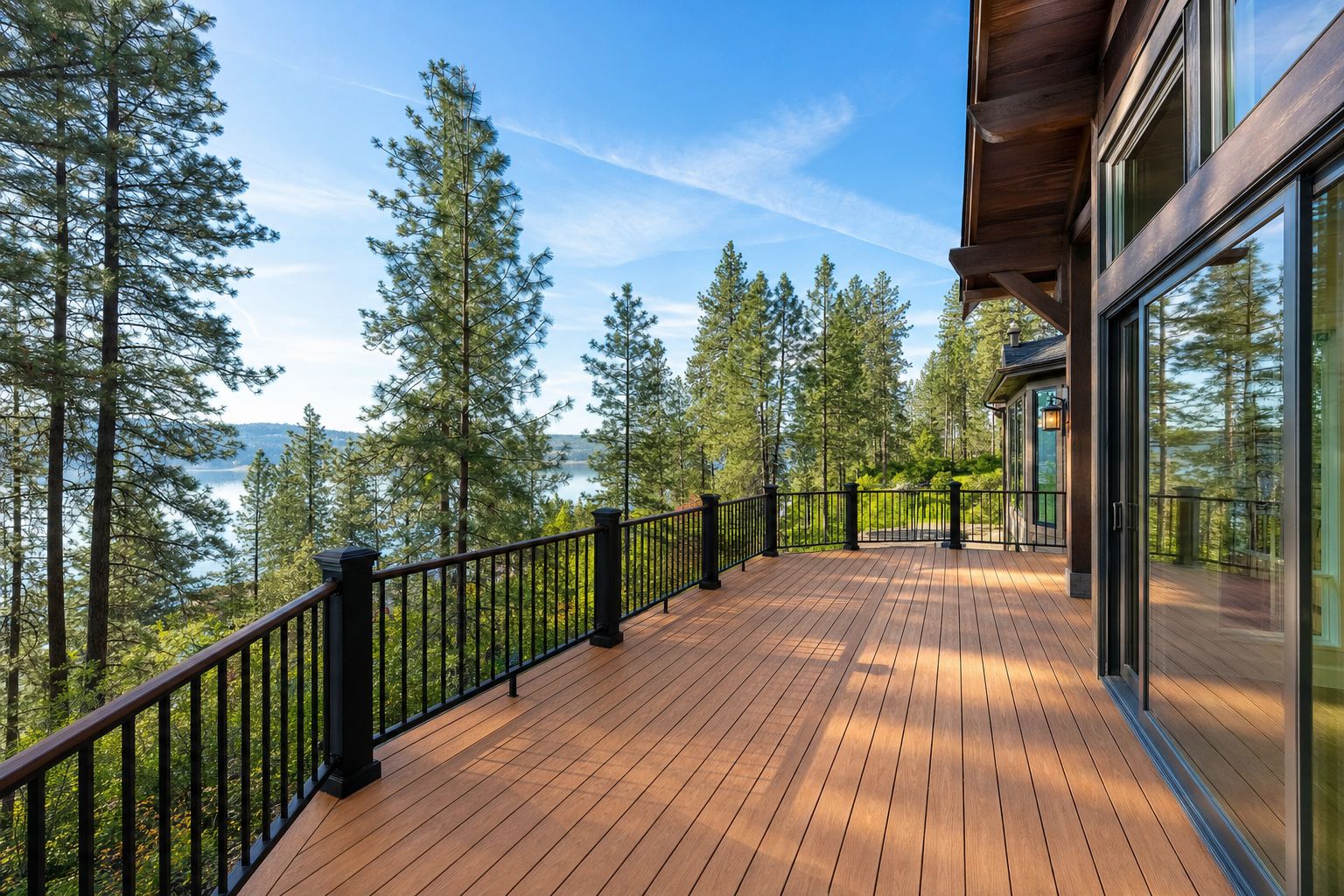
Two and three generations later, those same houses are still in the family or held by owners who've been in them for decades, and the yards have finally earned some leisure. A deck is the addition this generation makes — the first real outdoor room most of these homes have ever had. Domex Construction designs and builds custom decks across the Silver Valley under Idaho license RCE-66940, with free design estimates.
Putting a Deck on a House That Never Had One
Adding outdoor space to a modest home is its own discipline, and the first rule is proportion. A nine-hundred-square-foot house doesn't want a resort platform bolted to its back; it wants a deck scaled to the rooms it extends — often something in the twelve-by-sixteen range, placed where the door, the grade, and the afternoon sun agree. Right-sized costs less, looks like it belongs, and gets used more.
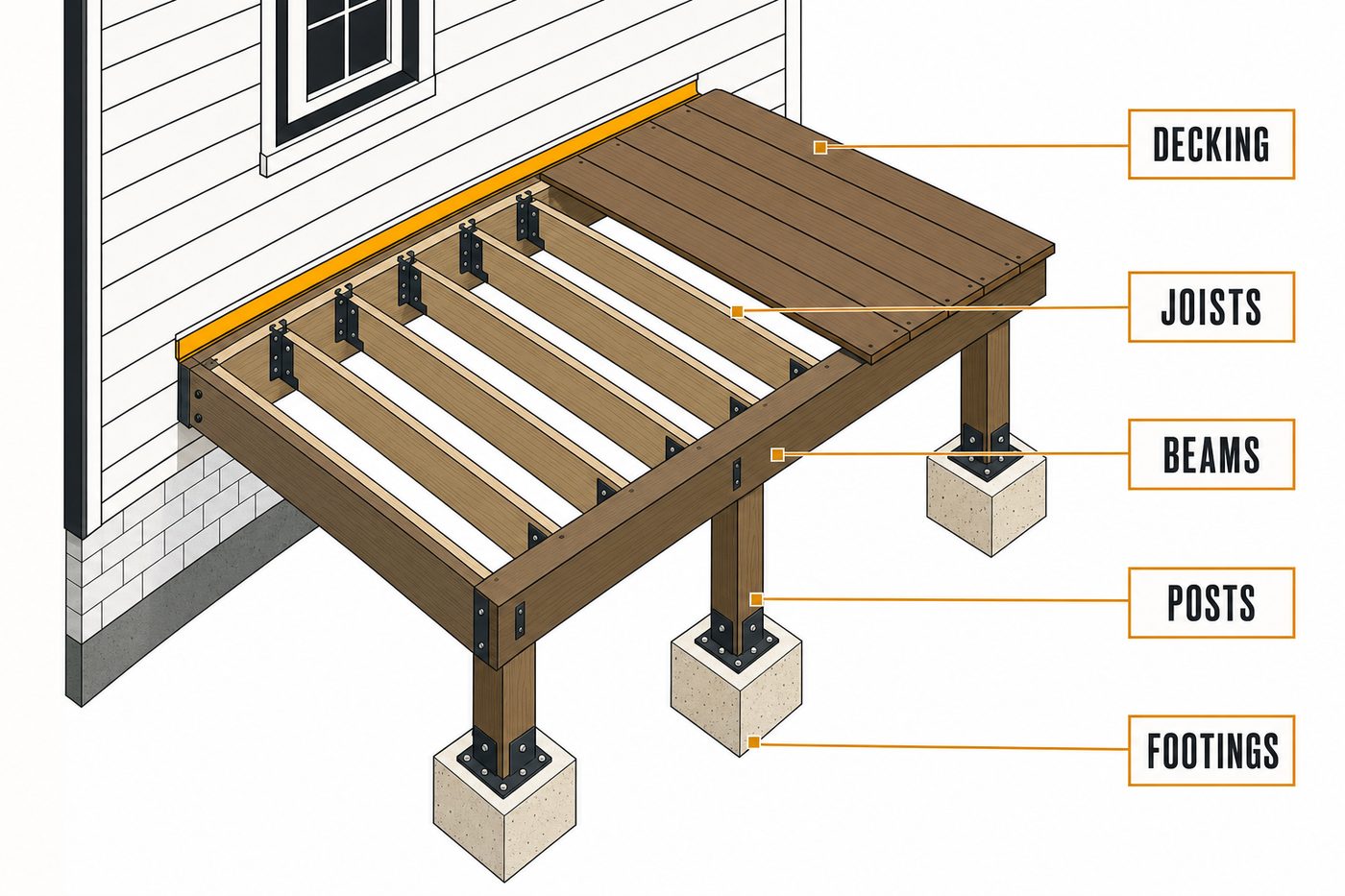
The second rule is respect for old framing. A deck ledger carries half the deck's weight into the house's rim board, and on a seventy- or hundred-year-old structure, that rim's condition is unknown until the siding comes open. We expose it, verify it, and bolt — never nail — the ledger through to sound structure, with flashing layered over the top so water sheds out instead of in. An unflashed or under-fastened ledger is the classic way a deck damages a house, and it's the detail we're most stubborn about. Where the rim turns out soft or the wall construction argues against it, we build the deck freestanding on its own posts, an honest solution that spares old walls entirely.
Framing for the Snow That Actually Falls
The Silver Valley gets real snow, and a deck holds every inch that lands on it plus whatever the roof sheds onto it. That drives the structure in ways a fair-weather deck design ignores.
Footings go below frost depth on undisturbed soil, sized for the loads above them — on Osburn's sloped lots, that sometimes means stepped or deepened footings on the downhill side. Beams and joists get sized for snow load, not just for people, and if the deck sits under an eave line that dumps roof snow, we design for that concentrated pile, because it can outweigh everything else on the structure. Joist spacing tightens further when composite decking is specified, since composite spans less stiffly than wood. Hardware — hangers, post bases, ledger bolts — is hot-dip galvanized or better, because a deck frame lives in splash and snowmelt for months a year. None of this shows when the deck is done. All of it decides whether the deck shrugs off February.
Decking for Owners Who Are Staying
People in Osburn build things to keep them, and decking is where that mindset pays off most clearly.
Wood is the lower first cost. Pressure-treated is sturdy and economical; cedar is prettier underfoot. Both demand a cleaning and re-staining cycle every couple of years — skip it, and valley conditions collect the debt with interest. Shaded yards along the valley floor grow moss and mildew on horizontal wood, and spring snowmelt keeps boards wet for weeks, so maintenance here is a genuine commitment rather than a footnote.
Composite decking costs more on day one and then mostly leaves you alone. No staining cycle, no splinters, color that holds, and a washing-off is the annual maintenance. Over a twenty-year ownership horizon — the normal horizon in this town — the cost gap narrows and often reverses, and you spend those twenty summers using the deck instead of refinishing it. We build the frame in treated lumber either way, use hidden fasteners where the product allows, and fit railings to the house: painted metal balusters keep sightlines open toward the hillsides, wood rails suit the older cottages.
What Changes the Number
Deck size drives the quote, but less linearly than people expect — footings, ledger work, and stairs are fixed chunks that don't shrink much with the deck. Height matters: a low deck near grade is simpler than one standing on tall posts over a walkout or slope, which adds structure and railing. Railing length itself is a bigger line item than most first-timers guess. Decking material moves the total in the wood-versus-composite way covered above. And on older homes, whatever we find at the rim board when the wall opens is the main contingency, which is why our written quotes state how that's handled before anything is signed.
Order of Operations
- Design visit. We look at the yard, the grade, the sun, the door locations, and the house's structure, then sketch options scaled to the home. Free.
- Written plan and permit. A drawn deck plan with framing spec and a fixed price; the building permit runs through the City of Osburn, and we file it.
- Footings and frame. Excavation, concrete, post-and-beam structure, and the ledger detail done slowly and correctly. The footing inspection happens here.
- Decking, stairs, and railing. The visible work goes fast once the bones are right.
- Final inspection and walkthrough. The city signs off, and then you do.
When Decks Get Built Here
Spring fills the calendar first — everyone wants the deck before summer — so booking in late winter gets the best slot. Fall is an underrated build window: the ground is workable, the schedule is looser, and the deck is ready and waiting when the snow melts. Deep winter mostly pauses concrete work, since footings need thawed, workable ground. Once footings cure, a typical Osburn-scale deck frames and finishes inside one to two weeks.
Deck Questions From the Valley
Do I need a permit to build a deck in Osburn?
Nearly always, yes — attached decks and anything of meaningful height are permitted and inspected through the City of Osburn. We handle the drawings, the filing, and the inspection scheduling.
Can you attach a deck to a 1950s (or 1910s) house?
Usually, once we've opened the wall and confirmed the rim board is sound. If it isn't, we either repair the rim as part of the job or build freestanding. What we won't do is lag a ledger blind into unknown wood.
Is composite really worth the extra money?
For an owner staying ten-plus years, our honest answer is usually yes — the maintenance cycle wood demands in a snowy, part-shaded valley is exactly the chore people stop doing, and neglected wood decking ages fast. For a tight budget, well-maintained pressure-treated is a respectable deck.
Do I have to shovel snow off it?
A properly engineered deck carries the valley's design snow load without help. Shoveling pathways for use is fine — use a plastic shovel and go with the boards — but the structure shouldn't depend on it.
Our back yard slopes. Is a deck still possible?
Yes, and it's often the best argument for one — a deck turns a slope you can't use into a flat surface you can. Sloped lots mean taller posts and stepped footings, which we engineer and price up front.
Can you build in the shoulder seasons?
Fall builds are some of our favorites. Even early winter works if footings go in before hard freeze; after that, we schedule the pour for thaw and frame from there.
How long from first call to finished deck?
Design and permitting typically take a few weeks, then one to two weeks of building. The longer variable is the calendar queue, which is why late-winter planning beats May planning.
We're also thinking about new siding — which comes first?
Siding first, or both together. The ledger flashing integrates best when the wall is open, and we do both trades, so combining them saves mobilization and gets the wall-to-deck joint perfect.
Built by a Licensed Valley Contractor
Domex Construction is licensed in Idaho (RCE-66940 — look us up through the Idaho Contractors Board) and Washington (DAVYDCI833NC), fully insured, with 9 years in business and 32 years of combined crew experience across exterior work. Decks, siding, and windows under one license means the connections between them get built right. Ask about our workmanship warranty at the design visit.
We build throughout the Silver Valley: Osburn, Kellogg, Wallace, Silverton, and the communities between them along I-90.
Your yard's been waiting a few generations. Free deck design estimates across the Silver Valley. Give us a call or request an estimate online.
More from Domex in Osburn: Siding Installation in Osburn · Window Replacement in Osburn · Custom Home Builder in Osburn · Custom Decks — Spokane hub