
Spirit Lake, Idaho Siding Contractors — Installation & Replacement
Siding contractors for Spirit Lake, ID: century-old townsite homes and prairie-edge builder houses alike. Hardie Preferred. Free estimates.
$1,000 Off
Your Complete Siding Replacement
Get a Free Estimate
FREE same-day estimates on all exterior projects.








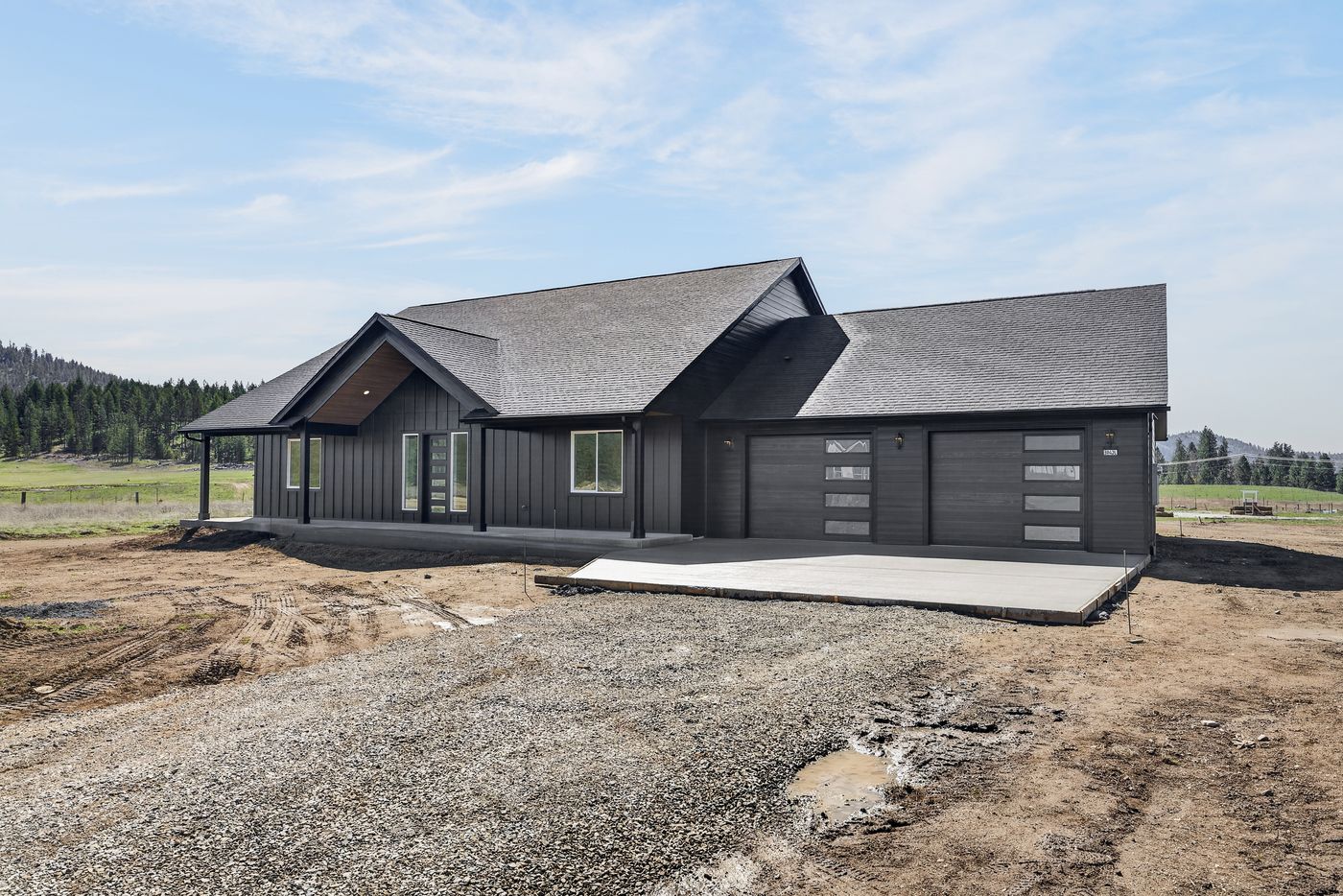
Two houses on the same Spirit Lake street can be a hundred and ten years apart. The townsite grid went in when the mill was still cutting timber, and its frame houses have been collecting siding layers ever since; the subdivisions filling the prairie edge south and east of town went up with vinyl at production speed. Those two walls need opposite things from a siding contractor. One is careful demolition first, installation second. The other is a clean swap — done, ideally, to a tighter standard than the builder's schedule allowed the first time.
Domex Construction re-sides both. We're a James Hardie Preferred Contractor that also installs LP SmartSide and vinyl, licensed in Idaho as RCE-66940, and Spirit Lake sits well inside the territory our crews run north of Post Falls. Estimates are free, and they start with figuring out which of those houses yours is.
Townsite Houses: Plan for What's Under the Vinyl
On the grid, the siding you can see is rarely the first siding the house wore. A typical tear-off runs backward through the decades — vinyl or steel from the eighties, hardboard from the sixties, and the original fir or cedar drop siding underneath, nailed straight to board sheathing. There's usually no house wrap anywhere in that stack — the product didn't exist when these walls went up.
Each layer preserved the problems of the one before it. Vinyl over old wood traps moisture against paint that was already failing. Board sheathing opens seasonal gaps that wind-driven snow finds. Sills and corner boards soften for decades with no outward sign. So we open walls before we price them — a few probe points at the usual failure spots tell us more than any drive-by — and our quotes carry rot-repair terms you can read before signing rather than negotiate in week two.
Prairie-Edge Vinyl Is Reaching Its Replacement Years
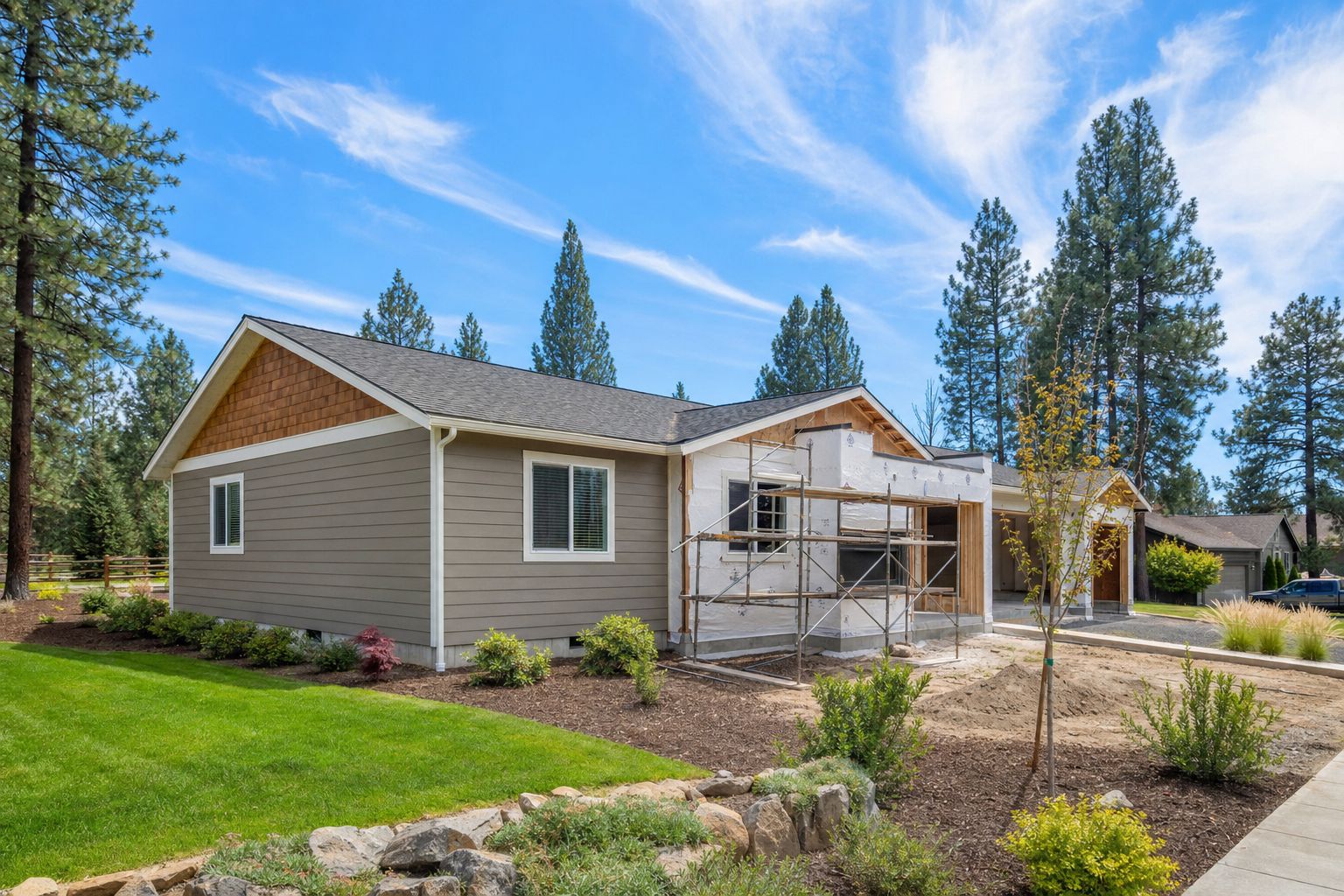
The newer half of town has a different file. Builder-grade vinyl from the 2000s and 2010s is hitting the age where wind off the Rathdrum Prairie starts unzipping panels at the laps, south walls fade unevenly, and cold snaps leave cracks at the nail hems. The wall behind it is modern — OSB, house wrap, flanged windows — so tear-off holds few surprises. What we do find is minimal flashing at openings — production schedules leaned on the window fin and a bead of caulk.
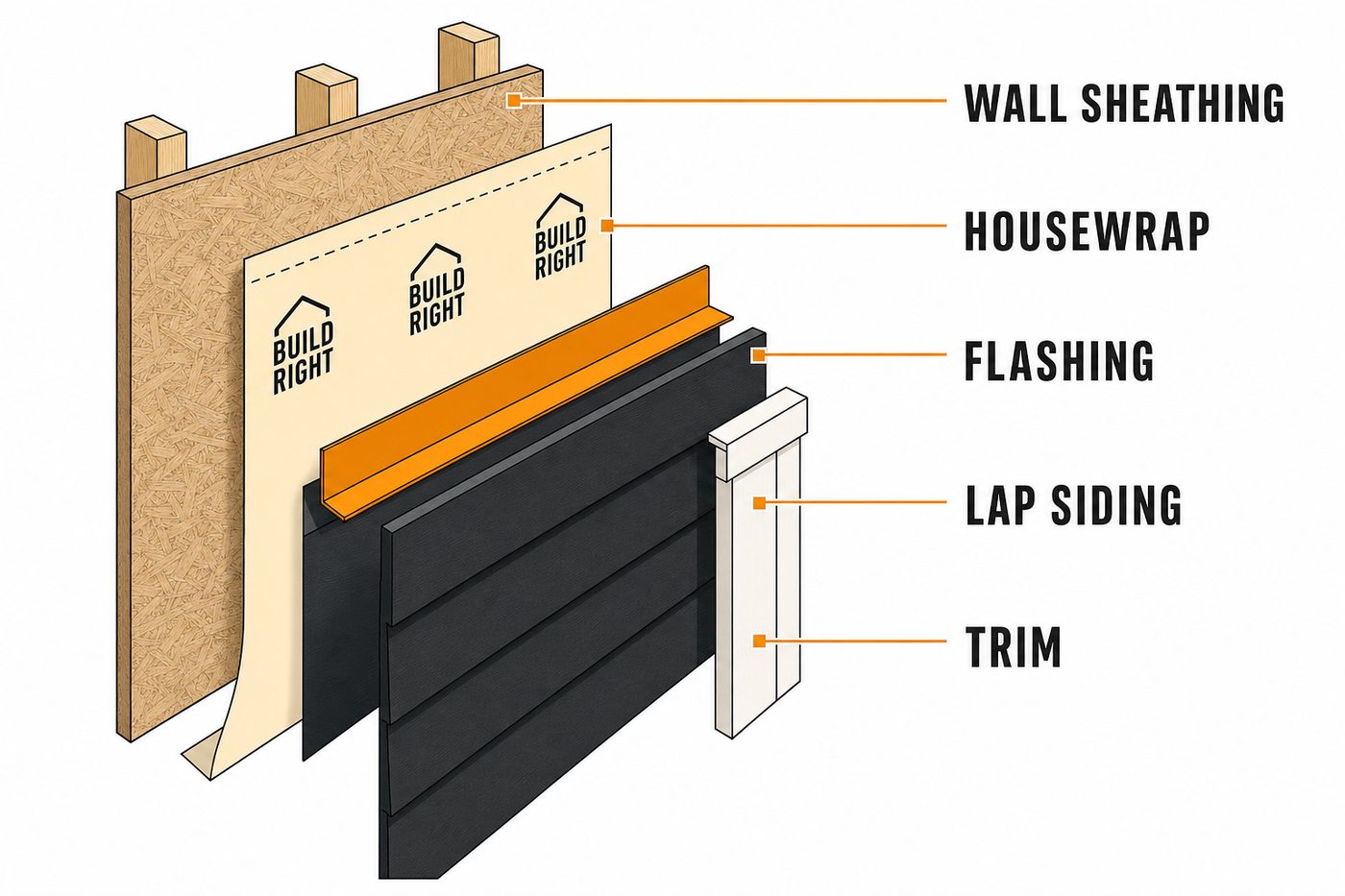
A re-side is the cheapest moment you'll ever have to correct that: with the skin off, head flashings, kick-outs, and proper wrap integration cost little to add, and they decide how the second round of siding ages.
Snow Sits Against These Walls Longer
Spirit Lake is snowier than Post Falls or Coeur d'Alene — the town sits higher, at the north edge of the prairie — and the plowed berms and roof-shed piles along a wall can stay put from December into March. Bottom courses spend that whole stretch wicking meltwater if the detailing lets them, and then the shoulder seasons freeze and thaw the same water dozens of times.
The fixes are unglamorous and specific: honest ground clearance under the first course, a water-table trim detail that sheds instead of shelving, downspouts that discharge away from the wall rather than beside it, and a bottom-of-wall material that doesn't absorb water in the first place. On estimates we look at where your roof dumps and where the plow piles before we talk color.
Matching the Material to the House
Townsite houses mostly argue for fiber cement. Hardie lap in a smooth or light-texture profile keeps the period proportions, carries ColorPlus factory color that holds up under UV bouncing off five months of snow, and doesn't wick the meltwater that killed the hardboard it replaces. LP SmartSide earns its spot on walls that take abuse — it absorbs ice sliding off a metal roof or a snowblower's gravel spray better than any cement board.
On the prairie edge, the honest conversation includes vinyl. A quality panel, properly flashed, is a legitimate like-for-like replacement at the lowest cost, and most Spirit Lake lots answer to no design board. Stepping up to LP or Hardie buys wind resistance, longevity, and a thicker shadow line. We price both paths in the same visit and say where we think the money is smart.
What Sets the Price
Layer count is the biggest variable on old-town work: every era of siding on the wall is labor coming off it, and disposal weight climbs with each one. Rot repair is second, which is why it's scoped in writing. On both housing stocks the number moves with wall area and stories, opening count — every window and door is a flashing assembly, not a hole — trim complexity, and material choice. In Spirit Lake's favor: the townsite grid has alleys and short setbacks, so access and staging rarely add the cost they do on rural acreage.
How the Season Shapes the Schedule
Summer and early fall fill first, so a spring estimate gets first pick of install dates. Most single-family re-sides run several days to two weeks on site, with layered tear-offs at the long end. Cold months are workable — cement board and engineered wood hang fine in freezing weather, while caulks and touch-up coatings have temperature floors we sequence around. Permits run through the City of Spirit Lake, and we build its inspection points into the schedule so you aren't managing that calendar.
Our Process
- Walkthrough and probing. We check the walls that worry us, note roof shed lines and plow zones, and tell you what we'd install and why.
- Written spec. Product, color, trim package, flashing details, and rot-repair terms — all on paper before you commit.
- Permitting. We file with the City of Spirit Lake and schedule around its inspections.
- Tear-off and correction. Old layers off, sheathing repaired, wrap and flashing detailed for a town where snow leans on walls for a season.
- Installation and walkaround. Manufacturer-spec fastening, sealed penetrations, full cleanup, and a wall-by-wall review with you.
Questions We Hear in Spirit Lake
My house has three layers of siding. Can you go over the top instead of tearing off?
We won't. Fasteners lose bite through stacked layers, flashing can't reach the openings properly, and the old layers may be exactly why the wall is wet.
Could there be asbestos in my old siding?
Some mid-century siding and backer materials contain it. We have suspect material tested before disturbing it — a known cost question, not a reason to abandon the project.
My vinyl is under twenty years old. Replace it or patch it?
If panels are unzipping in wind or cracking in cold, the material has gone brittle and patching becomes a subscription. One honest look tells us which side of that line you're on, and matching discontinued panel profiles is often impossible anyway.
Do I need a permit to re-side inside city limits?
Re-side work in town goes through the City of Spirit Lake. We handle the filing and the inspections as part of the contract.
What does the prairie wind mean for a siding choice?
It means fastening schedule matters as much as product. Vinyl needs correct hem engagement and room to move; lap products need nails placed and driven to spec. The wind failures we see are almost always installation errors, not material ones.
Can you install siding in a Spirit Lake winter?
Yes. Boards go up fine in the cold; sealants and coatings wait for their temperature windows, and we sequence the job accordingly. Winter booking usually means shorter lead times.
Does an old house really need house wrap added?
Yes — once the walls are open, a weather-resistive barrier is cheap insurance the house has lived without for a century.
You install windows too — should that happen at the same time?
If your windows are near the end of their run, combining the jobs gets you better flashing integration and one mobilization instead of two.
Licensed Work You Can Verify
Look us up before you call: Domex Construction holds Idaho registration RCE-66940, verifiable through the Idaho Contractors Board, plus Washington license DAVYDCI833NC, and we carry full insurance. Nine years in business, 32 years of combined crew experience, and a workmanship warranty we're happy to explain at the estimate.
From Spirit Lake we cover the surrounding towns — Twin Lakes, Rathdrum, Athol, and Blanchard — along with the lakeside homes on the west shore.
Want a straight answer on what's under your siding? Estimates are free anywhere in Spirit Lake. Give us a call or request an estimate online.
More from Domex in Spirit Lake: Window Replacement in Spirit Lake · Custom Decks in Spirit Lake · Custom Home Builder in Spirit Lake · Siding Installation — Spokane hub