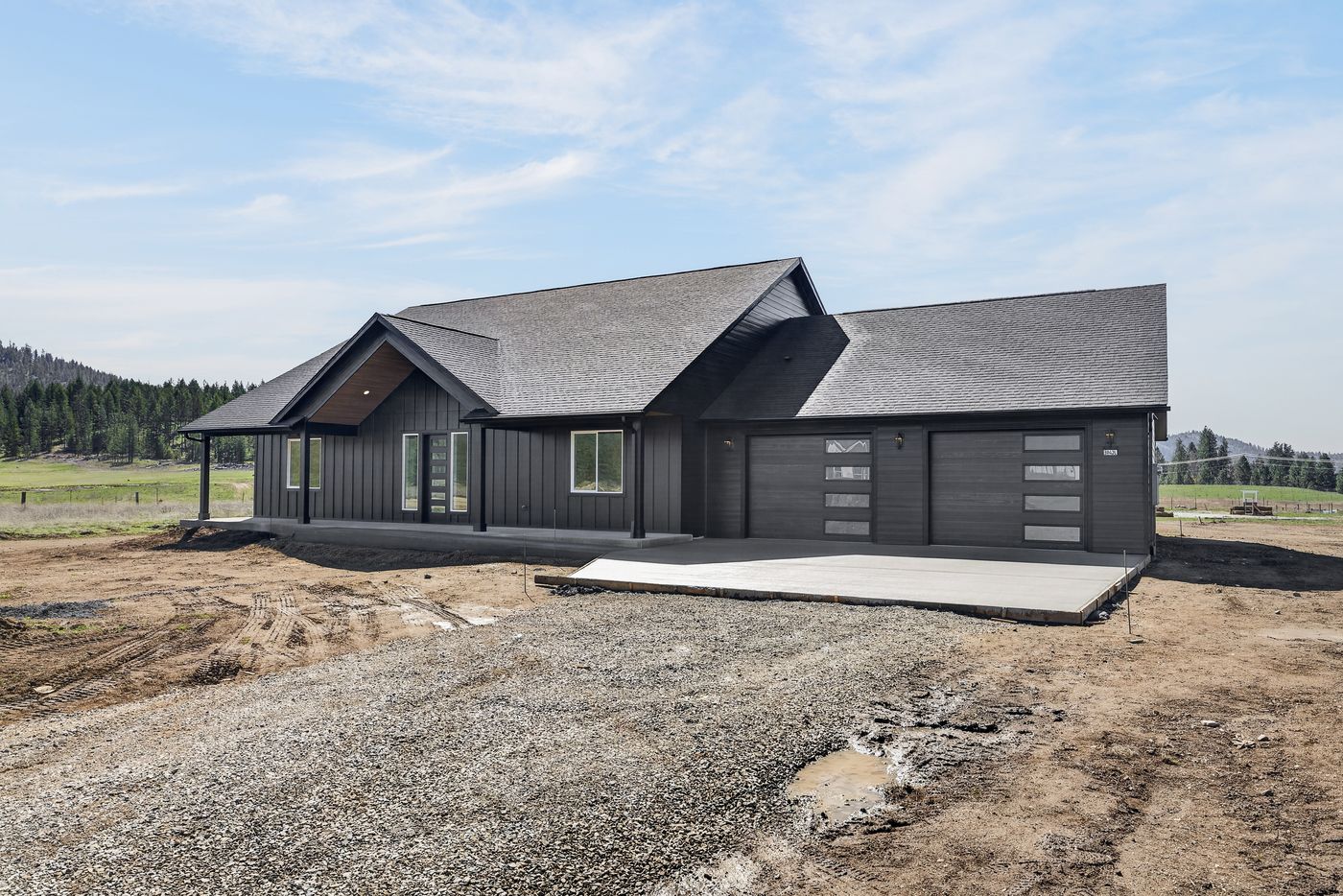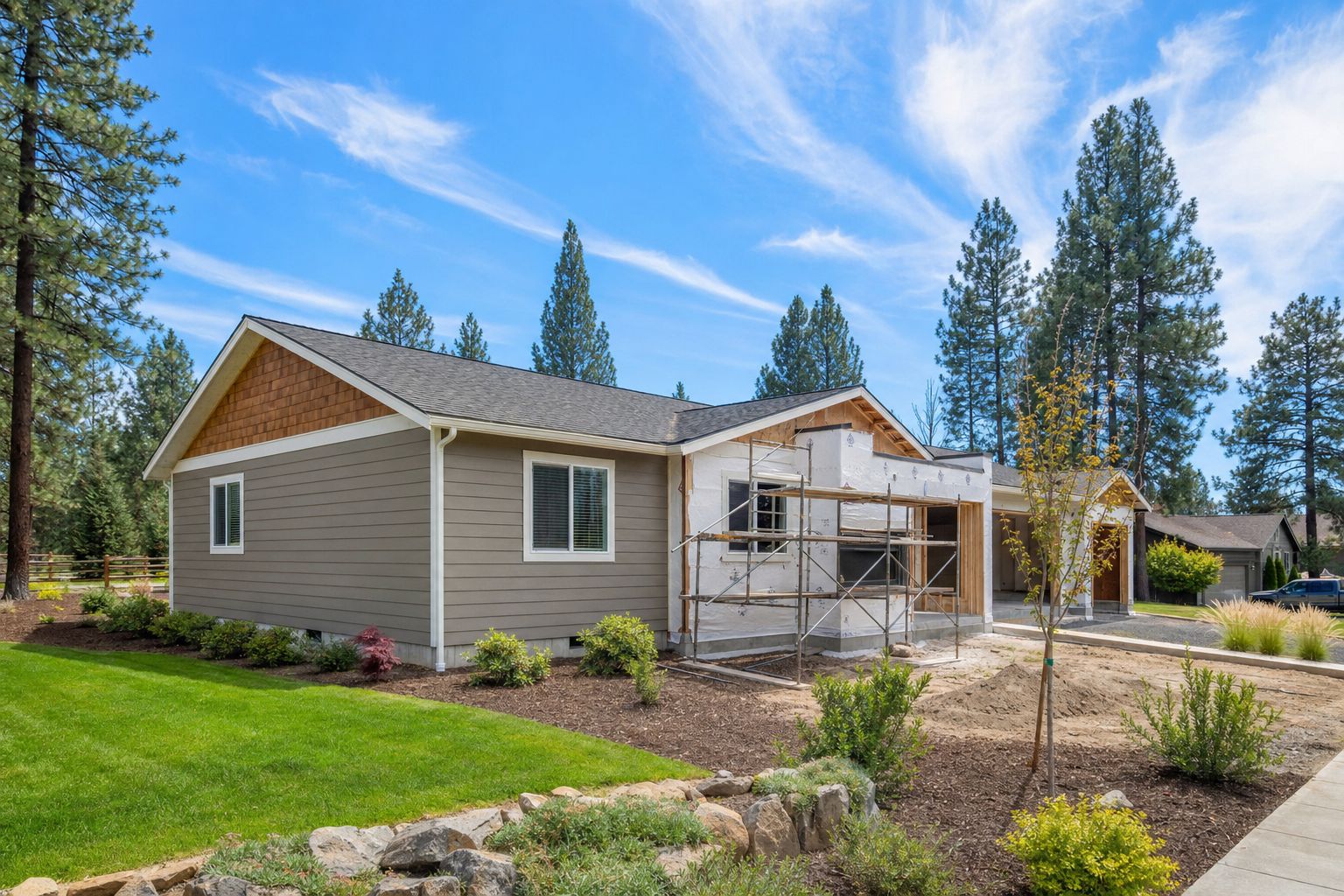

Siding Installation in Bonners Ferry, Idaho
Siding installation in Bonners Ferry & the Kootenai Valley by a Hardie Preferred contractor. Built for Boundary County winters. Free estimates.
$1,000 Off
Your Complete Siding Replacement
Get a Free Estimate
FREE same-day estimates on all exterior projects.








Bonners Ferry is a town built on a shelf. Downtown and the older neighborhoods sit on a bench above the Kootenai River, farm ground runs flat across the valley floor, and mountains press in from both sides — Selkirks west, Purcells east. The weather uses every piece of that terrain. Cold air drains off the ranges and pools in the valley, snow stacks on the bench and stays through the heart of winter, and wind crosses the open farmland with nothing to slow it before it reaches a wall.
Siding in Bonners Ferry has to answer for all of it. Domex Construction installs and replaces siding across Boundary County under Idaho license RCE-66940 — James Hardie fiber cement as a Hardie Preferred Contractor, LP SmartSide, and vinyl where it honestly fits. This is the northernmost town we serve, and our specs and scheduling reflect it.
The Coldest Corner Gets the Strictest Spec
Boundary County runs colder and holds snow longer than anywhere else on our route sheet, and that changes how we grade every product and detail. Freeze-thaw is a pry bar: water finds a joint, expands as it freezes, opens the joint wider, admits more water, and repeats — dozens of cycles through fall and spring, plus every midwinter thaw. A caulk line that would coast for years in Spokane gets worked hard here every winter.
So the spec tightens. Sealants get chosen for movement capability and realistic application temperatures, not just color match. Fastener schedules follow cold-climate guidance, because boards move more across a 100-degree annual swing. Cut edges on engineered wood get sealed the day they're cut. Fiber cement tops our recommendation list largely because it absorbs no meltwater and holds its dimensions when the thermometer dives — it has less to argue about with a Boundary County winter.
Hill Houses and Valley Farmhouses
Two housing populations meet in Bonners Ferry, and they fail differently.
On the hill above downtown, the older frame houses carry their history on their walls: original wood siding, sometimes hardboard or vinyl layered over it, plank sheathing underneath, and little or no weather barrier in the stack. A century of settling means openings that are no longer square, so trim and flashing become custom work at every window. We probe these walls during the estimate and write substrate-repair contingency terms into the contract — on houses like these, finding rot mid-tear-off is the norm, and pricing as if it isn't is a disservice.
Down in the valley, most farmhouses have been added onto across generations — a kitchen bumped out, a porch enclosed, a mudroom grafted on — and every seam between building eras is a place water learns to find. Wind is the second factor: with open fields on all sides, snow drives horizontally and packs against north and east walls. Newer homes from the recent wave of in-migration have their own pattern — some went up fast, and thin builder-grade cladding is already showing what this climate thinks of it.
Snow Against the Wall
Managing where snow ends up is half of siding design this far north. Steep metal roofs shed their load in slides that pile against lower additions and porches, and those piles sit against the bottom courses for months, wicking meltwater by day and freezing by night. We plan for that: bottom-course clearances set above realistic packed-snow height rather than the code minimum alone, kickout flashing wherever a roofline dies into a wall, and drainage details that carry meltwater down and out instead of letting it refreeze behind the cladding. On walls that catch a shed zone, we may recommend a wainscot of tougher material or regrading before a single board goes up.
Materials We'd Put on a Boundary County House
James Hardie fiber cement is our lead recommendation for most walls here. It takes on no meltwater, holds its dimensions through deep cold, and the ColorPlus factory finish stands up to the doubled UV load of sun bouncing off snowpack for five months. As a Hardie Preferred Contractor we install it to the letter of the manufacturer spec, which keeps the warranty meaningful.
LP SmartSide wins on impact. Ice shedding off a metal roof, gravel thrown by a county plow, the ordinary bumps of working farmland close to the house — engineered wood absorbs hits that crack other claddings. Its long board lengths also suit big, simple farmhouse gables, meaning fewer seams. The discipline it demands is edge-sealing every field cut, and we bring exactly that.
Vinyl costs the least and we install it well, but we're direct about its limits at this latitude: it turns brittle in deep cold, so a January impact a Spokane wall would shrug off can crack a panel here, and it must hang loose enough to move through the temperature swing. On a rental or a tight budget it can still be the sensible call — we'll say so when it is.
What Sets the Number on a Re-Side
Wall area and story count set the baseline. From there, the variables that move a Bonners Ferry quote are tear-off depth (one layer or three), substrate repair on older hill houses — written as a contingency line, not a mid-job surprise — trim and opening complexity, and the material and finish you choose. Distance matters less than people expect: Boundary County work runs as committed multi-day crew blocks, so mobilization is planned once instead of billed as daily travel. We quote a fixed price after walking the house, never off a satellite photo.
When the Crew Comes North
Honesty about scheduling: Bonners Ferry is the far north end of our range, and we don't send a crew up for a half day. Jobs here run as dedicated blocks — the crew arrives, stays on your project through completion, and isn't splitting the week with a job in Post Falls. That structure is better for the work, but it means the calendar is planned around season. Exterior finish work has temperature floors, and the best summer and early-fall windows go to homeowners who booked in spring. Call in April and you'll have real choices; call in August and we'll be honest about what's left.
From Estimate to Final Walkaround
- Site walkthrough. We walk every wall, probe suspect areas, note where the roof sheds and snow piles, and talk material options against your budget. Free and on-site.
- Written spec. Product line, color, trim package, flashing details, and substrate-repair contingency terms — on paper before you sign.
- Permits. Inside city limits, the permit runs through the City of Bonners Ferry; rural parcels go through Boundary County. We file with the right office either way.
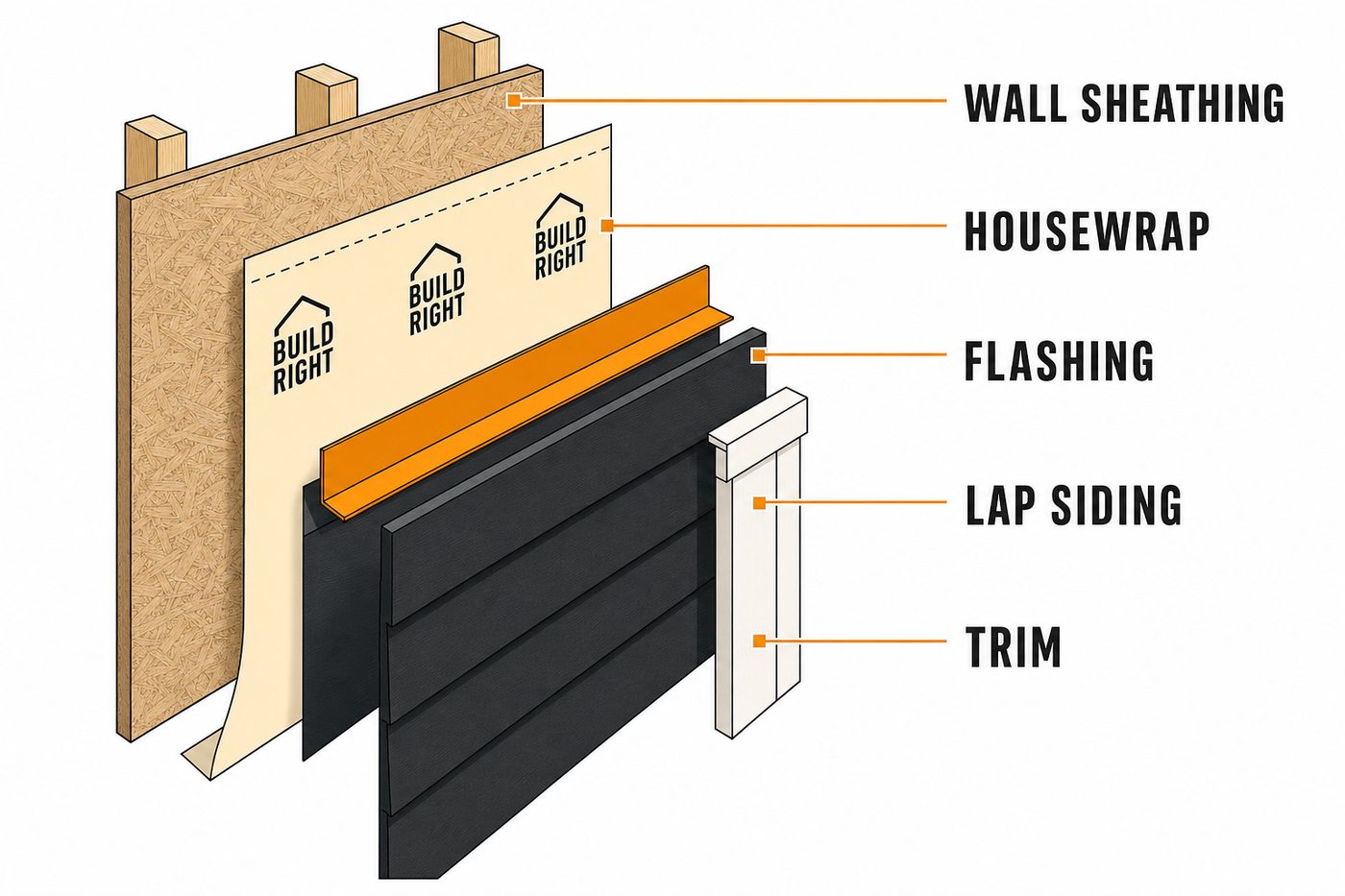
- Tear-off and correction. Old layers off, sheathing repaired, wrap and flashing detailed for snow-country drainage. This stage is most of what you're paying for.
- Installation and walkaround. Boards hung to manufacturer spec, penetrations sealed, site cleaned, and a wall-by-wall review with you before the crew heads south.
Siding Questions From Boundary County
Do you really send crews all the way to Bonners Ferry?
Yes. North jobs run as committed multi-day blocks planned around the season, so your project gets a dedicated crew for its full duration — not leftover days between closer jobs.
Which permit office does my project go through?
Inside city limits, the City of Bonners Ferry; rural and valley parcels go through Boundary County. We handle filing and inspections for both.
What siding handles the cold best?
Fiber cement — it doesn't absorb meltwater or move with temperature, which takes freeze-thaw mostly out of the equation. LP SmartSide is close behind and beats it on impact.
Can siding go on in winter here?
The boards can. Caulking and coatings have temperature minimums, so we sequence those into warm windows. Winter booking often means shorter lead times.
My farmhouse has additions from three different decades. Is that a problem?
It's normal here. Unifying substrate, wrap, and flashing across the seams between eras is what makes new siding perform as one wall.
Can you side over my existing siding?
We almost always advise against it. Layering hides the substrate problems older Bonners Ferry homes are prone to and robs flashing depth at every opening.
Should windows be replaced during the re-side?
If yours are close to needing it, yes — integrating window flashing with new wrap is cleaner done as one project, and we install windows too.
How long will the new siding last this far north?
Installed to spec, fiber cement and engineered wood are both 30-year-class materials even in Boundary County snow. Early failures almost always trace to installation shortcuts, not the material.
License, Insurance, and Range
Domex Construction holds Idaho license RCE-66940 — verifiable through the Idaho Contractors Board — plus Washington license DAVYDCI833NC, and is fully insured. Ask about our workmanship warranty at your estimate. From Bonners Ferry we cover Moyie Springs, Naples, the farms of the Kootenai Valley, and everything south along Highway 95 to Sandpoint.
Want walls ready before the next hard freeze? Free on-site estimates across Boundary County. Give us a call or request an estimate online.
More from Domex in Bonners Ferry: Window Replacement in Bonners Ferry · Custom Decks in Bonners Ferry · Custom Home Builder in Bonners Ferry · Siding Installation — Spokane hub