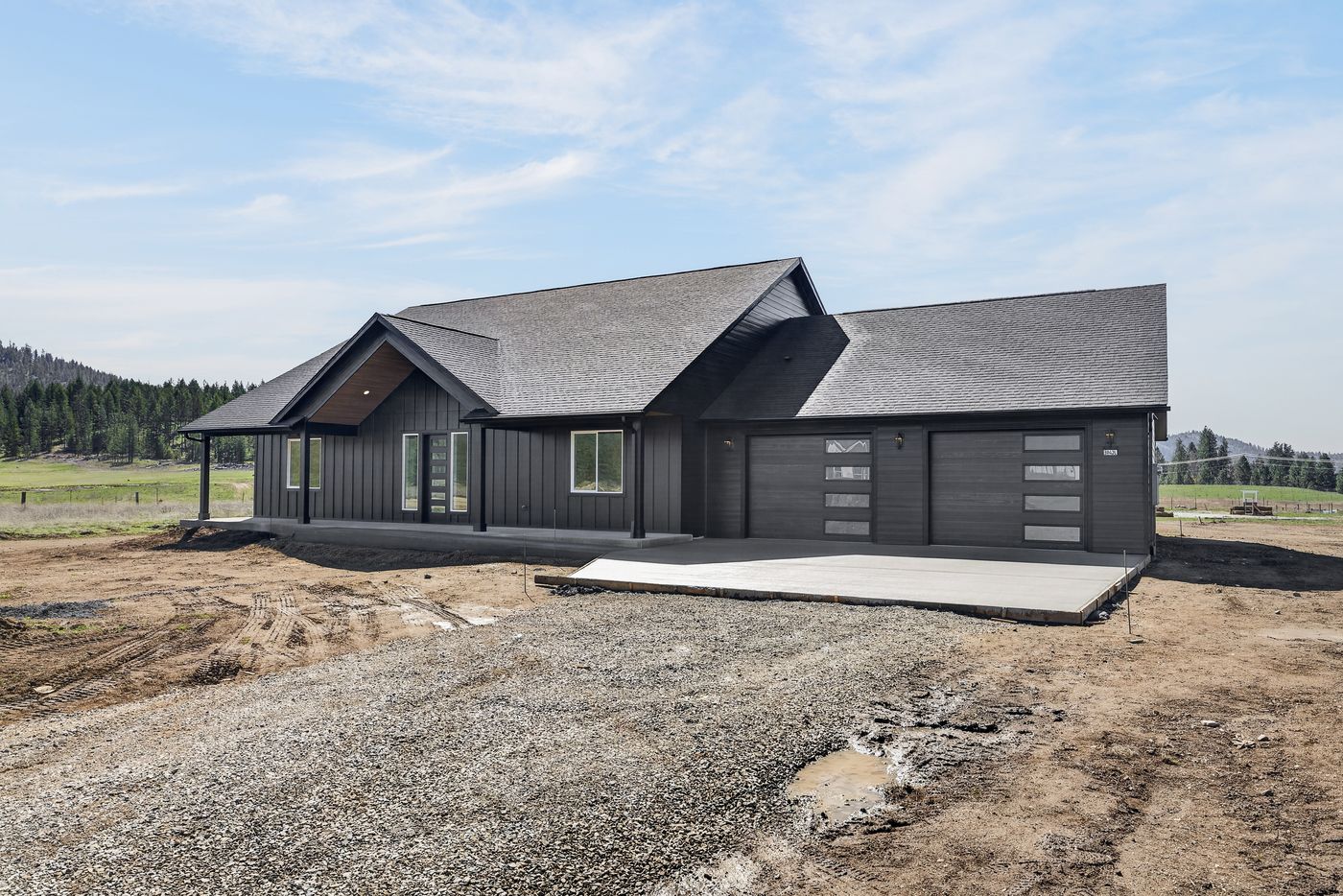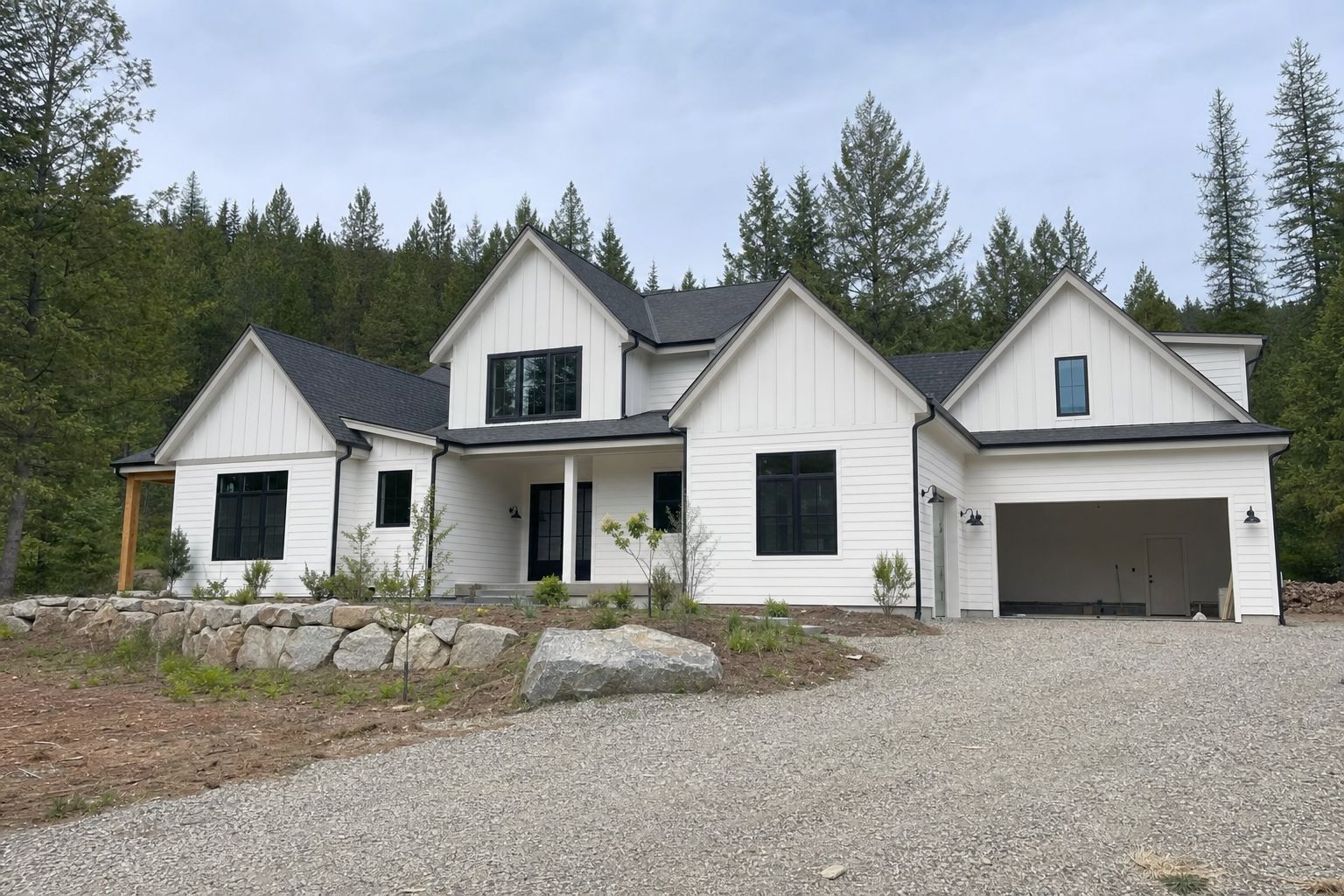

Custom Home Builder in Bonners Ferry, Idaho
Custom homes in Bonners Ferry and Boundary County: roofs designed for load and shedding, heating for long winters, valley or hill lots. Free consultation.
$1,000 Off
Your Complete Siding Replacement
Get a Free Estimate
FREE same-day estimates on all exterior projects.


On a Bonners Ferry house, the roof gets designed before the floor plan is finished. Where the snow goes when it slides off decides where the front door can go, where the deck can sit, and where the propane tank and the electric meter belong. Get it wrong and the house dumps a roof's worth of snow onto the one path everybody uses, every winter.
Domex Construction builds custom homes in Bonners Ferry and across Boundary County under Idaho registration RCE-66940. Design-build clients sit down with us to shape the house, and we hire the architectural and structural help it needs; build-to-plan clients bring their drawings, and we check them for snow load and local fit before bidding. This is the northern end of our range and the deepest snow country we serve, so crews work here in committed blocks of days around a shorter building season. Nine years in business, 32 years of combined crew experience, fully insured.
Where the Roof Puts Its Snow
Carrying the load. Roof framing is engineered to the design snow load for your specific site, confirmed with the building department at permit, since the number climbs with elevation. That sizes the trusses or rafters, the headers, and the load path down to the footings.
Choosing to shed or to hold. A steep metal roof sheds snow in slides; a lower-pitch roof with snow retention holds it until it melts. Both work. A roof that does some of each by accident doesn't, so we choose plane by plane.
Deciding where slides land. Entries go on gable ends or under a sheltering roof, not under an eave that sheds. Garage doors, decks, walkways, the propane tank, meters, and heating vents stay out of landing zones. Where a slide can't be avoided, snow guards hold it, or the landing area gets a gravel dripline and siding tough enough for impact. Our siding page covers the cladding side of that.
Keeping the shape simple. Every valley and dormer concentrates snow and meltwater in one spot. Simple planes carry load evenly and shed predictably. Plumbing vents and chimneys go near the ridge, where a slide won't shear them off.
Stopping ice dams at the ceiling. Ice dams start with house heat leaking into the attic and melting snow from underneath. Air sealing the ceiling, deep insulation, and proper roof ventilation keep the roof deck cold so snow melts from the sun, not from the furnace.
Heating a House Through a Long Boundary County Winter
The heating season here runs long, so the house should be tight and well insulated before anyone picks a furnace. Idaho's energy code sets a baseline, and going past it (more insulation, careful air sealing, good windows) costs less during construction than the extra fuel you'd burn every winter for decades.
Common heat sources include a cold-climate heat pump with backup, a propane furnace, radiant slab heat, and a wood stove. Rural power lines go down in storms, so we plan for a heat source that doesn't need the grid, or at least a generator hookup that keeps the essentials running. Mechanical rooms and water lines stay inside the heated envelope, off exterior walls. South glass pulls in winter sun; north walls get fewer, smaller windows.
Kootenai Valley Flats or a Hillside Parcel
Parcels around town come in two kinds. The valley floor along the Kootenai River is flat, easy to reach, and good for a shop, but much of it is old river floodplain farmed behind dikes. That means pulling the flood maps and digging to see how wet the ground gets before settling on a foundation, and often raising the finished floor or using a crawlspace instead of a full basement. Open fields also let wind drift snow across driveways, which affects where the garage goes.
The hills and benches above the valley trade flat ground for views and better drainage. They bring slopes, longer driveways, rock close to the surface in places, and wells whose depth is anyone's guess until they're drilled. Outside town, septic goes through Panhandle Health District and building permits through Boundary County; inside town limits, the City of Bonners Ferry handles permits. On remote parcels, bringing in power and building a driveway that can carry a concrete truck come first.
Featured Nearby Project
[PROJECT PLACEHOLDER: replace with a real completed Domex project near Bonners Ferry: photos, plans/spec, neighborhood, year. Do not publish this page without one.]
How a Boundary County Build Comes Together
- Site walk in any season. We look at the parcel, slope, access, floodplain questions, and where winter wind and roof slides would put snow.
- Roof-first design. Roof form, shedding plan, and heating strategy settled early, then the floor plan built under them, with engineering for the structure.
- Permits and approvals. City of Bonners Ferry or Boundary County for the building permit, Panhandle Health District for septic, and a well drilled by a licensed driller.
- Site work in the thaw. Power, driveway, excavation, and foundation once the ground opens, timed to get the shell closed before snow.
- Build and hand over. Framing, roof, envelope, and systems, inspections passed, and a walkthrough that includes how your roof and heating are meant to work in January.
Snow Country Build Questions
Metal roof or shingles?
Metal is common here because it sheds cleanly and lasts, but it has to be planned so slides land in safe places. Shingles hold snow longer and need a structure sized for that. Either is fine if the design commits to it.
Should my roof have snow guards?
Over entries, walkways, decks, and anything that can't take a slide, yes. On planes that can shed onto open ground, letting snow come off is often the better choice.
What's the best heat for a rural house out here?
No single answer. Our usual advice: a main system sized for a tight house, plus backup heat that works in a power outage.
Is the valley floor a good place to build?
It can be, with homework. Floodplain status, the water table, and wind exposure get checked first, and the foundation design follows from them.
How do you schedule this far north?
Design and permits over the winter, site work once the ground allows, and a crew block reserved so your job runs without gaps.
Licensed for Boundary County and the Road South
Domex Construction holds Idaho registration RCE-66940, which the Idaho Contractors Board can confirm, plus Washington license DAVYDCI833NC, and carries full insurance. Ask about our workmanship warranty at the site walk. From Bonners Ferry we also build in Moyie Springs, Naples, Copeland, and south toward Sandpoint.
If you've got land in Boundary County and want a house that works in February, call us or request a free consultation online. Winter is a good time to start the design.
More from Domex in Bonners Ferry: Siding Installation in Bonners Ferry · Window Replacement in Bonners Ferry · Custom Decks in Bonners Ferry · Custom Home Builder: Spokane hub