
Window Replacement in Nine Mile Falls, Washington
Window replacement in Nine Mile Falls, WA: view walls, low-E glass, full-frame installs on older river homes. Licensed WA contractor. Free estimates.
$1,000 Off
Your Complete Siding Replacement
Get a Free Estimate
FREE same-day estimates on all exterior projects.








Stand in a living room anywhere along this stretch of river and the first thing you notice isn't the room — it's the water. Houses in Nine Mile Falls are aimed at the Spokane River and Lake Spokane the way houses elsewhere are aimed at the street, and the glass is the whole point of the floor plan. Which is exactly why the most common call we get here starts the same way: the view has gone milky. A haze between the panes that no amount of cleaning touches, worst in morning light, sometimes with a tide line of mineral spots where trapped condensation has dried and re-formed for years.
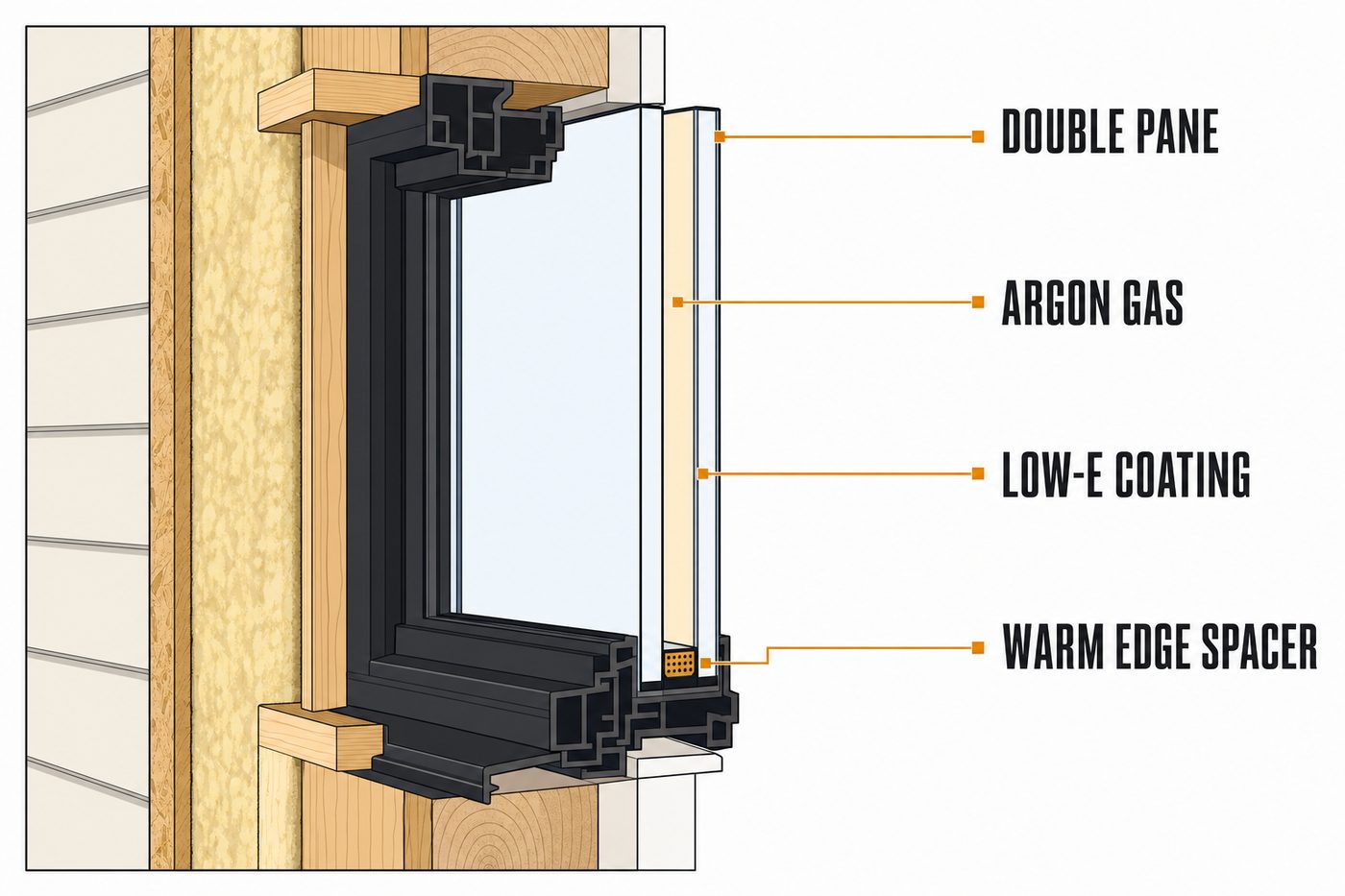
That haze is a failed seal. Insulated glass is two panes with a sealed, gas-filled gap; once the perimeter seal gives out, the argon is gone, humid air cycles through, and moisture condenses inside where no rag can reach. The insulation value drops with it, but for most homeowners it's the fogged view that finally makes the phone ring. Domex Construction replaces windows throughout Nine Mile Falls and Suncrest under Washington license DAVYDCI833NC — and on this corridor, the view walls are where we start the conversation.
Replacing a View Wall
Big water-facing openings are their own category of window work. A wall of mulled picture units and sliders is carrying structural load paths, wind exposure off the canyon, and afternoon sun amplified by reflection from the lake — all at once — and the replacement has to answer each of those.
Glass selection is the interesting part. Low-E coatings are microscopically thin metallic layers that reflect heat, and they come in grades: the aggressive ones knock down solar gain hard, the milder ones let more warmth and light through. A west- or southwest-facing view wall here takes serious afternoon heat load off the water in July, which argues for stronger coatings — but this is also a heating climate where free winter sun through big glass is worth real money, and the heaviest coatings shave visible light from the very view you built the wall for. We size the coating to the orientation rather than ordering one glass package for the whole house — firmer control on hot exposures, higher transmission where winter gain and clarity matter. Tempered glass goes wherever code requires it near doors and floors, which on big low-sill view units is often.
Frames matter at this scale too. Large spans flex in canyon wind, so we steer view walls toward stiffer frame materials — fiberglass and well-built vinyl lines rated for the span — and mull units to the manufacturer's engineering rather than site-improvised joins — mull joints are where leaks start on amateur installs.
The Windows the Decades Left Behind
Away from the view walls, the housing stock sets the agenda. The older river cottages still carry single-pane wood sash — charming, drafty, and often sitting in sills that decades of damp have softened. Where the frame wood is sound, an insert replacement can preserve the original trim. Where a screwdriver sinks into the sill, inserts would just entomb the rot, and a full-frame replacement — pulling the window back to the rough opening, repairing the wood, re-flashing — is the honest fix.
The 1970s and 80s left aluminum sliders through the mid-slope neighborhoods. Aluminum conducts heat so well that the frames themselves frost up on cold mornings, and the interior condensation people blame on "cheap glass" is often really the frame acting as a radiator to the outdoors. The 1990s builder-grade vinyl toward Suncrest is now hitting the age where seals fail in batches — you replace one fogged unit and three more go cloudy over the next couple of winters. On those homes we usually price both paths: the fogged units now, or the whole set in one mobilization at a better per-window number.
Why the Draws Run Cold
Nine Mile Falls terrain folds into shaded draws where cold air pools and winter sun never quite reaches, and the houses tucked into them behave differently from the houses on open ground above. North-facing rooms in a draw run noticeably colder than the rest of the house, glass sweats heavily on winter mornings, and frost lingers on frames long after the ridge lots have thawed.
Window selection can push back on that. U-factor — the rate a whole window loses heat — matters more than solar coatings on those elevations, so we spec the better-insulated frame and glass combinations there. Warm-edge spacers between the panes keep the glass perimeter warmer, which is precisely where condensation forms first. And fresh weatherstripping ends the moving-air drafts that old sliders in a cold draw practically whistle through. Bedroom windows in these older homes also have to meet egress sizing when they're replaced full-frame — a code point we handle in design rather than discovering at inspection.
How a Window Job Runs
- Measure and assess. We check every opening for frame rot and squareness, note orientations, and recommend insert or full-frame per window — most houses here need a mix.
- Spec and order. Glass packages by exposure, frame material, grid and color choices, all written up with a fixed price. Manufacturing lead time starts here.
- Permits handled. Nine Mile Falls is unincorporated; the permit comes from Spokane County or Stevens County depending on which side of the line your parcel sits. Filing it is our job.
- Installation. Openings are done one at a time so the house is never standing open — old unit out, opening prepped or repaired, new unit set, insulated, flashed, and sealed the same day.
- Finish and check. Interior trim or returns finished, every sash and lock operated with you, stickers off, glass cleaned.
What the Estimate Prices
Window count leads, but size and glass do more than people expect: big view units cost multiples of a bedroom window, and tempered or laminated glass adds to any opening that requires it. Full-frame work costs more than inserts because it includes carpentry and flashing, not just a unit swap. Frame material moves the number — aluminum-clad and fiberglass above vinyl. Access counts on this terrain; setting a heavy picture unit on a second story that stands over a slope takes equipment and hands a flat lot doesn't. Every one of those shows as a line item in the written quote.
Ordering, Lead Times, and Seasons
The wait is mostly manufacturing, not us — custom-sized units typically take weeks from order to delivery, and oversized or specialty glass takes longer. The installation itself is quick: one to three days for most homes, longer only for full-frame work across many openings. Winter replacement is routine because of the one-opening-at-a-time method; each room is exposed for under an hour. If you want new glass before the summer view season, the order date matters far more than the install date.
Window Questions, Answered
Can you fix a fogged window without replacing the whole unit?
Often, yes — if the frame is sound, the insulated glass unit can be swapped inside the existing sash. When frames are aluminum or the vinyl has warped, replacement is the better spend, and we'll tell you which case is yours.
What glass handles glare off the lake?
Low-E coatings tame heat more than glare. For true glare relief you're choosing tints or shading strategies, and we'd rather explain the trade-offs against view clarity than sell you a darker window you'll regret.
Do new windows need a permit out here?
Replacement work in unincorporated Nine Mile Falls goes through the county, and which county depends on your parcel. We confirm it and file — you don't touch the paperwork.
Insert or full-frame — how do we know?
The wood decides. Sound frames take inserts and keep your trim; soft sills and water-stained framing call for full-frame so the rot gets repaired instead of hidden. We probe every opening during the measure.
Why do my windows sweat every winter morning?
Interior condensation means humid indoor air is meeting a cold surface — usually old frames and glass with poor insulating value. Better U-factor and warm-edge spacers raise the surface temperature, and on most projects the morning sweating simply stops.
How disruptive is the install?
Each opening is exposed for well under an hour, floors and furniture are protected, and we're typically out of an average house in a day or two. You can live at home throughout, winter included.
The License Behind the Work
Domex Construction is licensed in Washington — DAVYDCI833NC, checkable through the state L&I contractor lookup — and carries Idaho license RCE-66940 plus full insurance, with nine years in business and 32 years of combined field experience. Ask about the workmanship warranty when we visit. Our window crews cover Nine Mile Falls, Suncrest, Tumtum, Ford, Seven Mile, and northwest Spokane on regular routes.
Ready to see the river clearly again? In-home estimates are free throughout Nine Mile Falls. Give us a call or request an estimate online.
More from Domex in Nine Mile Falls: Siding Installation in Nine Mile Falls · Custom Decks in Nine Mile Falls · Custom Home Builder in Nine Mile Falls · Window Replacement — Spokane hub