
Custom Deck Builders in Pullman, Washington
Custom deck builders in Pullman, WA. Hillside framing, code-right railings, wind-smart design for the Palouse. Free estimates from a licensed contractor.
$1,000 Off
Your Complete Siding Replacement
Get a Free Estimate
FREE same-day estimates on all exterior projects.








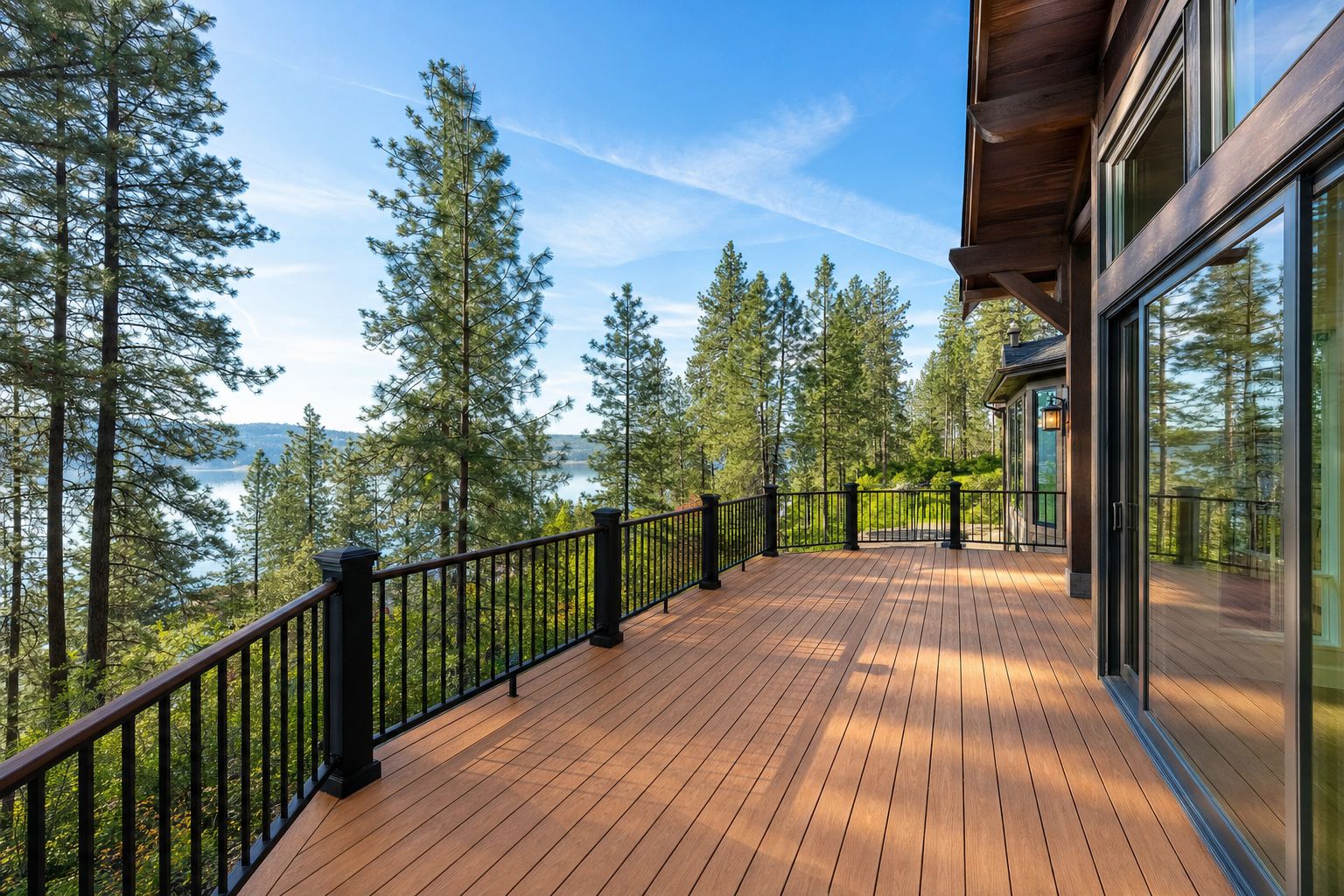
A flat backyard is the one thing most Pullman lots didn't come with. Build on College Hill, Military Hill, Pioneer, or Sunnyside and the ground behind the house usually falls away — sometimes gently, often not — which means the usable outdoor space a buyer pictured never quite existed at ground level. A deck is how that space gets manufactured. Done right on a slope, it hands you the level square footage the lot withheld, with a view across the Palouse thrown in. Done wrong, it's a wobbly platform on undersized posts that every guest can feel move.
Domex Construction builds decks across Pullman's hills under Washington license DAVYDCI833NC, from straightforward rental replacements to multi-level family decks engineered down a grade. Slope framing is the core skill this market demands, so that's the first thing this page explains.
Structure Comes Before Everything on a Slope
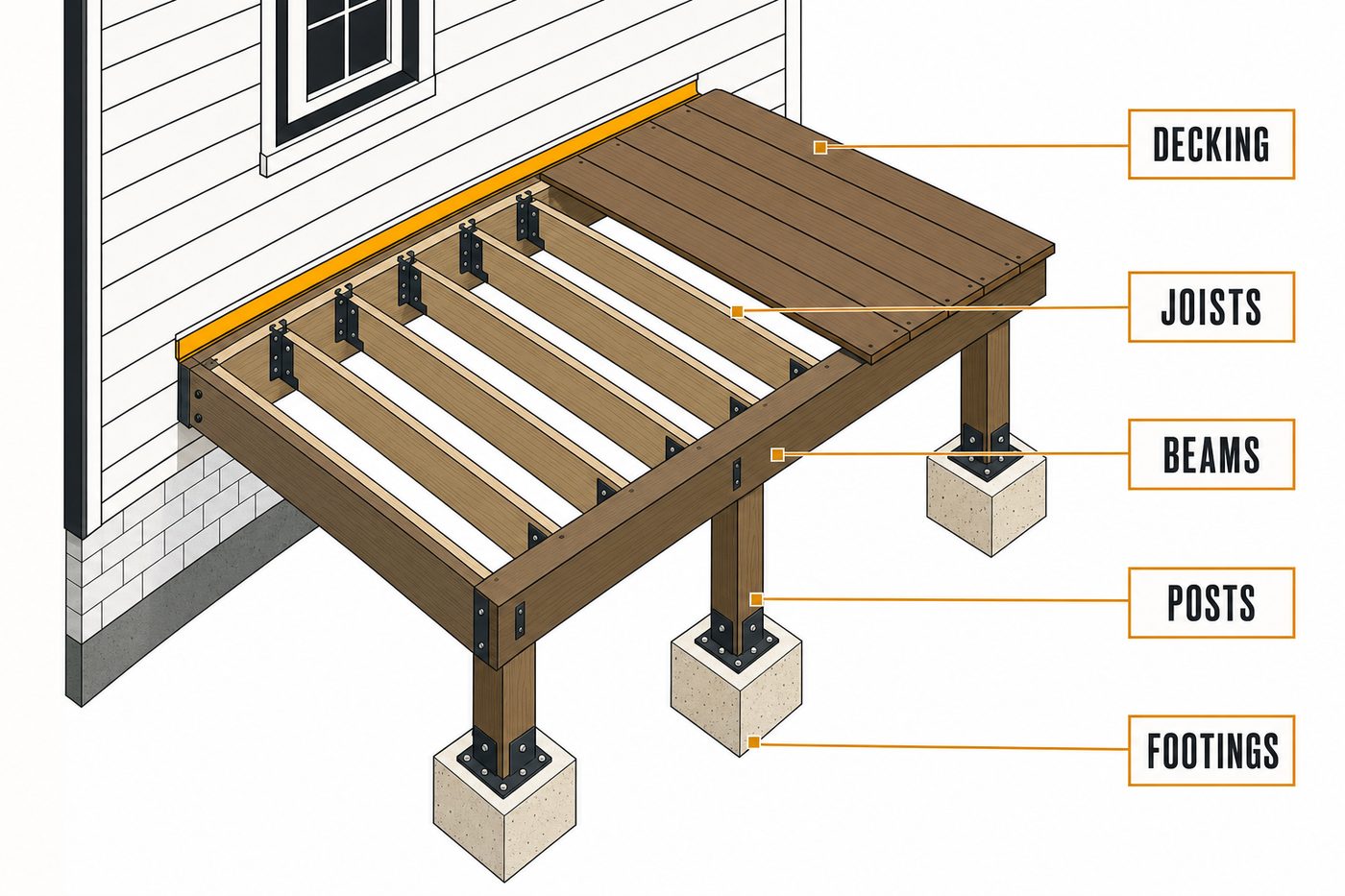
On a hillside, the deck surface is the easy part; the geometry underneath is the job. Footings get poured at different elevations down the grade — stepped, each one dug below frost depth and sized for the load it carries, because a footing pad resting on disturbed fill or shallow soil is how decks start leaning. Posts on the downhill side can easily run eight, ten, twelve feet tall, and a tall post is a lever: without diagonal bracing between posts and beams, the whole frame racks sideways a little more every year until the deck sways when people walk on it. We size posts up (6x6 as the working minimum on anything tall), brace in both directions, and bolt — not nail — the connections that matter.
The ledger deserves its own sentence. Where a deck attaches to the house, that connection carries half the structure, and a ledger lagged through siding without flashing is both a rot generator and the single most common cause of deck collapse nationally. Ours get through-bolted to framing and flashed so water never sits behind them.
Tall or complex builds on steep grades sometimes call for engineered footings or a stamped design; we'll tell you at the estimate if yours is one, before the permit is filed.
Rental Decks and Keeper Decks
Pullman's rental stock generates a steady version of this job: an aging elevated deck or stair landing that a property owner needs safe, code-compliant, and durable — because it's going to host more people, more often, than any suburban family deck ever will. That build is about load and hardware: guardrails at code height with baluster spacing a toddler can't pass, graspable stair rails, joist spacing tight enough for real crowds, structural screws and hangers instead of whatever held the old one together. Nothing decorative about it, and nothing optional either — decks and guardrails are exactly what inspections look at.
The other half of our Pullman deck work is the opposite brief: an owner-occupied house where the deck is the backyard, full stop. Those builds get designed — levels that follow the grade, built-in benches, privacy screening on the neighbor side, lighting on stairs, picture-frame borders, sometimes a covered section for shade. Two different jobs, one framing standard underneath both.
Designing for a Wind That Doesn't Quit
An elevated deck at the top of a Pullman hill lives in moving air. That shapes design more than most people expect. Furniture and umbrellas need a plan — umbrellas in unanchored bases become projectiles here, so we talk shade structures early, and anything roofed or screened must be engineered for wind load, not just tacked on. A slatted wind screen on the prevailing side can turn an unusable evening deck into the most-used room of the house; solid walls, counterintuitively, often perform worse, creating turbulence instead of shelter. Fastening matters too: hidden-clip systems and screws rated for cyclic loads keep boards from working loose as the structure flexes. And on hot south-facing exposures, wind plus sun dries wood decking fast — good for rot, hard on finishes.
Board and Frame Choices for the Palouse
Pressure-treated framing goes under everything we build — the structure is treated lumber regardless of what shows on top.
Composite decking is what most Pullman clients land on for the walking surface, and on rentals it's close to automatic: no annual staining, no splinters, color that survives high-UV summers, and a surface that handles snow shoveling without gouging. Darker composites get hot in full Palouse sun, so on south-facing decks we point people at lighter boards.
Cedar still makes sense for owners who want real wood underfoot and will actually maintain it — figure a refinish cycle every two to three years in this sun, sooner on exposed western faces.
Railings run from matched composite systems to aluminum balusters to steel cable on view decks — cable is popular at hilltop lots for an obvious reason: the Palouse horizon is the whole point.
What a Hillside Deck Costs Depends on the Hill
Height is the honest answer. Every foot of drop adds post length, bracing, footing depth, stair runs, and railing footage — a 300-square-foot deck three feet off grade and the same deck ten feet off grade are different projects wearing the same dimensions. After height: material choice (composite costs more up front than cedar and repays it in skipped maintenance), railing style, stairs (each run is real labor), built-ins and lighting, and site access for excavation and concrete on tight hillside lots. We give fixed written quotes after seeing the grade, and no, we don't price hills off satellite photos.
How the Build Runs
- Site visit. We shoot the grade, check soils and access, look at how the house takes a ledger, and talk through how you'll actually use the space.
- Design and written quote. Framing plan, materials, railing spec, and fixed pricing — engineered drawings included where the height requires them.
- Permit and footings. Deck permits in city limits go through the City of Pullman; we file, then dig and pour footings for inspection before framing starts.
- Frame, brace, and deck. Posts, beams, joists, and bracing first — the part that determines whether the deck feels solid in year ten — then decking, railings, and stairs.
- Final inspection and walkthrough. City sign-off, site cleanup, and a walk of every rail and stair with you.
Timing a Palouse Deck Season
Deck demand peaks the first warm week of spring, which is precisely when it's too late to have one for early summer — design, permitting, and material lead times want a late-winter start. Footings need unfrozen ground, so the practical build season runs spring through fall, though framing and decking themselves proceed fine in cool weather once concrete is in. On logistics we'll be plain: Pullman jobs run from Spokane in multi-project Palouse trips, batched with work in Moscow, Colfax, and the small towns between, so your build gets committed consecutive workdays on a planned trip rather than scattered one-off visits.
Deck Questions We Hear on the Hills
My yard drops off fast behind the house. Can you even put a deck there?
Almost always — steep grades are the normal condition for this work in Pullman. Stepped footings, tall braced posts, and occasionally an engineered design handle it. The site visit tells us which.
Do I need a permit for a deck in Pullman?
Decks above minimal height, and anything attached to the house, run through City of Pullman permitting with inspections at footing and final. We manage all of it.
What's code for rental deck railings?
Guardrails on elevated decks at code height with openings small enough to stop a 4-inch sphere, plus graspable handrails on stairs. If you own rentals, this is the item to fix before an inspector or an accident finds it.
Is composite worth it on a rental?
Usually yes — the maintenance you never do is the maintenance composite doesn't need. Structure stays treated lumber either way.
Should I leave snow on the deck all winter?
A code-built deck carries Palouse snow loads without drama. Shovel with a plastic blade if you want the surface clear; composite tolerates it well.
How long does a build take?
Once permits and materials are in hand, most single-level decks frame and finish inside a week of consecutive workdays; multi-level hillside builds run longer. Lead time before that start is the number to plan around.
Can you rebuild on my existing footings?
Only if they're sized, deep, and sound — most old hillside decks we replace are failing precisely at the footings and bracing, so we verify before reusing anything.
Licensed, Insured, and Around Here Often
Domex Construction is licensed in Washington (DAVYDCI833NC, verifiable via the L&I contractor lookup) and Idaho (RCE-66940), fully insured, with nine years in business and 32 years of combined crew experience across decks, siding, windows, and full exteriors. Ask about our workmanship warranty during your estimate. Our Palouse deck work covers Pullman, Moscow, Colfax, Palouse, Albion, and the acreage properties across the surrounding hills.
Ready to get the backyard your lot never gave you? Site visits and estimates are free. Give us a call or request an estimate online.
More from Domex in Pullman: Siding Installation in Pullman · Window Replacement in Pullman · Custom Home Builder in Pullman · Custom Decks — Spokane hub