
Window Replacement in Pullman, Washington
Window replacement in Pullman, WA for rentals and family homes. Wind-tight installs, honest tiering, licensed WA contractor. Free estimates.
$1,000 Off
Your Complete Siding Replacement
Get a Free Estimate
FREE same-day estimates on all exterior projects.








There's a certain window we get called about over and over in this town. It's a twenty-something-year-old slider in a rental near campus. It hasn't latched properly in years, the glass fogged up two tenants ago, and everyone involved has been ignoring it — the tenants because they'll be gone in May, the owner because it technically still opens. Then something forces the issue: a January heating bill that makes the utility look like a typo, a written complaint, or an inspection report that turns "someday" into "now." Rental windows in Pullman almost never get replaced on a plan. They get replaced under pressure, which is the most expensive way to do it.
Domex Construction replaces windows across all four of Pullman's hills and the streets around them — occupied rentals, faculty homes, whole small portfolios — under Washington license DAVYDCI833NC. This page lays out how we quote the two very different jobs this town asks for, and why wind, not just age, decides which openings go first.
An Honest Two-Tier Quote
We openly spec rentals and owner-occupied homes differently, because pretending they're the same job serves nobody.
The landlord spec is durability per dollar. Solid mid-grade vinyl frames, standard low-E double-pane glass, tilt-in sashes so turnover cleaning takes minutes, hardware that survives being cranked by a hundred different hands, screens that don't fold the first September. Premium finishes and designer glass rarely return anything in a rental; a tight, tough, boring window returns plenty — lower heat bills tenants notice, fewer maintenance calls, and one less line on an inspection report. Replacing a whole unit or building in a single mobilization beats emergency one-off swaps on price every time.
The homeowner spec shifts toward comfort and lifespan: glass packages tuned to each wall's orientation, fiberglass frames where the budget allows, laminated glass on the loudest wind-facing elevations, interior trim work done to be looked at for decades.
If you're a landlord who wants to see both numbers side by side, ask — we'll quote it both ways without a sales pitch attached.
Why the Top of the Hill Loses First
Elevation is exposure in Pullman. A house at the crest of Military Hill or Sunnyside faces open Palouse country, and wind pressure-tests every gap in its walls all winter. The mechanism is mechanical, not mysterious: sliders and single-hung windows seal by fit, riding in tracks, and repeated wind flex loosens that fit season after season until air moves through the meeting rail even when the lock is thrown. That's also why the fix has a direction to it — casements and awnings crank closed against compression seals, so wind pushes them tighter instead of working them looser. On exposed upper walls we steer hard toward casement, awning, or fixed units and save sliders for the sheltered sides. Design-pressure ratings are worth asking about on any bid you collect; a stiffer, higher-DP unit is what keeps a hilltop window sealing in year fifteen, not just year one.
The Mid-Century Openings Problem
Plenty of Pullman housing went up in the 50s through the 70s, and those openings leak by original design. Single-pane wood sashes with hollow weight pockets beside them — uninsulated channels running the full height of the window. First-generation aluminum sliders that conduct cold straight through the frame and weep condensation onto sills every winter morning. Openings flashed with tar paper or nothing, decades before flashing tape existed. On these houses the draft isn't a defect that crept in; it was built in. Full-frame replacement, where we strip to the rough opening, insulate those weight pockets, and flash to modern standards, costs more per window than an insert — and on this vintage it's frequently the honest recommendation, because an insert dropped into a leaky opening upgrades the glass while preserving the draft.
Where Glass Money Goes — and Comes Back
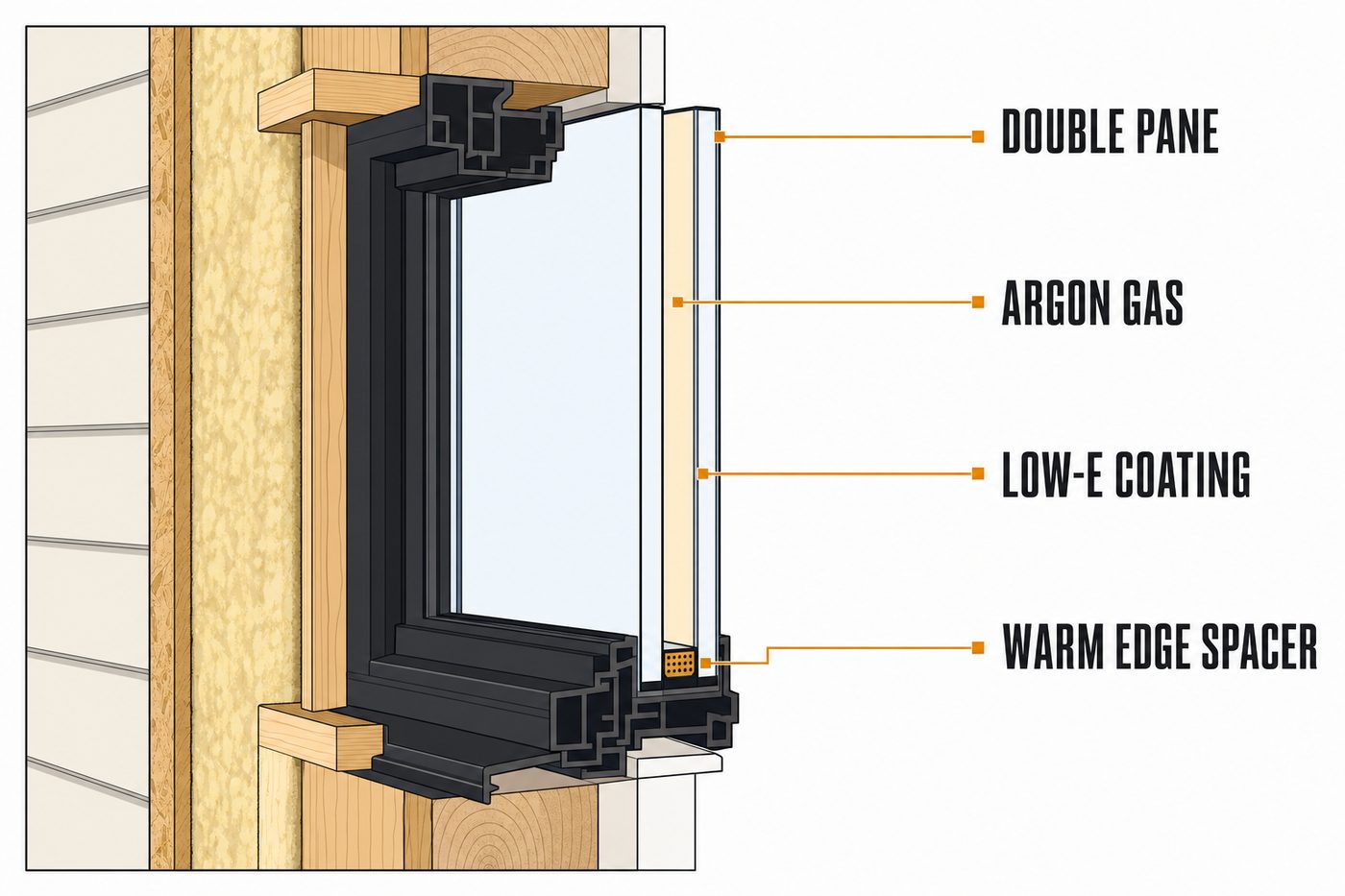
Low-E double-pane is the floor for anything we install. Above that floor, spend where the physics pays. West- and south-facing rooms take serious summer heat off the open Palouse, so a lower solar-gain coating on those walls keeps upstairs bedrooms livable in August. Argon fill is cheap insurance on every unit. Laminated glass earns its upcharge twice on wind-facing walls — it stiffens the unit against pressure flex and it noticeably mutes a wind that otherwise narrates your whole night. What doesn't pay: triple-pane everywhere by default. In this climate we'd rather put that budget into better frames or the two or three openings that actually face the weather.
Replacement With People Still Living There
Most Pullman window work happens in occupied buildings, tenants included, and the method is built around that fact.
- One opening at a time — pulled, set, insulated, sealed, and closed before the next one starts. No wall stands open, in any month.
- Floor and furniture protection goes in before the first pry bar; each room is usable again the same day.
- In rentals, notice and access run through the landlord, we work unit by unit, and each tenant's disruption stays measured in hours.
- Exterior sealing and trim happen on the same trip, so nothing wind-exposed waits half-finished between visits.
- Old units and debris leave with us, and every sash, lock, and crank gets operated before we call an opening done.
The Levers Behind the Price
Opening count is the biggest one — batching drops the per-window cost, which is exactly why portfolio owners come out ahead planning rather than reacting. After that: insert versus full-frame scope, frame material, glass upgrades, and access, which is a genuine Pullman line item when a downhill wall needs staging three stories off a slope. Rot around long-neglected sills is the common surprise, so repair terms sit in our contract before work starts, not in a mid-job phone call. We don't quote dollar ranges sight-unseen; the itemized estimate is free and states which openings justify full-frame and which don't.
Booking Around the WSU Calendar
This town runs on the university's clock and so does smart window scheduling. Summer break is the natural slot for rentals — vacant units, open access, everything buttoned up before August move-ins — and the December break absorbs smaller scopes. Manufacturing lead time is several weeks after measure, so a landlord targeting turnover season should have us out by late winter or spring. One logistics note we'd rather state than hide: we run Palouse jobs from Spokane in efficient multi-project trips, grouping Pullman work with Moscow and Colfax stops. You get a firm, committed slot on a planned trip — and if your dates are flexible, telling us sometimes saves you money.
Asked in Pullman
Tenants complain about drafts every winter. Is weatherstripping enough?
On old sliders facing open ground, new weatherstripping buys a season or two. Compression-seal replacement units end the complaint instead of rescheduling it.
Can you replace windows in an occupied unit?
Yes — that's the standard job here. One opening at a time, hours not days per unit, notice coordinated through the owner.
Insert or full-frame for a 1960s house?
Ask what's beside and under the window, not just in it. Uninsulated weight pockets and unflashed openings argue for full-frame; a sound, tight opening can take an insert. We check before we recommend.
Does the City of Pullman require a window permit?
Requirements depend on scope — like-for-like swaps and size or egress changes are treated differently. Permitting runs through the City of Pullman and we manage the filing either way.
Which windows handle hilltop wind best?
Casement and awning styles with compression seals, in stiff frames with a real design-pressure rating. Sliders belong on the sheltered walls.
Is triple-pane worth it here?
Rarely as a whole-house default. Targeted upgrades — solar-control glass on west walls, laminated glass on wind walls — usually beat it for the same money.
How far ahead should a landlord plan a summer project?
Spring at the latest. Measure, ordering, and manufacturing eat several weeks before install day, and summer trip blocks fill first.
What about egress in basement bedrooms?
Rental bedrooms need code-compliant egress openings, and window replacement is the natural moment to fix a nonconforming one. We flag these during the estimate.
The Company on the Contract
Domex Construction carries Washington license DAVYDCI833NC — look it up on the state L&I contractor registry — plus Idaho license RCE-66940, full insurance, nine years in business, and 32 years of combined crew experience across windows, siding, and full exteriors. Ask about the workmanship warranty when we quote you. From Pullman our window work covers the Palouse: Moscow, Colfax, Palouse, Albion, and the rural properties in between.
One drafty bedroom or a forty-window portfolio — the estimate costs nothing. Call and get on the next Palouse trip.
More from Domex in Pullman: Siding Installation in Pullman · Custom Decks in Pullman · Custom Home Builder in Pullman · Window Replacement — Spokane hub