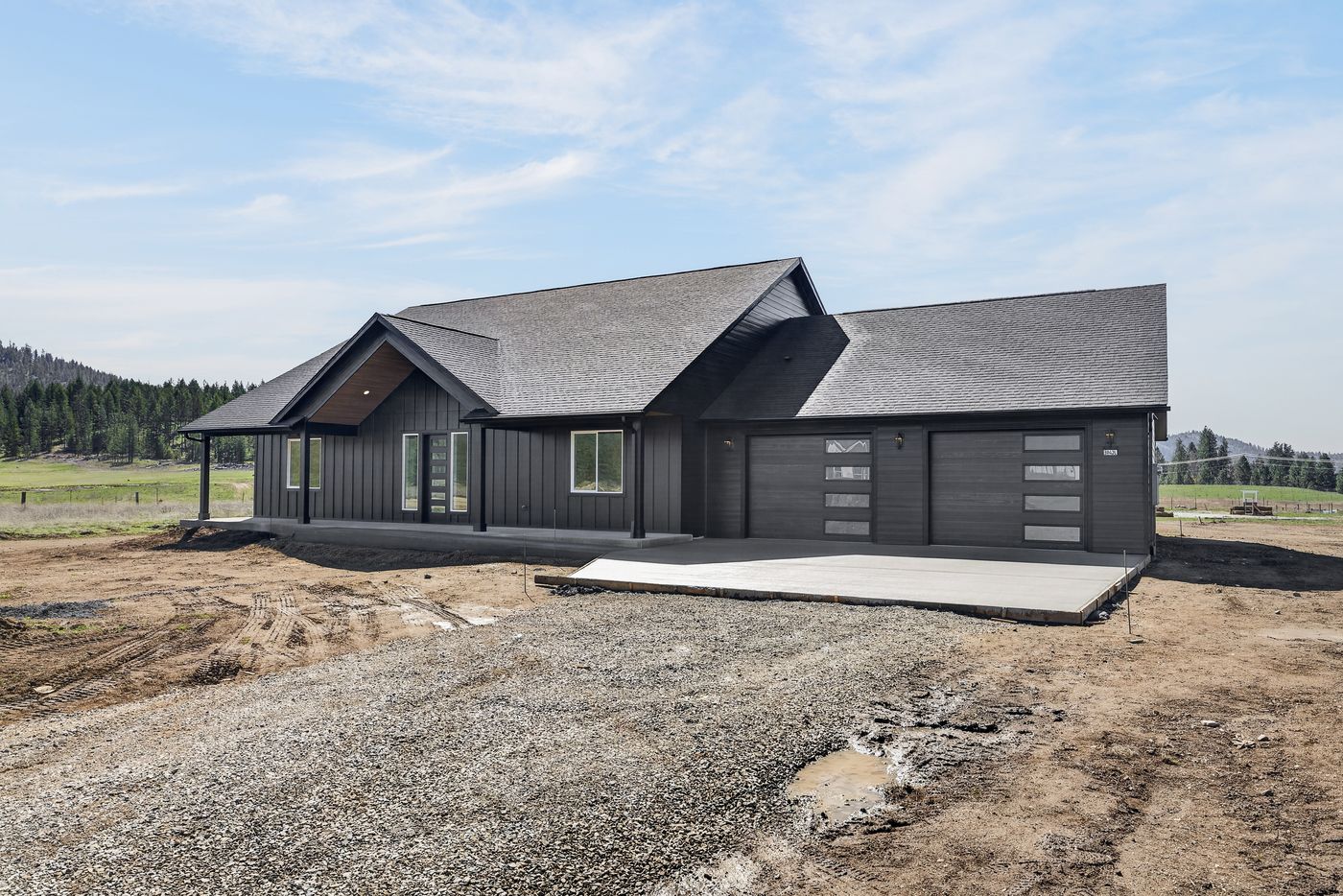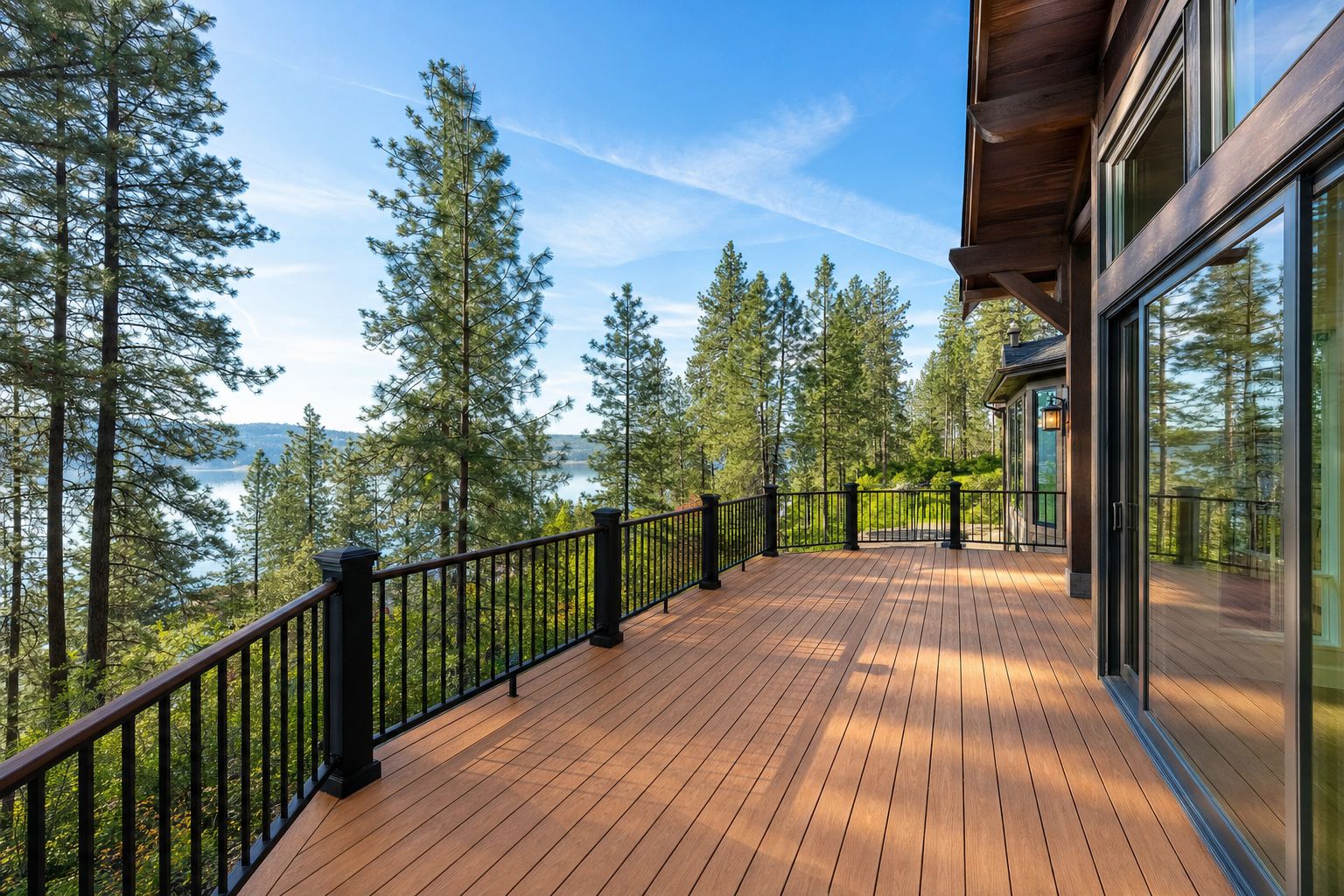

Custom Deck Builders in Deer Park, WA
Custom deck builders in Deer Park, WA. Footings engineered for cold-pocket frost, decking that handles open sun. Free design estimates.
$1,000 Off
Your Complete Siding Replacement
Get a Free Estimate
FREE same-day estimates on all exterior projects.








Here's something most deck plans never account for: frost depth is a design input, and it changes twenty miles up the highway. Deer Park sits in a cold pocket where the ground freezes harder and stays frozen longer than it does in Spokane, which means a footing detail that never causes a problem in a Spokane backyard can slowly jack a deck out of level here. We've been asked to diagnose "settling" on north-county decks that weren't settling at all — they were being lifted, a fraction of an inch per winter, by ice forming under and around footings that stopped short of stable ground.
Domex Construction designs and builds custom decks across Deer Park and the surrounding acreage under Washington license DAVYDCI833NC, and every one of them starts below the ground, where the local climate does its quiet damage.
Getting Under the Frost
Frost heave works like this: water in the soil freezes, ice expands, and the expanding ice grips whatever it surrounds and pushes it upward. A footing that bottoms out inside the freezing zone gets lifted with the frost each winter and settles back imperfectly each spring. Multiply by a decade and you get doors that scrape, railings that lean, and stairs that no longer meet the ground where they used to.
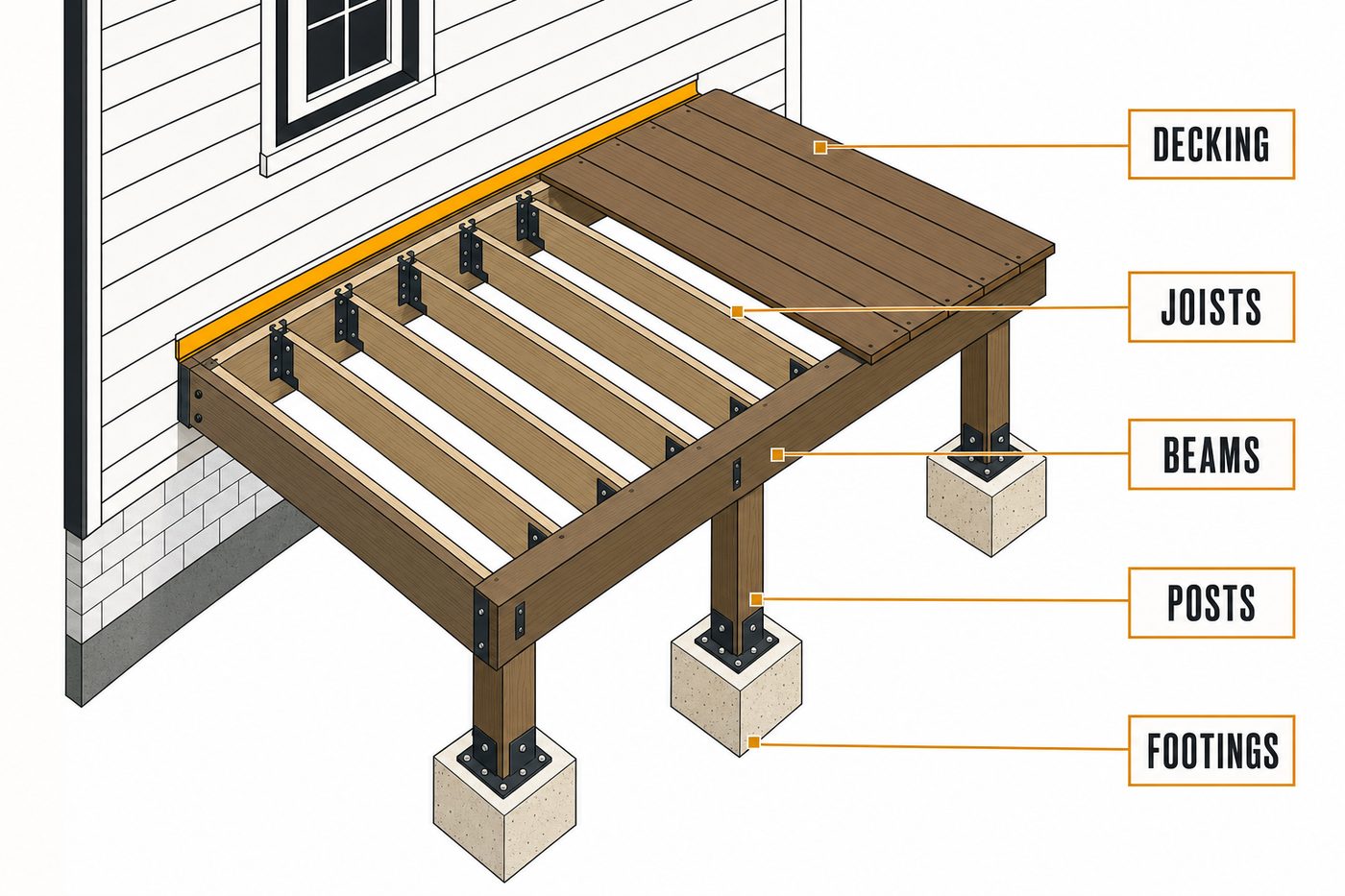
The defense is depth plus drainage. We set footings below the depth this cold pocket actually freezes to — deeper than the bare code minimum where conditions call for it — and we shape and bed them so frost can't get a grip: smooth-sided piers rather than rough irregular pours, gravel at the base so water drains away instead of pooling and freezing under the bearing surface. The ledger connection at the house gets the same cold-climate attention, flashed so meltwater off the deck never reaches your rim joist. None of this is visible in the finished photos. All of it is why the deck is still level in year fifteen.
Acreage Gives You Options a City Lot Doesn't
A lot of Deer Park properties are rural-residential parcels with room to spare, and that room changes the design conversation. Setbacks stop dictating the shape. A deck can run the full length of the house, step down to a ground-level patio platform, wrap a corner to chase evening shade, or reach toward a shop or outbuilding so the path between them stops being a mud track in March. We've built decks that function as the connective tissue of a property — house to fire pit to shop — rather than a rectangle bolted to the back door.
The newer subdivision lots in town work differently: tighter footprints, closer neighbors, and grading that has to be respected. There the design work is about making a modest deck live large — built-in seating instead of space-eating furniture, and railings that keep sight lines open.
Decking for Open Sun and Hard Freezes
Open farm-country parcels get unshaded sun most of the day, and the same boards then sit through harder freezes than Spokane sees. That combination narrows the smart material choices.
Composite is the low-maintenance answer, with two local caveats we design around. Dark boards get genuinely hot in full sun, so on an exposed south-facing deck we steer toward lighter colorways, and composite moves with temperature — this town's wide swings are exactly what its gapping and fastener specs exist for, so we follow them precisely rather than approximately. Done right, composite shrugs off the freeze cycles that crack and splinter neglected wood.
Wood — typically pressure-treated framing under cedar or treated decking — costs less up front and takes stain-and-seal maintenance on a schedule the sun here shortens. UV breaks down finishes fast on unshaded decks, so a wood surface that might go years between coats in a shaded yard needs attention sooner on open ground. Some owners happily trade that upkeep for the price and feel of real wood; we build either well.
Fasteners and hardware get cold-climate attention too: hidden fastener systems that respect expansion, hardware rated for treated lumber, and railing posts anchored to structure rather than decking.
The Build Window
Frozen ground is real here for a real stretch of winter, and footings are the frost-sensitive stage — excavation and concrete both prefer thawed ground and above-freezing cures. So the practical build season for a from-scratch deck runs roughly from spring thaw into late fall, and the best summer slots are claimed by homeowners who started the design conversation in late winter. There's a useful loophole in the calendar: if footings and framing go in before hard freeze, decking and railing can be finished in cold weather, so a fall start can still mean a deck that's ready the first warm weekend of spring. Design, engineering, and permitting have no season at all — winter is the ideal time to do the paperwork.
The Numbers Behind a Deck Quote
Square footage sets the base, but structure and details move the final number more than most people expect. Height matters: an elevated deck needs more substantial posts, beams, bracing, and stairs than a near-grade platform. Footing count and depth — the cold-pocket line items — scale with the deck's size and the soil we find. Decking material is the most visible lever, with composite above wood up front and below it in lifetime maintenance. Railing choice swings cost surprisingly hard; cable and aluminum systems price well above wood balusters. Extras like built-in benches, lighting, and multi-level transitions each add their share. Every quote is a fixed price from a real design, not a per-square-foot guess.
From First Sketch to Final Railing
- Site visit and design talk. We look at grade, sun, access, and what you actually want the deck to do — then sketch options against your budget. Free.
- Design and written spec. Framing plan, footing schedule, materials, railing, and fixed price on paper.
- Permit. Deck permits in town run through the City of Deer Park; addresses outside city limits go through Spokane County. We prepare the drawings and file.
- Footings and frame. Piers set below frost depth and inspected, ledger flashed, framing built square and to span tables — the stage that determines everything.
- Decking, railing, walkthrough. Surface and rails installed to spec, hardware checked, site cleaned, and a full walk of the finished deck with you.
Deck Questions We Hear in Deer Park
How deep do deck footings need to be here?
Below the local frost line with allowance for this cold pocket — deeper than a minimal Spokane pour. Exact depth comes out of the site visit and the permit drawings, not a one-size answer.
My existing deck has gotten wavy and the stairs don't meet the ground evenly. Can it be fixed?
That pattern usually means frost heave at shallow footings. Sometimes we can re-support a sound frame on proper piers; badly racked framing argues for rebuild. An inspection settles it.
Composite or wood for a full-sun deck?
Composite in a lighter color is the low-maintenance choice; wood costs less and asks for more frequent refinishing under this much UV. Both work when specced honestly.
Do I need a permit for a deck in Deer Park?
Most decks do — through the City of Deer Park in town, Spokane County outside it. We handle drawings, filing, and inspections.
Can you build in winter?
Footings want thawed ground, so full winter starts are rare. But a project footed before freeze-up can be finished through the cold, and design-and-permit work runs all winter.
Can you tie the deck into my shop or outbuilding?
Yes — walkway connections and multi-platform layouts are some of our favorite acreage projects. Each structure's connection gets detailed and flashed properly.
How long does a deck build take?
Once permits are in hand, most builds run one to three weeks on site, depending on size, height, and features.
Will snow hurt a composite deck?
No — snow sitting on properly gapped composite is fine, and a plastic shovel clears it without scarring. What damages decks in winter is structure moving underneath, which is the footing conversation again.
The Company Behind the Footings
Domex Construction is licensed in Washington (DAVYDCI833NC — look us up through Labor & Industries) and fully insured, with 9 years in business and 32 years of combined team experience across decks, siding, windows, and full remodels. Ask about our workmanship warranty at your estimate. We build throughout north Spokane County: Deer Park, Chattaroy, Clayton, Loon Lake, Colbert, and the acreage in between.
Thinking about next summer? Winter is when the good build slots get claimed. Free design estimates — call.
More from Domex in Deer Park: Siding Installation in Deer Park · Window Replacement in Deer Park · Custom Home Builder in Deer Park · Custom Decks — Spokane hub