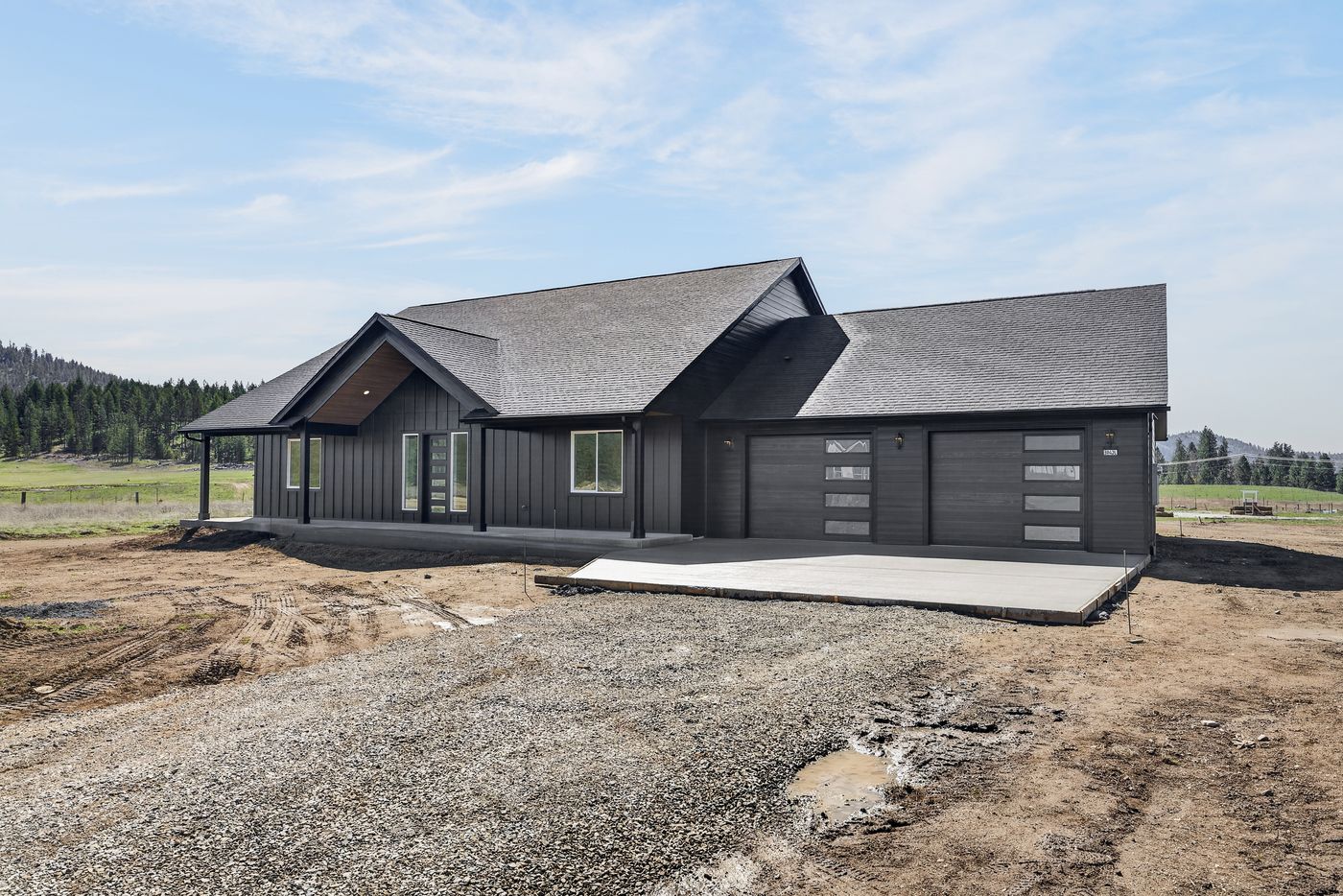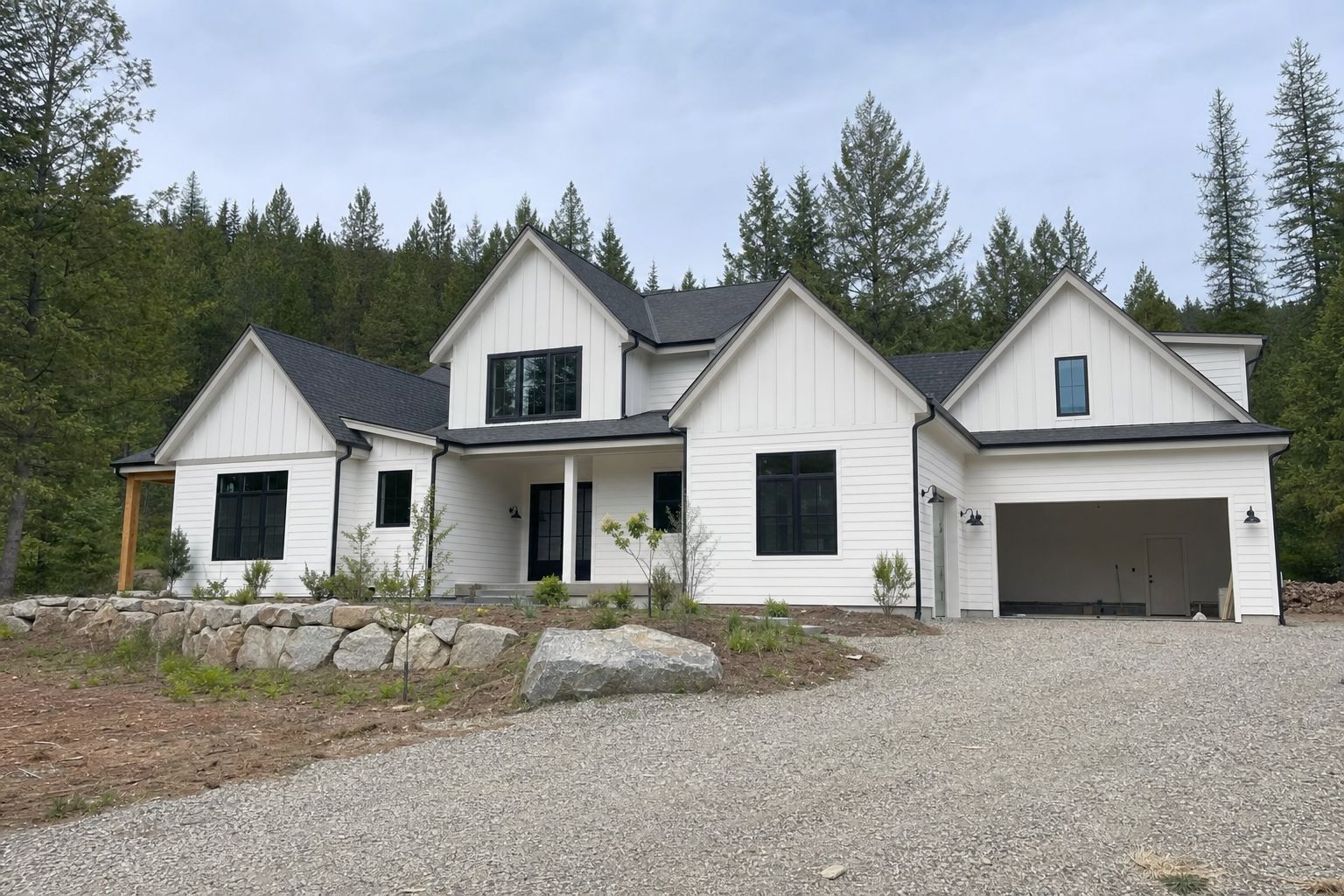

Custom Home Builder in Colville, Washington
Custom home builder in Colville, WA for timbered acreage: clearing, wells, septic, long driveways and fire-resistant exteriors. Book a free consultation.
$1,000 Off
Your Complete Siding Replacement
Get a Free Estimate
FREE same-day estimates on all exterior projects.


Most people who call us about building near Colville already own the land, and most of that land has trees on it. Twenty acres of fir and larch on a slope east of town, or a forty off a county road where the only opening is the landing the logger left. On ground like that, the first real design decision isn't the floor plan. It's which trees come down, where the house can sit so a fire moving through the timber has less to work with, and how far a gravel truck has to drive before it reaches the pad.
Domex Construction builds custom homes in Stevens County two ways. Design-build means we develop the plans with you and bring in a drafter, architect, or engineer as the house requires. Build-to-plan means you hand us drawings from your own designer, or a stock plan you've already picked, and we price and build what's drawn. Both run under Washington license DAVYDCI833NC, with nine years in business and 32 years of combined team experience.
Siting a House in the Timber
Clearing is the cost owners most often underestimate on wooded ground: felling, limbing, pulling stumps out of the footprint and drainfield area, and deciding whether the logs get sold or chipped. Stumps left under a slab rot out and leave voids, so the pad gets grubbed down to mineral soil.
Placement comes next. We walk the parcel looking for a bench with workable soil, a septic site that isn't sharing a draw with the well, and a spot where low winter sun still reaches the south wall after you've kept the trees you like. Big trees within falling distance of the roof get discussed one by one, and so does slope, because fire runs uphill, and a house perched at the head of a timbered draw sits right in its path.
Defensible Space Starts on the Site Plan
Smoke settles into the valley most late summers, and owners here ask about fire before we bring it up. On a rural build, fire resistance is two jobs: what surrounds the house and what the house is made of.
Around it, we plan the clearing so the ground nearest the walls stays lean. Trees get thinned with limbs raised off the ground, woodpiles and junipers stay away from the siding, and gravel or hard surfaces run along the foundation line instead of bark mulch. That's cheap to set up while the excavator is on site.
On the house itself, embers do more damage than a wall of flame. They blow ahead of a fire and lodge in gutters, under decks, in attic vents, and in the gap at the base of the siding. Fiber cement doesn't burn, which is one reason James Hardie board is our usual call on a timber lot (we're a Hardie Preferred Contractor, and our siding work in Colville is where that habit started). We add noncombustible trim and metal flashing at the base of walls, ember-resistant vents at the eaves and crawlspace, a Class A roof covering, enclosed soffits where the design allows, and a plan to keep the underside of any deck from collecting needles. Depending on how your parcel is mapped, fire-related building requirements may apply, and we confirm that with the building department before plans are final.
Driveways, Wells, and Septic on Stevens County Ground
A long gravel driveway has to carry a loaded concrete truck in spring when the ground is soft, a lumber drop, and later a snowplow and possibly a fire engine. It needs a real base, culverts where it crosses a low spot, ditching to move runoff off the surface, and a turnaround near the house.
Water comes from a well on most parcels out here. We bring in a licensed driller early, because the well's location and yield affect where the house and septic can go, and a low-producing well can mean designing in storage. Septic permits in Stevens County go through the Northeast Tri-County Health District, which reviews the soil evaluation and system design before the building permit moves.
Featured Nearby Project
[PROJECT PLACEHOLDER: replace with a real completed Domex project near Colville: photos, plans/spec, neighborhood, year. Do not publish this page without one.]
From Raw Timber Ground to Move-In
- Parcel walk. We cover the acreage on foot with you: tree cover, slope, candidate building sites, a likely septic area, well options, and the route a driveway can realistically take.
- Soils, water, and design. Soil evaluation for the health district, well coordination, and either design-build drawings or a review of your plan set for snow, frost, energy code, and fire exposure.
- Line-item proposal. Clearing, driveway, excavation, utilities, structure, envelope, and finish allowances written as separate lines, so the land work is visible next to the house.
- Permits and site prep. Septic approval, then the building permit through Stevens County or the City of Colville, then clearing, grubbing, driveway base, and footings dug past local frost depth.
- Build and close out. Framing, a fire-resistant envelope, roof, and systems, with every required inspection, weekly updates, and a final walk against the written scope.
Colville Acreage Build Questions
How many trees should come down around the house?
Enough that no crowns touch the roof and the ground around the walls stays lean, with trees farther out thinned rather than clear-cut. We flag them together on the walk.
Should I drill the well before I finalize plans?
Usually, yes. Yield and location can shift the layout, and the well and drainfield need proper separation. Learning that later means paying for drawings twice.
Is fiber cement really better than wood siding for fire?
Fiber cement is noncombustible, so it won't feed a fire the way wood siding can. Vents, the roof, gutters, and the ground around the house matter just as much.
Can you build a shop at the same time as the house?
Yes, as part of the acreage build. Laying out shop, house, and drainfield together keeps a truck turnaround off the septic reserve area, and the excavation and power work get shared.
Who permits a house outside city limits?
Stevens County issues the building permit on rural parcels, and the Northeast Tri-County Health District handles septic. Inside town, the City of Colville is the building authority. We run the filings for whichever applies.
Licensed for Stevens County Work
Domex Construction holds Washington contractor registration DAVYDCI833NC, which you can check through the Department of Labor & Industries contractor lookup, and we're fully insured. Ask about our workmanship warranty when we meet. Our crews run up from Spokane in committed blocks and build around Colville, Kettle Falls, Addy, Arden, Chewelah, and the rural roads between them.
Got timber ground and a rough idea of where the house belongs? Call us to set up a free consultation on the parcel. Bring boots, because we'll want to walk it.
More from Domex in Colville: Siding Installation in Colville · Window Replacement in Colville · Custom Decks in Colville · Custom Home Builder: Spokane hub