
Window Replacement in Clarkston, Washington
Window replacement in Clarkston, WA with low-SHGC glass for LC Valley heat. Licensed WA contractor. Free estimates on your actual openings.
$1,000 Off
Your Complete Siding Replacement
Get a Free Estimate
FREE same-day estimates on all exterior projects.








The complaint that starts most of our Clarkston window calls isn't a draft. It's a room — usually the living room, usually facing west — that nobody can sit in on a July evening. The blinds stay shut from four o'clock on, the air conditioner runs flat out and loses anyway, and the glass is warm to the touch after sundown. Homeowners describe it as a hot room. What they're actually describing is glass doing nothing to stop solar energy, in the one town on our map where solar energy is the whole problem.
Domex Construction replaces windows across Clarkston and the LC Valley under Washington license DAVYDCI833NC. Up in Spokane we spec windows around cold. Down here we spec them around sun, and that difference changes which numbers on the sticker deserve your attention.
Start With the Glass: Solar Heat Gain
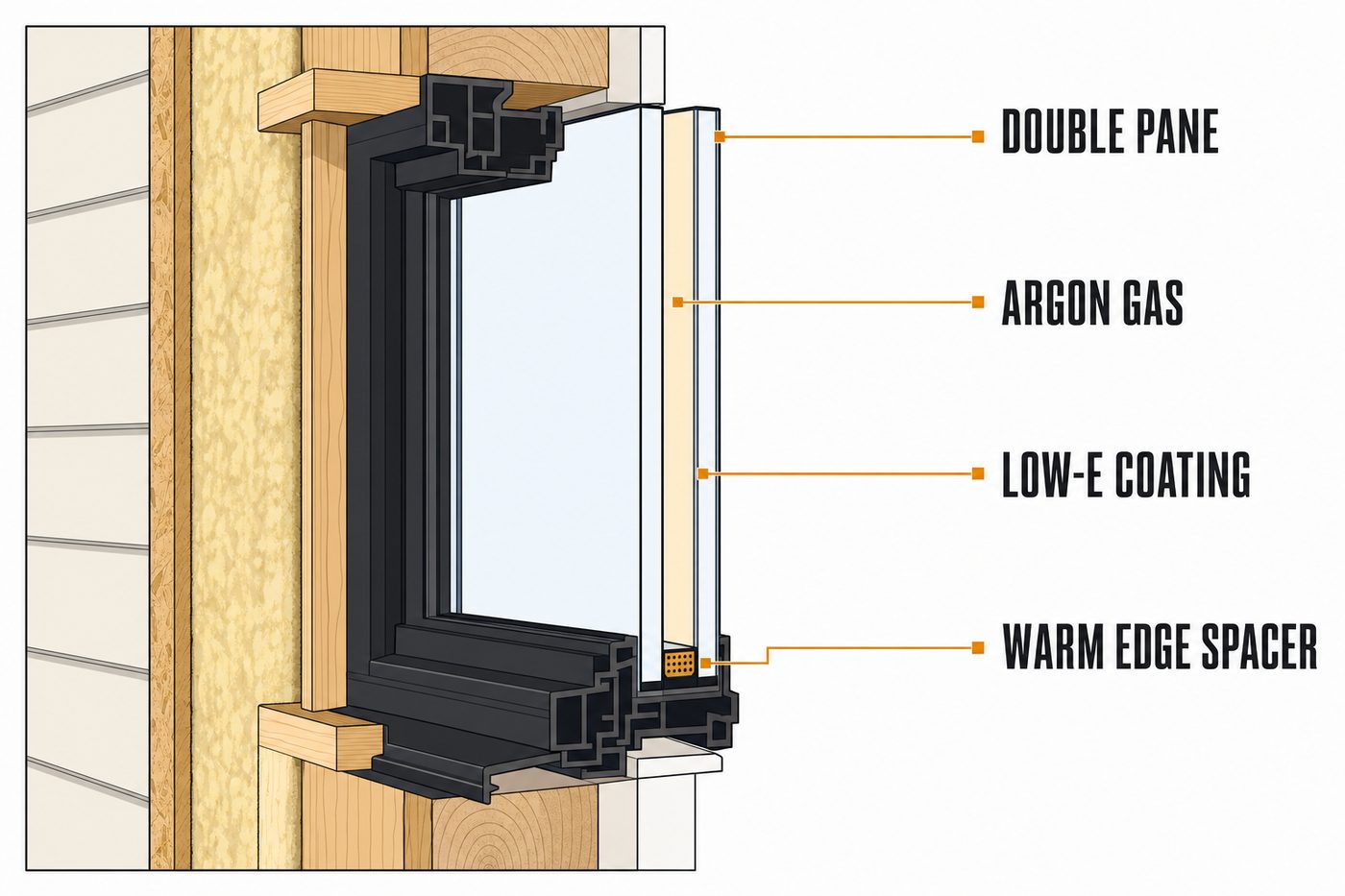
Every window label carries two ratings that matter, and most buyers only ever hear about one of them. U-factor measures how well a window holds heat in — the winter number. SHGC, solar heat gain coefficient, measures how much of the sun's energy comes through the glass — the summer number. In Clarkston, SHGC leads. A low-SHGC glass package uses a spectrally selective low-E coating that admits daylight while rejecting a large share of solar heat, and on a west wall here the difference between an old clear-glass unit and a modern low-solar-gain one is the difference between a room you avoid and a room you use.
Orientation decides where that money works hardest. West windows are the worst offenders in the valley because evening sun comes in low, under any roof overhang, straight through the glass at full strength during the hottest hours of the day. South glass gets some free protection from overhangs in summer. East glass gets morning sun, milder but real. When a budget has to be split, we put the best glass on the west and south openings rather than spreading a mediocre package over the whole house. Exterior solar screens are a legitimate supplement on brutal exposures — they stop heat before it reaches the glass — and frame material matters too, since the old bare-aluminum frames common here conduct heat straight through and get hot enough to feel.
The Mild-Winter Math, Honestly
A window salesman working from a snow-country script will pitch you triple-pane glass and heating-bill payback. Run those numbers for the banana belt and they wobble. Clarkston winters are short and mild by our region's standards — heating loads here are the lightest in our service area, so the winter-savings share of the payback is smaller than the same window earns in Spokane or Sandpoint. We'd rather tell you that than sell you insulation you won't fully use.
What pencils out instead is the cooling side. Long 100°F-plus runs mean air conditioning is the serious utility load in the valley, and solar gain through old glass is a direct driver of it. A good dual-pane unit with a low-SHGC coating captures most of the benefit available here; triple-pane adds cost and weight for a winter it will rarely meet, and we'll usually only recommend it for street-noise reasons or specific comfort cases. That's a smaller invoice than the snow-country pitch, aimed at the season you actually live through.
Openings from the Ranch-House Era
Clarkston's postwar neighborhoods hand us a consistent set of openings: single-pane aluminum sliders in the bedrooms, and a big fixed picture window in the front room — very often facing the street, which on the grid here frequently means west. Those aluminum frames were the standard of their day and they've lasted, but they conduct heat aggressively in both directions and their glass does nothing against sun. They're the single biggest comfort upgrade available in this housing stock.
The dry climate does the valley one favor: the rot and hidden water damage we routinely uncover around openings up north is far less common here, so more Clarkston homes qualify for insert replacements — a new unit fitted into the existing sound frame, which is quicker and less costly than full-frame work. Where we recommend full-frame instead, it's usually to fix an original flashing detail or to resize an opening, not to chase decay. Homes closer to the river with earlier bones need a closer look; sixty-plus-year-old sills earn a probe before anyone quotes an insert.
How We Run a Window Replacement
- Estimate on your actual openings. We measure, check frames and sills, note the orientation of every unit, and talk through where low-SHGC glass earns its keep on your house. Free.
- Written spec. Manufacturer, series, glass package per opening, insert versus full-frame per opening, in writing.
- Ordering and scheduling. Windows are built to order; when yours arrive, your install gets a committed multi-day trip on our valley schedule.
- Installation. Old units out, new units set plumb and square, gaps insulated, exterior flashing and trim sealed against sun and wind-driven rain alike.
- Walkthrough. Every sash operated, every lock checked, labels off, glass cleaned, and the punch list closed before we leave the valley.
What Moves the Number
Count and size lead, as everywhere — but a few local factors shape Clarkston quotes. Insert-versus-full-frame is the biggest swing per opening, and the valley's dry-frame advantage keeps more homes on the economical side of it. Glass packages move the price modestly and matter here more than anywhere we work; a low-SHGC coating is money aimed directly at your biggest utility bill. Large mid-century picture windows cost more per unit than standard sliders, and any resizing or opening changes add framing and permit scope. Grid patterns, exterior color, and hardware finish the list. We quote fixed prices per the written spec — no per-window games at the kitchen table.
Booking and Job Length
Most whole-house Clarkston replacements run one to three days on site once product arrives; manufacturing lead time before that typically runs several weeks and varies by series. Because valley work runs as scheduled trips from Spokane, your dates are blocked out in advance — the crew stays on your job until it's done rather than splitting days with other towns. Summer installs start early to set glass before peak heat; winter installs are fully practical here, since the mild valley cold poses none of the problems a Spokane January does, and one opening is worked at a time so the house never stands open.
What Homeowners Here Ask
Which windows should I replace first if I can't do the whole house?
The west-facing ones, almost every time. They drive the most heat gain and the most discomfort. South-facing large glass is next.
What SHGC number should I look for?
Lower is cooler. For hot west exposures here we generally spec low-solar-gain glass in the low-0.2 range; we'll go through the label of every product we propose so the numbers aren't a mystery.
Do low-E coatings make rooms dark?
Modern spectrally selective coatings reject heat, not light. There's a slight tint compared to bare glass, but rooms stay bright — the change people actually notice is the missing heat.
Is triple-pane worth it in Clarkston?
Usually not for energy. Winters are too mild for the extra pane to pay its way. It earns a place for noise reduction near the highway or when a homeowner wants maximum comfort regardless of payback — and we'll say which case is yours.
Insert or full-frame on a 1960s ranch?
If the existing frame is square, sound, and dry — common in this climate — an insert does the job for less. We check before we quote rather than assuming either way.
Will new windows really cut my cooling bill?
If your current glass is single-pane or early dual-pane clear glass, yes — solar gain through windows is a major share of a valley cooling load. We won't promise a percentage, but the mechanism is real and you'll feel it in the west rooms first.
Do window replacements need a permit here?
Like-for-like replacements and opening changes are treated differently, and city and county rules differ — City of Clarkston in town, Asotin County outside it. We determine what your scope requires and handle the filing.
Can I get windows and siding done together?
It's the best-sequenced version of both jobs — flashing and trim integrate properly when one contractor controls both layers. We do both, on one schedule.
Credentials and Coverage Area
Domex Construction holds Washington contractor license DAVYDCI833NC (verifiable through the Washington L&I lookup) and Idaho license RCE-66940, and carries full insurance. Nine years in business, thirty-two years of combined team experience, and a workmanship warranty you should ask us about at the estimate.
Our valley window work covers Clarkston, Asotin, and rural Asotin County on the Washington side, and Lewiston, Idaho across the river — the whole LC Valley on one trip schedule.
Ready to get your west rooms back? Free window estimates across Clarkston and the LC Valley. Give us a call or request an estimate online.
More from Domex in Clarkston: Siding Installation in Clarkston · Custom Decks in Clarkston · Custom Home Builder in Clarkston · Window Replacement — Spokane hub