
Custom Deck Builders in Priest River, Idaho
Custom deck builders in Priest River, Idaho. River-facing decks engineered for snow load and damp ground, priced for families. Free estimates.
$1,000 Off
Your Complete Siding Replacement
Get a Free Estimate
FREE same-day estimates on all exterior projects.








Drive any river town and you'll notice the same thing: the houses turn toward the water. Priest River does it twice over — the Pend Oreille along the south edge of town, the Priest coming down to join it — and when a homeowner here calls about a deck, the first sentence is almost never about square footage. It's about the view. The deck gets built to face the water, and everything technical about the project follows from that one decision.
Domex Construction builds custom decks across Priest River and the Highway 2 corridor under Idaho license RCE-66940. We're an exterior remodeling outfit first — siding, windows, decks — which matters more than it sounds, because the connection between a deck and the wall of your house is where most bad decks start failing.
Built to Face the Water
Orienting a deck toward the river sets three engineering problems in motion, and all three get solved at the design stage or not at all.
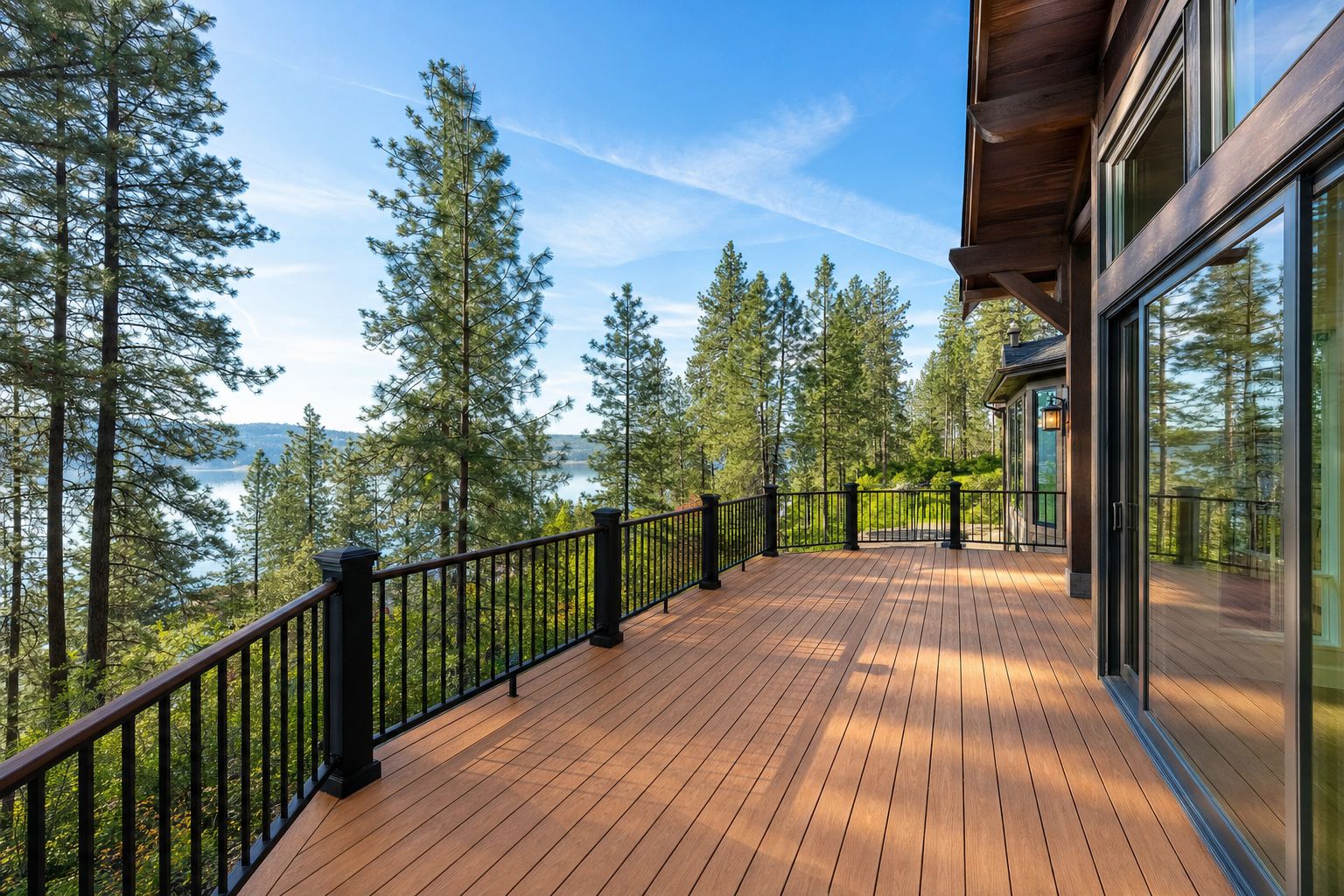
Sightlines. A view deck lives or dies on its railing. We design rail height to code and then pick infill for transparency — slim balusters, cable, or panel options — and set the seating zone where the sightline clears the rail from a chair, not just standing.
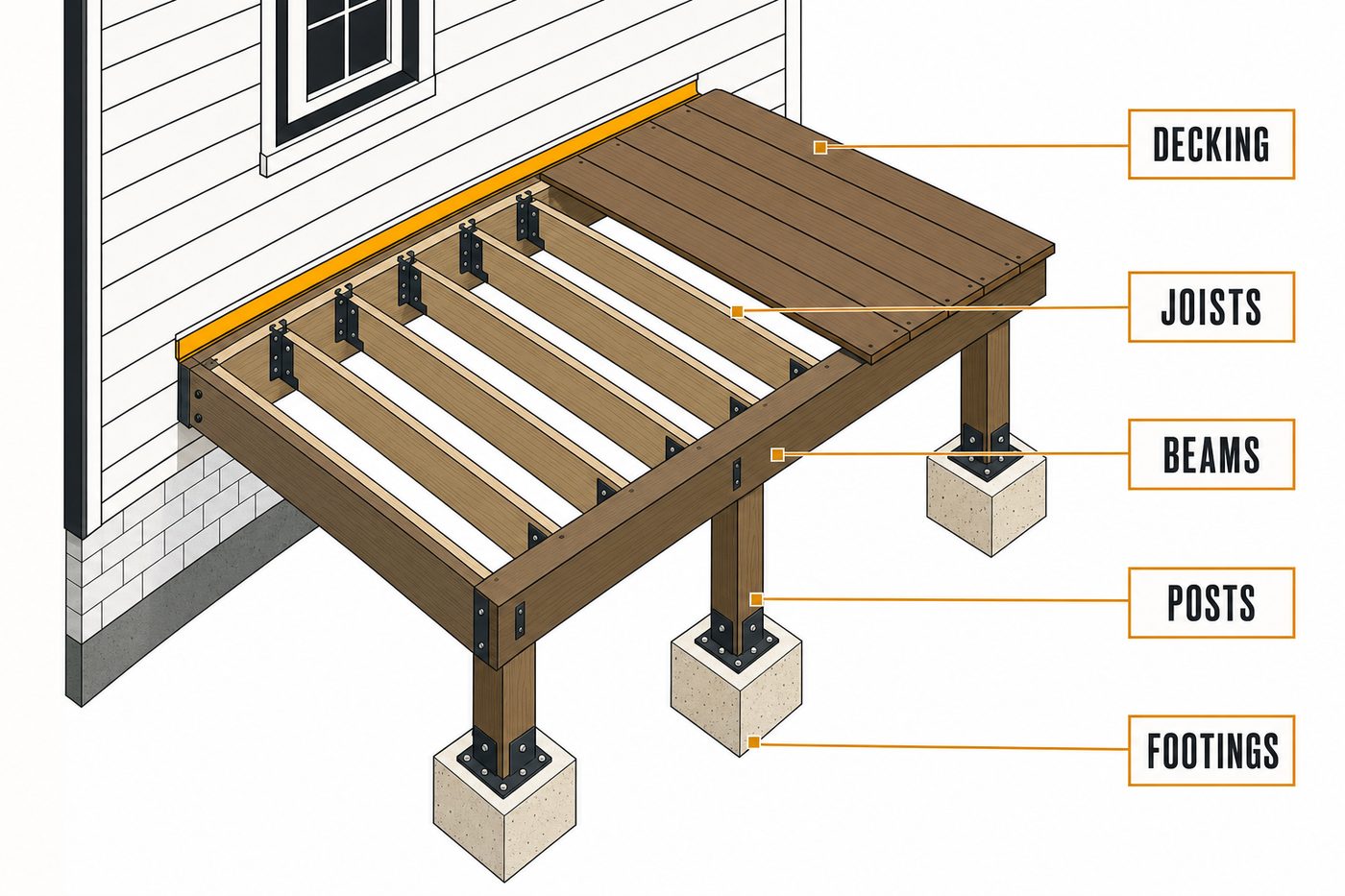
Ground that stays damp. Lots that slope toward either river hold moisture most of the year, and low ground near the confluence holds it longest. Damp soil is where shortcut footings fail: surface blocks heave, shallow piers tilt, and the deck racks within a few winters. Our footings are dug and poured below frost depth, sized for the load above them and the soil below them, with hardware that keeps post bases out of ground contact entirely. On the soggiest lots we'll tell you honestly if a footing design needs to change — before concrete, not after.
Drainage. The deck itself sheds water fine; the question is where that water goes. We slope framing away from the house, gap the decking for runoff, put gravel and fabric under low decks so the ground beneath dries instead of composting, and — the detail we care most about — flash the ledger correctly. A ledger lag-bolted over siding with no flashing is the single most common fatal flaw we find on existing decks here, and it rots the house, not just the deck.
Framed for Snow That Doesn't Leave
Bonner County winters put serious, sustained snow load on an open deck, and unlike a roof, nobody shovels the deck on a schedule. Snow stacks, absorbs rain, refreezes, and sits at its heaviest in late winter. We engineer for the county's snow-load requirements as a floor, not a ceiling: beams and joists sized for the real load, joist spacing tightened where composite decking spans demand it, post-to-beam connections made with rated hardware rather than nails and hope, and ledger attachments through-bolted into the house's rim framing. On the older frame homes in town, we open the wall enough to verify what that rim actually is before we hang a deck on it — a century-old band board gets inspected, not assumed. Where the house can't take the load, a free-standing frame solves it cleanly.
Decking a Family Actually Uses
Most Priest River decks we build are working-family decks — kids, dogs, a grill, a couple of chairs pointed at the water — and the material conversation is about upkeep as much as price.
- Pressure-treated wood is the budget anchor: strong, code-ready, and the least expensive way to get a safe deck. It asks for cleaning and a re-seal on a regular cycle, and it will check and splinter as it ages. Honest trade, lowest entry point.
- Cedar looks the part of a North Idaho porch and stays cooler and splinter-friendlier underfoot, but in damp river air it needs the most faithful maintenance of the three to stay sound.
- Composite costs the most up front and then mostly leaves you alone — no sealing, no splinters, color that survives snow-glare UV. For a family that wants weekends on the deck instead of weekends maintaining it, the math over fifteen years usually favors it.
Plenty of our builds mix tiers: pressure-treated frame under composite boards is the standard pairing, and a wood-decked budget build can be framed so composite can replace the boards later without touching the structure.
What Sets the Price
Size and height drive the base — a low platform and a walk-out second-story deck are different animals in framing, railing, and stairs. From there: footing count and soil conditions (damp-ground digs take longer), decking tier, railing style (cable and panel infill cost more than balusters), stairs and landings, and any electrical or gas rough-ins you want run before boards go down. Attached decks add ledger and flashing work; free-standing adds posts and footings. We quote a fixed price from a measured design, and there are no dollar surprises hiding in the soil because we assess it first.
From First Visit to Final Railing
- Site visit. We look at the view you want, the slope and soil you have, and the wall the deck would attach to. Free, and it settles half the design questions on the spot.
- Design and fixed quote. A measured drawing with framing spec, decking and railing selections, and footing plan — priced as a whole number, contingencies stated.
- Permit. Deck permits in town go through the City of Priest River; rural addresses run through Bonner County. We file, and inspections land on our calendar, not yours.
- Footings and frame. Digging, pouring, curing, then framing with rated hardware — the stage where the inspector and the snow load are both satisfied.
- Decking, railing, walkthrough. Boards, rails, stairs, and a final walk with you — including how to care for whichever decking you chose.
Season and Schedule
Footings want unfrozen ground, so digging season effectively runs spring through fall — and spring contracts get first pick of summer build slots. A straightforward family deck typically frames and finishes in one to two weeks on site once concrete has cured; complex multi-level builds run longer. Fall builds are underrated: the deck cures over winter and is ready the first warm evening of spring, when the wait for a builder is longest.
Deck Questions From Priest River Homeowners
Can my deck face the river and still meet railing code?
Yes. Rail height is fixed by code, but infill choice and seating layout preserve the view — that's a design task we solve on paper before the build.
Do I need a permit for a deck in town?
Nearly always, and attached or elevated decks certainly. The City of Priest River handles permits inside city limits; we take care of the filing and inspections.
My yard is wet most of spring — can it hold a deck?
Almost certainly, with footings designed for it. Depth, diameter, and post hardware are chosen for your soil, and we assess the ground before quoting rather than pricing a dry-lot deck for a damp lot.
Should I shovel my deck in winter?
A deck we've built carries the design snow load without panic shoveling. After the heaviest dumps, clearing with a plastic shovel along the boards is smart — mostly to spare the decking surface, not the structure.
Wood or composite for a family with kids and a dog?
Composite wins on splinters, upkeep, and claw marks; pressure-treated wins on entry price. Framing for composite spans even under wood boards keeps your upgrade path open.
Can you attach a deck to a hundred-year-old house?
Usually, after we've opened and verified the rim framing. If the old structure can't carry it, a free-standing frame beside the house gets you the same deck without the risk.
What went wrong with my existing deck?
The usual suspects we find in town: unflashed ledgers, surface footings that heaved, and undersized joists sagging under snow. An assessment visit tells you which — sometimes repair is the right scope, and we'll say so.
How soon can you build?
Depends on the season you call. Spring and summer slots go early; fall often has the shortest wait and still beats the frost.
Licensing on Both Banks and Both States
Domex is licensed in Idaho (RCE-66940 — look us up through the Idaho Contractors Board) and Washington (DAVYDCI833NC), fully insured in both. With Oldtown and Newport a few minutes down the highway, one call covers a deck on either side of the line. Ask about our workmanship warranty at the site visit.
From Priest River we build across Oldtown, Newport (WA), Blanchard, Laclede, Sandpoint, and up the Highway 57 corridor toward Priest Lake.
Want a deck pointed at the water by summer? Free design visits across Priest River and the Highway 2 corridor. Give us a call or request an estimate online.
More from Domex in Priest River: Siding Installation in Priest River · Window Replacement in Priest River · Custom Home Builder in Priest River · Custom Decks — Spokane hub