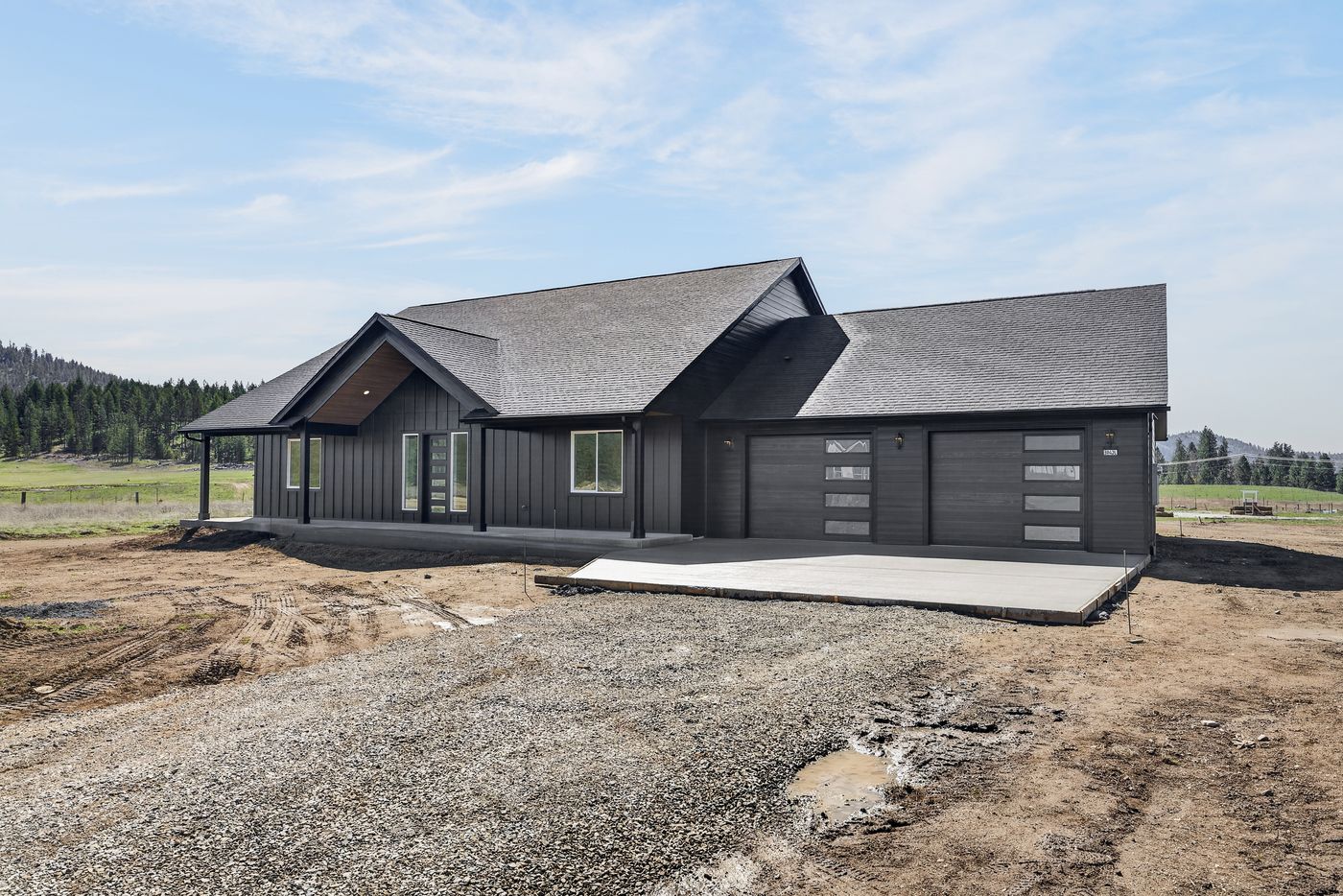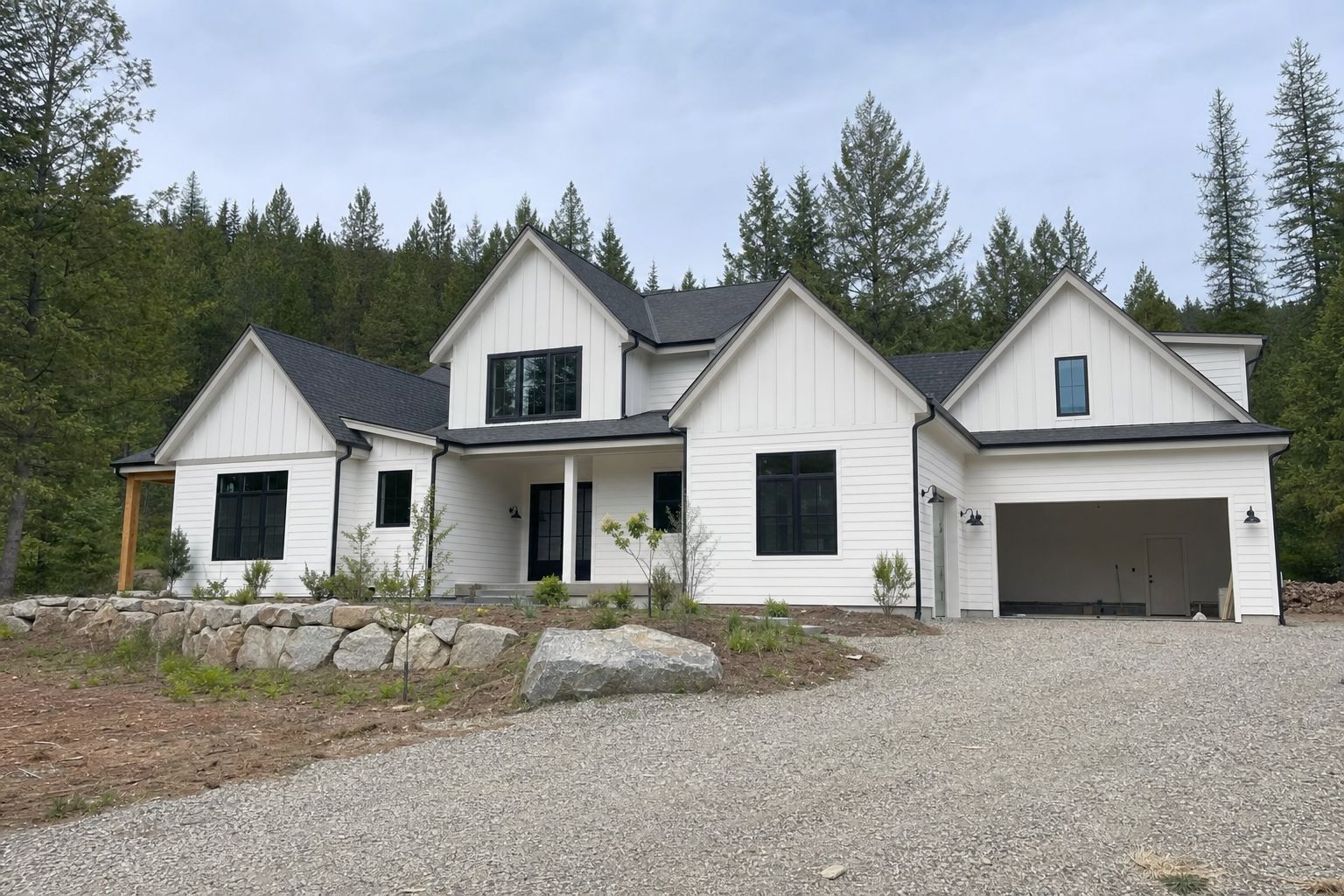

Custom Home Builder in Post Falls, Idaho
Custom homes in Post Falls on Spokane River frontage or prairie subdivision lots. Setbacks, covenants and resale planned in. Call for a free consultation.
$1,000 Off
Your Complete Siding Replacement
Get a Free Estimate
FREE same-day estimates on all exterior projects.


Post Falls land comes in two kinds. Along the Spokane River there are frontage lots where the water sets the terms: how close you can build, how the ground falls to the bank, which way the house has to face. Out on the prairie there are open lots in newer subdivisions, flat and sewered and easy to dig, surrounded by houses a production builder put up from a short list of plans. Both can carry a good custom home; they just raise different questions.
Domex Construction builds custom homes under Idaho registration RCE-66940. Owners who have a lot and an idea get design-build: we develop the plans with you, bring in a drafter or architect and an engineer as the house needs them, and build under one contract. Owners who already have drawings get a line-item bid against the set and a crew that builds what's drawn. Nine years in business, 32 years of combined experience, and an exterior-trades background that shows on the walls.
River Frontage: Setbacks, Banks, and the Aquifer
Building on the river starts with the setback line. Shoreline rules keep houses, decks, and grading back from the water and limit clearing near the bank, and the line is measured from the river, not from your property line. A lot that looks deep on the plat can shrink noticeably once that line is drawn on a survey. So we survey first and design inside the lines.
River lots also tend to drop toward the water, so houses often step down with a walkout level facing the river. That lower wall needs drainage and waterproofing, and during construction, silt fence and erosion control keep disturbed soil out of the river. Downspouts and driveway runoff get routed so they don't carve channels down the bank.
Under everything sits the Spokane Valley-Rathdrum Prairie Aquifer, the EPA-designated sole-source aquifer that supplies drinking water from here to Spokane. The ground above it is deep glacial flood gravel that drains fast, which is good news for foundations and bad news for anything spilled on the surface. That's why roof and driveway stormwater gets handled on the lot, usually through grassy swales or drywells shown on the site plan, and why a jobsite over the aquifer keeps fuel and concrete washout contained. Where a parcel sits outside sewer service, Panhandle Health District reviews the septic design with that aquifer in mind.
A Custom House on a Street of Tract Homes
The prairie subdivisions offer what river lots can't: sewer and water at the property line, flat ground, and a lot price that leaves money for the house. The catch is the neighbors. When every house around you came from a production plan book, a custom home has to be designed with the appraisal in mind.
Appraisers value a house against recent nearby sales. Build far above everything on the street and the appraisal may not catch up to what you spent, which matters for a construction loan and again the day you sell. That doesn't mean building small. It means putting money where both you and the next buyer will feel it: a better floor plan, a main-floor primary suite, a deeper garage, taller ceilings, better windows and cladding. Finishes only you will love are fine too, chosen knowing the appraiser won't count them.
Read the recorded covenants before anyone draws. Newer subdivisions commonly set minimum square footage, roof pitch, exterior materials, and garage placement, and some route plans through an architectural review committee. Some lots are even tied to a particular builder by the original sale, which is worth checking in your purchase paperwork. We design to what the covenants actually say, because a plan rejected by committee costs weeks.
The exterior is where a custom home separates itself from the tract house next door without fighting the neighborhood. Fiber cement or LP SmartSide instead of thin vinyl, deeper trim, real roof overhangs, and a covered entry read as a better house from the street. Domex is a James Hardie Preferred Contractor, and our Post Falls siding page covers the materials in more detail.
Featured Nearby Project
[PROJECT PLACEHOLDER: replace with a real completed Domex project near Post Falls: photos, plans/spec, neighborhood, year. Do not publish this page without one.]
How a Post Falls Build Moves From Plat to Move-In
- Lot and paperwork review. Plat, survey, covenants, and on river lots, the setback line and the condition of the bank, all checked before design money is spent.
- Design for the river or the street. Walkout layouts and view orientation on frontage lots; appraisal-aware sizing and covenant compliance on subdivision lots.
- City permits and site plan. Building permit through the City of Post Falls with stormwater handling shown on the site plan, shoreline review on river parcels, and Kootenai County for lots outside city limits.
- Excavation in prairie gravel. Digging goes fast in the flood gravels, with cobbles sorted out of the backfill, swales or drywells built, and utilities connected.
- Build and hand over. Framing, envelope, systems, and finishes on a written schedule, every inspection passed, and a final walkthrough against the scope.
Post Falls Custom Home Questions
How close to the Spokane River can I build?
It depends on the shoreline rules that apply to your parcel and where the survey puts the water line. We confirm it with the city or county before design.
Will a larger custom house hurt my appraisal in a tract neighborhood?
It can if the gap is extreme. We'll talk through where your spending shows up in value and where it's purely for you, then let you decide with that in view.
My subdivision has design rules. Can you still build my plan?
Usually, with adjustments. We read the covenants, flag conflicts like roof pitch or siding material, and revise before the committee sees it.
Why does my site plan need a swale or drywell?
Stormwater on the prairie soaks into gravel that sits over the region's drinking water supply. On-site systems let it infiltrate in a controlled way instead of running into the street or the river.
Does the gravel make foundations easier?
Excavation is quick and the soil drains well, but cobbles slow trenching and footings still go deeper than local frost depth. It's a good building soil with its own quirks.
Licensed in Idaho, Working Both Sides of the Line
Domex Construction holds Idaho contractor registration RCE-66940, which you can verify with the Idaho Contractors Board, and carries full insurance. From Post Falls we also build in Coeur d'Alene, Rathdrum, and Hayden, and across the state line in Liberty Lake and Otis Orchards under our Washington license.
Holding a river lot, a subdivision lot, or a set of plans? Call for a free consultation and we'll walk the property with you.
More from Domex in Post Falls: Siding Installation in Post Falls · Window Replacement in Post Falls · Custom Decks in Post Falls · Custom Home Builder: Spokane hub