
Custom Deck Builders in Plummer, Idaho
Custom deck builders in Plummer, Idaho. Wind-braced, snow-rated decks built for open-country sunsets. Licensed and insured. Free estimates.
$1,000 Off
Your Complete Siding Replacement
Get a Free Estimate
FREE same-day estimates on all exterior projects.








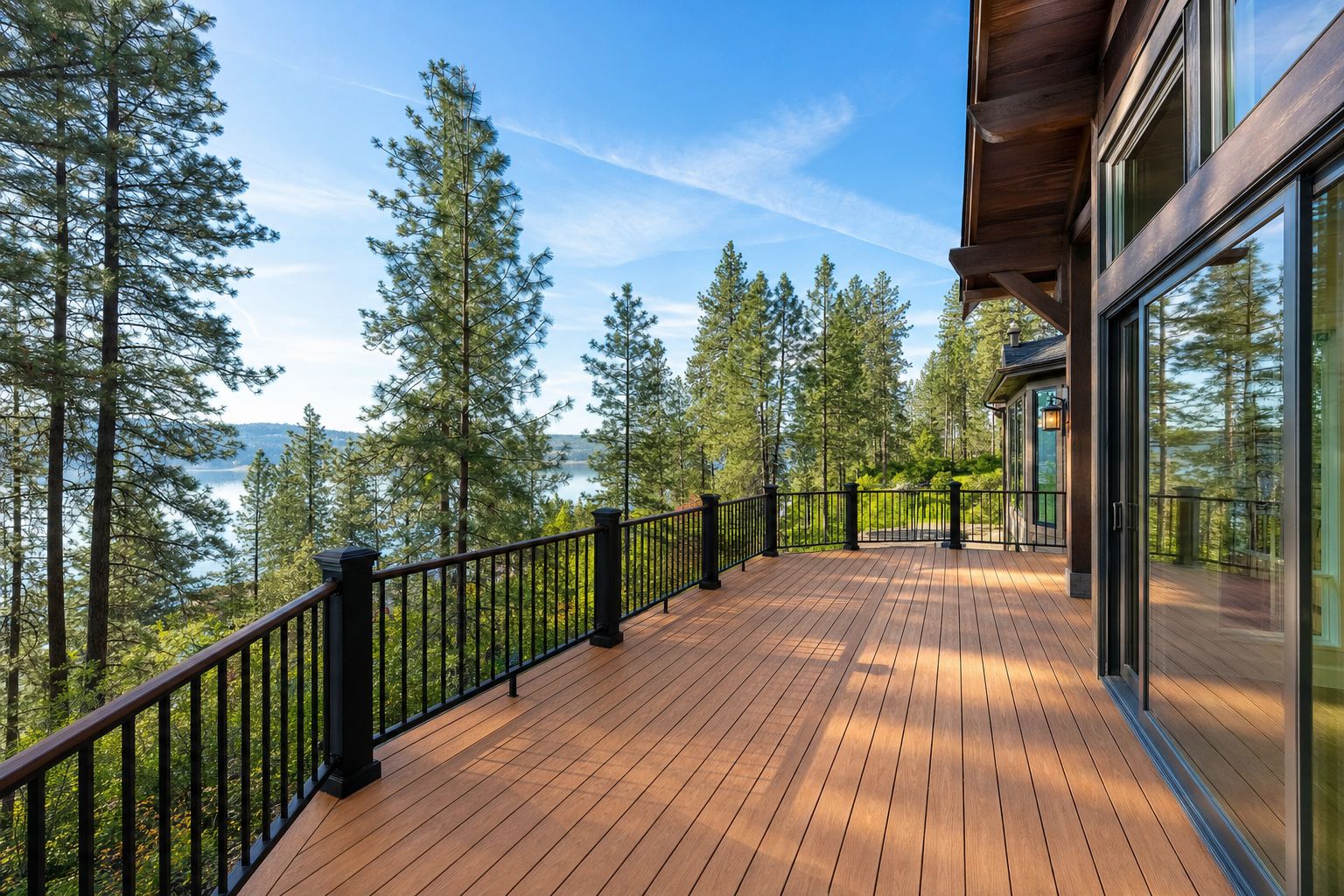
Here's something we've noticed building around this region: the views run for miles up here. Plummer sits at the top of the country where the Palouse meets the lake basin, and from a lot of backyards the ground just rolls away — no shoreline, no dock, nothing to face the deck toward except open land and the longest sunsets in Benewah County. Down at Chatcolet, decks face the water. Up here they face the evening sky, and that difference drives most of what we design in town.
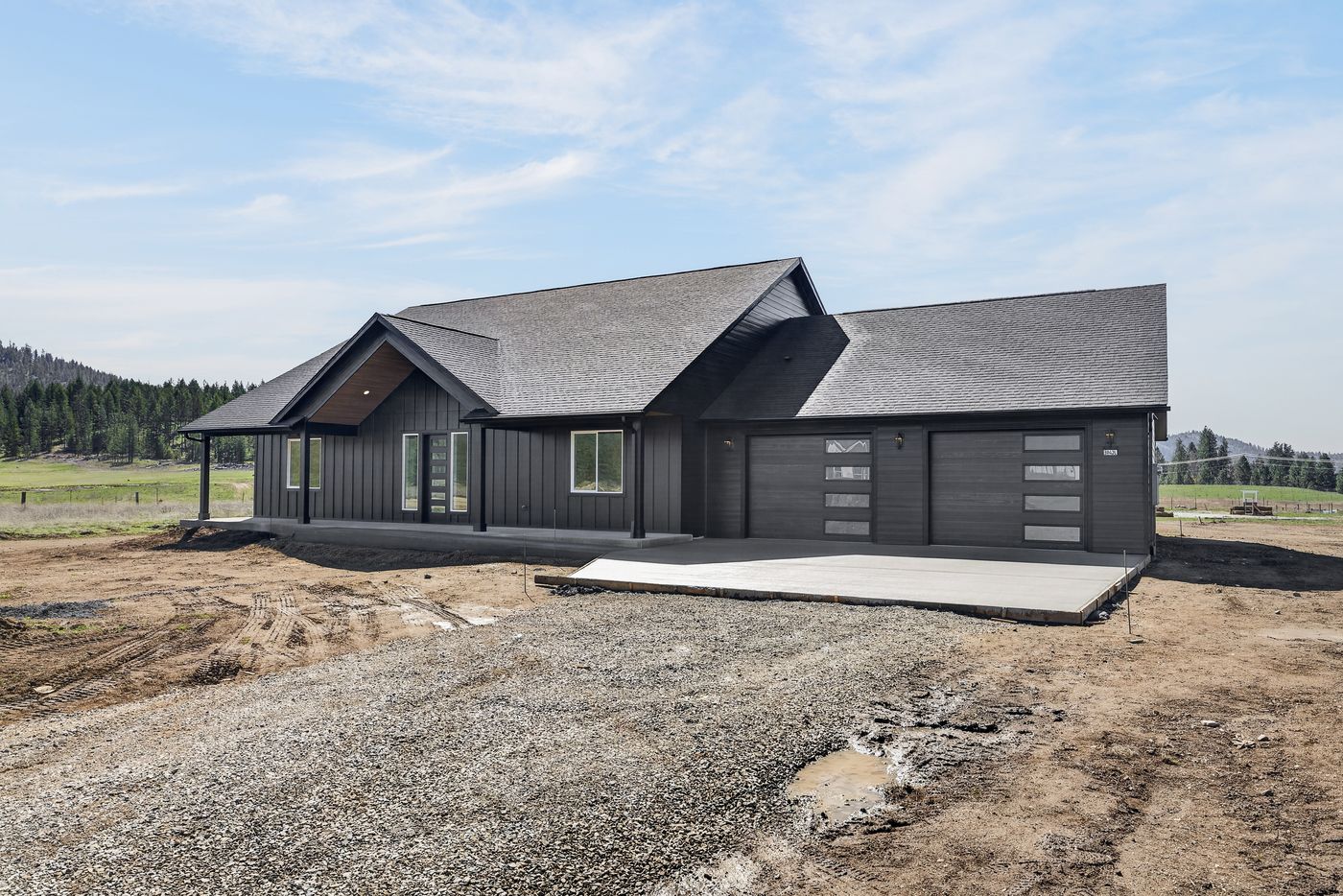
Domex Construction builds custom decks across Plummer and the surrounding county under Idaho license RCE-66940. The trail crowd knows this town as the start of the Trail of the Coeur d'Alenes; we know it as a place where a well-aimed, well-braced deck turns an ordinary backyard into the best room of the house.
Aiming a Deck at Open Country
Orientation comes first. A sunset deck wants to face west or southwest, which on this ridge also means facing the prevailing weather — so the design has to serve the view and survive the wind at the same time. That shapes real choices: railing systems that don't block the sightline from a chair (horizontal cable or slim-baluster designs beat chunky pickets for this), a low profile that keeps the deck connected to the yard, and framing braced against lateral load, because wind pushes on a deck the way it pushes on a wall. On more exposed lots we'll talk about a windward privacy screen or a half-wall at one end.
Sun exposure is the other side of that orientation. A west-facing deck on open ground gets baked from mid-afternoon until dark in summer. Sometimes the answer is a partial cover or pergola over the seating zone; sometimes it's simply choosing surface materials that stay walkable in July heat.
Practical Decks for Working Homes
Most of what we build in Plummer isn't sprawling multi-level showpieces — it's right-sized family decks on modest older homes and manufactured homes. A 12-by-16 platform with a grill zone, sturdy stairs to the yard, and seating for six covers most of what a family here wants, and money not spent on square footage nobody uses can go into the things that matter daily: better decking, better railings, better footings.
Manufactured homes get a specific approach. Their wall construction generally shouldn't carry a bolted ledger the way site-built framing can, so we build those decks freestanding — self-supporting on their own posts and beams, snugged to the house but not hanging from it. On the older frame houses, the ledger connection is the critical joint: through-bolted into solid rim material, flashed so meltwater can't reach the sheathing behind it. Rotted ledgers are the most common failure we see on existing decks and the cheapest thing to get right on a new one.
Built for Snow Sitting and Wind Pushing
Structure in this climate answers two forces. Snow is the vertical one: this part of Idaho sees real accumulation, and a deck carries its snow all winter plus whatever slides off the roof above it. We frame for those loads with joist sizing and spacing beyond mild-climate minimums. Footings go below frost depth on proper pads, because a footing that heaves even slightly telegraphs through the whole frame as sloped decking and racked railings.
Wind is the horizontal one, and open terrain gives it a running start. Post-to-beam connections get real hardware rather than toenailed lumber, tall or elevated sections get diagonal bracing, and railing posts — the thing your kid leans on — get blocked and through-bolted so they don't loosen as the frame cycles through gusty seasons. None of it shows when the deck is done; all of it is why the deck still feels tight ten years on.
Decking That Can Take Full Sun
With little natural shade on most Plummer lots, the deck surface lives under maximum UV, and material choice should start there.
Composite is the low-maintenance favorite, but grades matter in full sun: better lines carry caps engineered against fade and stay dimensionally stable through big temperature swings. Color matters too — dark boards on a west exposure get genuinely hot underfoot in August, so we steer sun-blasted decks toward mid and light tones.
Pressure-treated wood remains the budget-honest option and we build plenty of it. In this much sun it will check and gray, and it wants a re-seal every couple of years — a fair trade for the lower upfront cost, as long as you go in knowing the bargain.
Hidden fasteners and quality rail systems are worth their modest premium on either surface: no popped screw heads after freeze-thaw, no wobble in the one component that's a safety item.
What Moves a Deck Quote
Size and height set the base — elevated decks add posts, bracing, and railing length that ground-hugging platforms skip. Beyond that, the price moves with surface material (composite runs above treated wood upfront and pays it back in skipped maintenance), railing selection (cable and aluminum cost more than wood pickets), stairs, and features like pergolas, privacy screens, or built-in benches. Site work is usually mild in town — flat lots, straightforward access — which keeps Plummer quotes leaner than hillside builds nearer the lake. Every quote is fixed-price after a site visit, itemized so you can trade features against budget line by line.
From First Call to First Evening Out
- Site visit. We look at where the sun sets from your yard, where the wind comes from, how the house can (or can't) carry a ledger, and what you actually want to do out there. The visit costs nothing.
- Design and fixed quote. A drawn plan with dimensions, materials, railing, and structure spelled out — itemized for honest trade-offs.
- Permit path. Plummer parcels sit within the Coeur d'Alene Reservation and jurisdiction varies by parcel, so we confirm the correct permit path for your parcel with the City of Plummer and Benewah County and manage the paperwork and inspections.
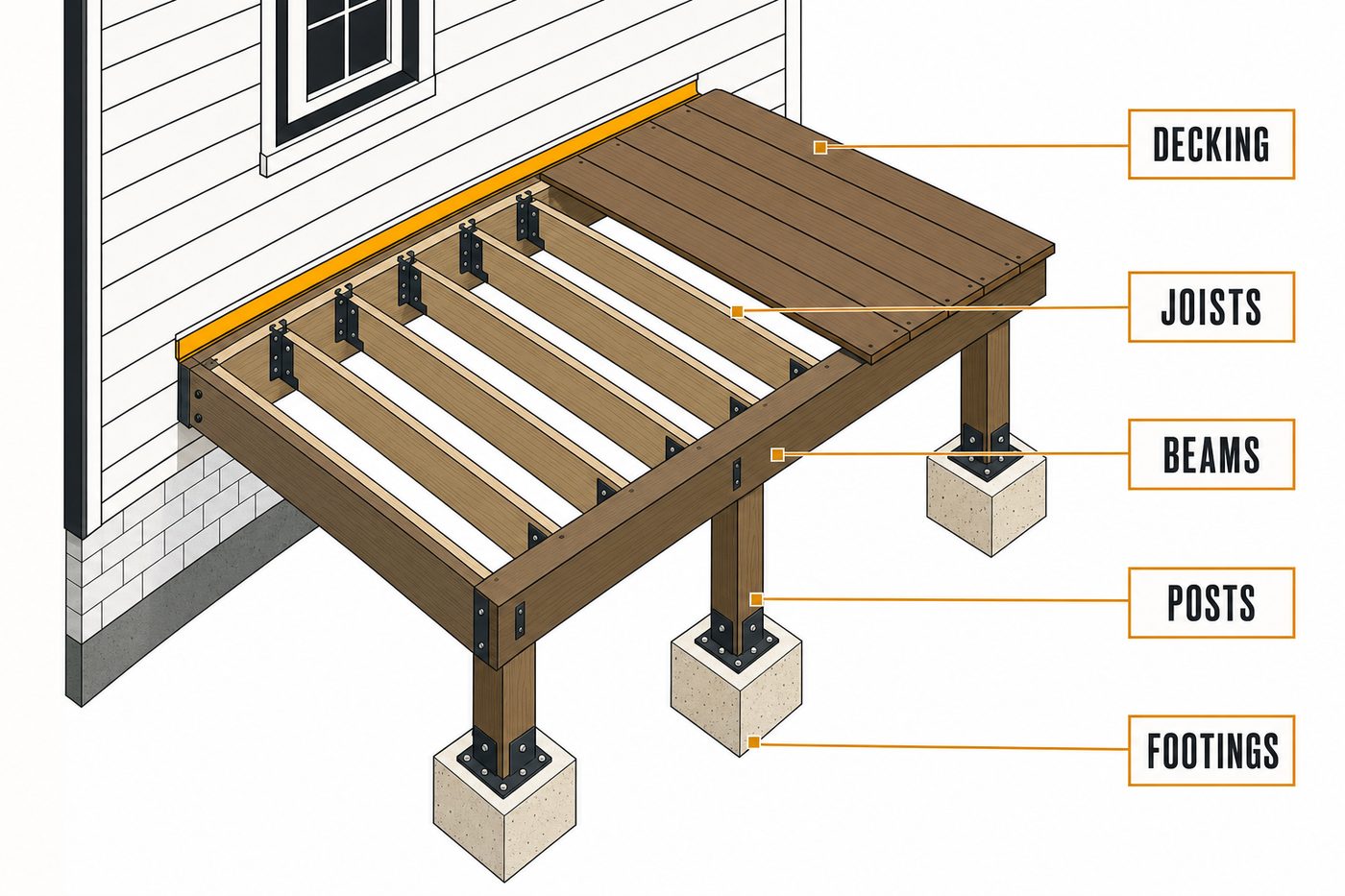
- Footings and frame. Excavation, frost-depth footings, posts, beams, joists, and bracing — inspected at the stages the permit requires.
- Surface, rails, walkthrough. Decking down, railings tight, stairs finished, site cleaned, and a final walk with you before we call it complete.
Season and Schedule
Ground-thaw to ground-freeze is prime footing season, roughly April into November most years. A typical Plummer family deck runs about a week of build time once materials are staged; elevated or multi-feature builds run longer. The smart move on the calendar is booking design and permitting through late winter so your build claims an early slot — decks finished in May earn a full summer instead of half of one. Frame carpentry itself goes ahead in most weather.
What Plummer Homeowners Ask About Decks
Composite or wood for a deck in full sun?
If the budget allows, a quality capped composite in a mid or light tone — no re-sealing, better fade resistance, cooler underfoot than dark boards. If the budget is firm, treated wood is a fine deck that asks for maintenance in return.
Can you attach a deck to my manufactured home?
We build those freestanding instead — self-supported on posts and beams beside the house, which is the structurally correct method for manufactured walls.
How deep do footings need to go here?
Below local frost depth, on properly sized pads — the exact spec gets set with the permit review for your parcel. Shallow footings are the root cause of most of the leaning, wavy decks we're asked to fix.
Do I need a permit for a deck in Plummer?
Most decks of any real size need one, and the office it runs through depends on your parcel. We confirm the correct permit path for your parcel with the City of Plummer and Benewah County and handle it start to finish.
Will wind make a deck shaky?
Not one braced for it. Hardware connections, diagonal bracing where height calls for it, and through-bolted railing posts keep a deck rigid through the gusty seasons. Wind only wins against toenailed framing.
How long does the whole process take?
Design and permitting typically run a few weeks depending on the parcel's permit path; the build itself is usually about a week for a standard family deck.
Can you add a cover or pergola for the west sun?
Yes — over the seating zone is the common request, shading the late-day sun without closing off the sunset view. It's easiest engineered into the original frame, but we retrofit them too.
The Company Behind the Deck
Domex Construction holds Idaho license RCE-66940, verifiable through the Idaho Contractors Board, along with Washington license DAVYDCI833NC, and carries full insurance. Nine years in business, 32 years of combined crew experience, and a workmanship warranty worth asking about at your free estimate.
We build decks in Plummer, Worley, Tensed, De Smet, the Heyburn State Park area, and throughout Benewah County.
Ready to claim your sunset? Free deck estimates in Plummer and across Benewah County. Give us a call or request an estimate online.
More from Domex in Plummer: Siding Installation in Plummer · Window Replacement in Plummer · Custom Home Builder in Plummer · Custom Decks — Spokane hub