
Custom Deck Builders in Lewiston, Idaho
Custom deck builders in Lewiston, ID. Heat-smart materials, shade design & wind-ready framing for the LC Valley's long season. Free estimates.
$1,000 Off
Your Complete Siding Replacement
Get a Free Estimate
FREE same-day estimates on all exterior projects.








Here's a fact pair that should shape every deck in this valley: Lewiston gets the longest outdoor season in our entire service range — shirtsleeve afternoons in March and November that Spokane never sees — and it also produces the hottest deck surfaces we measure anywhere. A dark board in full July sun down here can be genuinely uncrossable barefoot. Most of the decks we're asked to rescue were designed as if only the first fact were true. A deck you can't stand on from two to eight in the evening, four months a year, is half a deck.
Domex Construction designs and builds custom decks across the LC Valley under Idaho license RCE-66940. Because Lewiston sits at the south end of our territory, builds run as scheduled multi-day trips — the crew comes down with materials staged and works your project straight through.
Heat Decides the Design
Shade comes first, and it should be structure, not an afterthought umbrella. A pergola, a roof extension, or a partial cover sized against the sun's actual afternoon path turns a July deck from unusable to the best room in the house — and it has to be framed in from the start, because shade structures bolt to beams, not to decking. Color comes second: the surface-temperature gap between a light board and a dark one in full sun is dramatic, tens of degrees, and it's the difference between bare feet and shoes-required. Layout comes third. We place the dining and sitting zones where evening shade will actually fall, and we keep the deck open to the up-valley afternoon breeze instead of walling it off — free cooling this valley delivers on schedule most summer days.
Bench Rims, River Views, and Which Way You Face
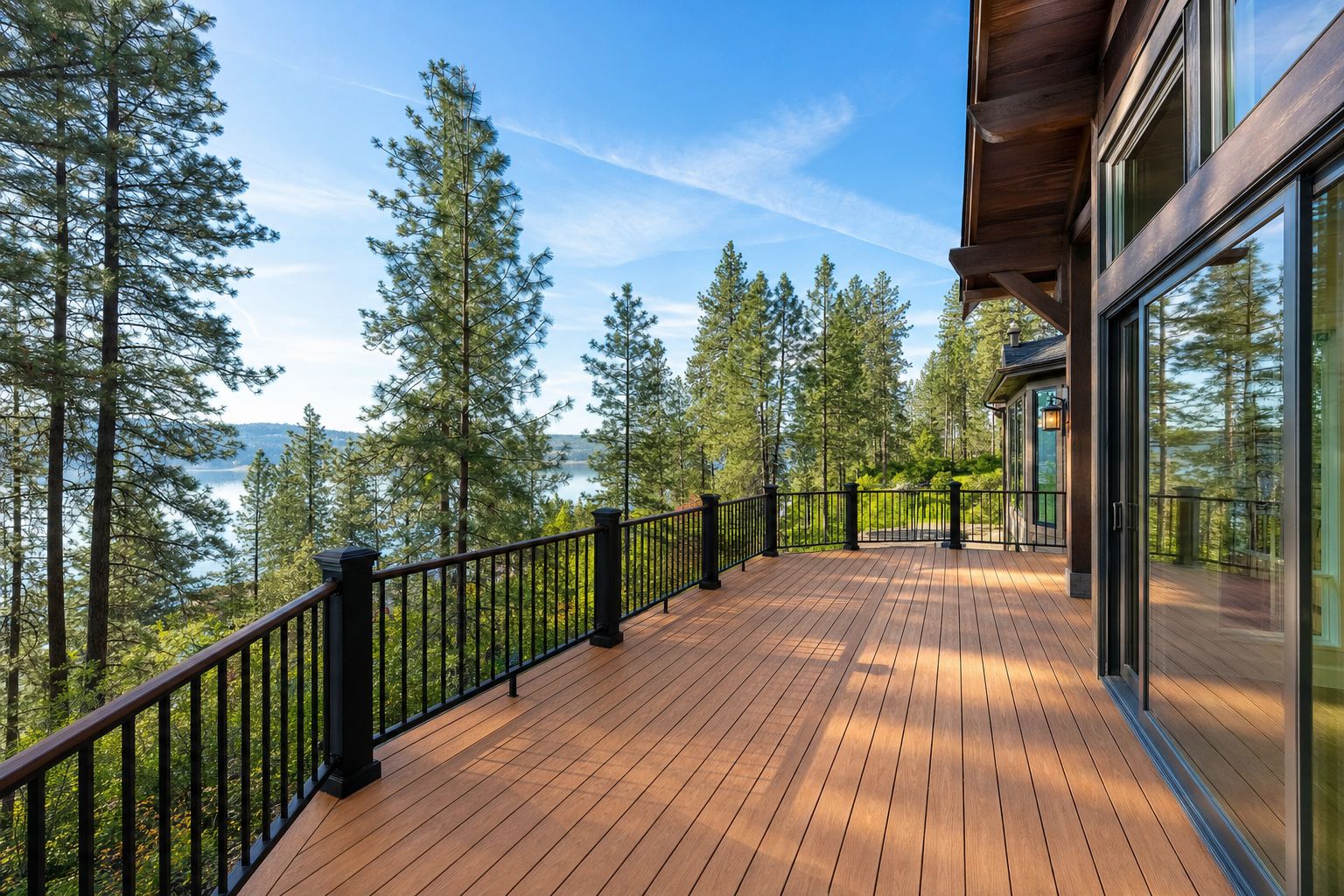
Lewiston's geography hands some homeowners a view most of Idaho would pay serious money for. Rim lots along the edge of the Orchards bench look down on the confluence and across to the Clarkston side, and those lots want elevated decks — taller posts, engineered footings on the slope, and real lateral bracing, because a tall deck is a structure, not a platform on stilts. Railing choice decides how much of that view you keep. Cable rail and slim metal pickets preserve the sightline and let the breeze through; glass panels frame a postcard but hold heat against the deck and show every week of valley dust. Down on Normal Hill, the conversation shifts to compact yards and period homes, where a well-proportioned deck or rebuilt porch has to sit comfortably against century-old architecture rather than dominate it.
Wind Is a Structural Input Here
Afternoon thermal winds run up the Snake River canyon through the warm months, and river-facing and rim decks take them head-on. That changes the build in specific ways: shade sails and pergola tops engineered against uplift, not just gravity; hardware-connected framing — through-bolts and structural screws where a fair-weather builder would nail; umbrella sleeves mounted to framing members instead of clamped to a rail. The wind gives something back, too. Combined with the dry air, it dries decks fast after rare rain, which is genuinely good news for rot — the enemy of every deck frame — and part of why valley decks age differently than the ones we build in snow country.
Boards That Can Take This Sun
Composite is the majority pick here, with caveats the brochures skip. Capped composites hold their color well against valley UV, but dark composite runs hotter underfoot than dark wood — heat retention is the spec to interrogate, and lighter, mineral-influenced boards run coolest. Expansion matters more in Lewiston than almost anywhere we work: boards that swing 60-plus degrees between afternoon and night need correct gapping and hidden-clip fasteners that let them move. Face screws in heat-cycled composite work loose and telegraph every season.
Wood still makes sense — a pressure-treated frame under cedar decking is a proven, budget-friendlier build. The honesty owed with it: this UV compresses maintenance cycles. A stained south-facing surface here wants recoating on a short schedule, and an unmaintained cedar deck goes gray fast and checks earlier than it would up north. Some owners happily trade that upkeep for real wood underfoot; they should just make the trade with open eyes.
What a Deck Costs in the Valley
Size sets the base, but height moves the number more than square footage does — a rim-lot deck's tall posts, engineered footings, bracing, and long railing runs are where budgets grow. Railing systems span a wide price range, with cable at the premium end. A framed shade structure is a real line item that earns its cost faster here than anywhere we build. Material choice — cedar versus mid-range composite versus premium capped boards — rounds out the big movers, along with slope access for equipment and concrete. Every quote follows a site visit and comes back fixed and in writing.
From Layout to Last Board
- Site visit. We track the sun path, the wind exposure, the view, and the slope — the four Lewiston variables — before sketching anything.
- Design and written spec. Framing plan, footing layout, decking and railing selections, shade structure if the design calls for one.
- Permit through the City of Lewiston. We file it and schedule the footing and framing inspections into the build.
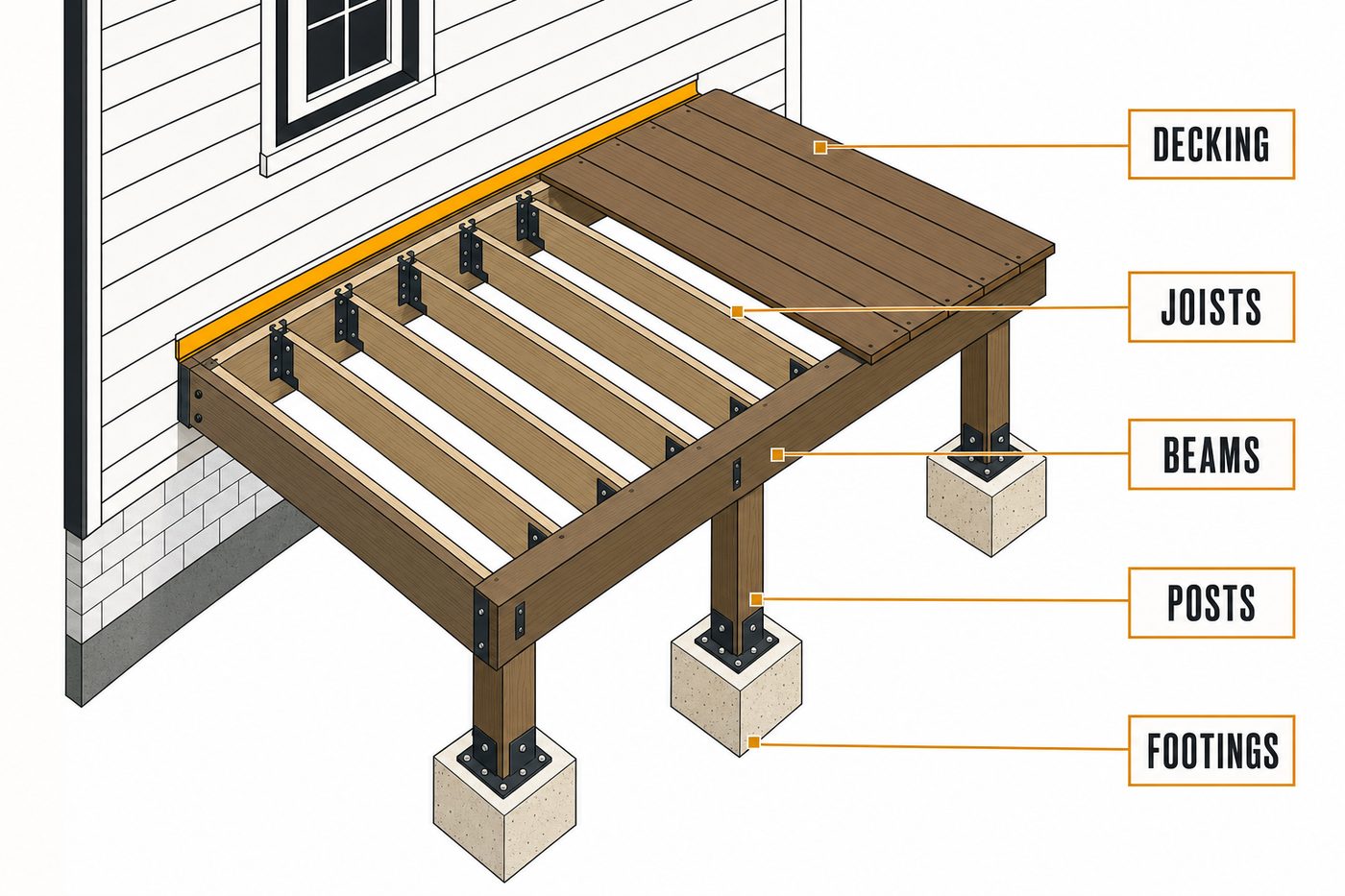
- Footings and frame. Concrete placed for the slope and soil, beams and joists hardware-connected, everything sloped and flashed so water leaves instead of lingering.
- Decking, railing, and walkthrough. Boards gapped for this climate, railing set to spec, shade structure raised, and a full review with you on the finished deck.
The Longest Build Calendar We Run
Mild, dry winters keep footing and framing work open in Lewiston through months that shut down our northern jobs, so a valley deck can realistically be built almost any time of year. The scheduling logic follows from that: homeowners who book in late winter get spring completion and the whole season on their new deck, while peak-summer builds get sequenced to early-day work for the crew's sake. Because projects run as committed multi-day trips, your build gets consecutive working days from footings to final fastener rather than gaps between visits.
Valley Deck Questions
Does composite really get too hot to walk on?
Dark composite in full Lewiston sun, yes. Light and mid-tone boards stay manageable, and shade structure fixes the problem outright. Color choice matters more here than in any other city we serve.
Wood or composite for this climate?
Composite wins the maintenance argument under this UV; wood wins on feel and upfront cost. The dry air is kind to both frames — the decision is really about how you feel over restaining a sun-baked surface on a short cycle.
Pergola or solid roof?
A pergola cuts sun while keeping light and breeze; a solid cover creates a true outdoor room and shelters furniture. On west-facing decks we often combine them — solid over the sitting zone, open elsewhere.
Will cable railing hold up to the canyon wind?
Yes, when tensioned and anchored to properly blocked posts — which is a framing detail, decided before decking goes down, not a retrofit.
Do I need a permit for a deck in Lewiston?
Most decks of any real size or height require one through the City of Lewiston. We handle the filing and inspections as part of the build.
Can you build in winter?
In this valley, usually yes — that's the banana-belt advantage. Winter builds also dodge the spring rush and put you on the deck by March.
How long does a build take?
A straightforward ground-level deck runs about a week of on-site work inside one trip; elevated rim-lot builds with railing systems and shade structures run longer. The written schedule comes with the spec.
Is the drive from Spokane a problem for a multi-week project?
No — LC Valley builds are planned as consecutive-day trips with materials staged in advance, so the distance shows up in our logistics, not your timeline.
Who You're Hiring
Domex Construction: nine years in business, 32 years of combined crew experience, licensed in Idaho (RCE-66940 — look it up through the Idaho Contractors Board) and Washington (DAVYDCI833NC) for work on the Clarkston bank, and fully insured. Deck clients across the valley get the same crews that handle our siding and window work. We serve Lewiston, the Lewiston Orchards, Normal Hill, Clarkston (WA), Asotin, Lapwai, and the surrounding LC Valley.
Ready to plan a deck you can actually use in July? Free design consultations and estimates across the LC Valley. Give us a call or request an estimate online.
More from Domex in Lewiston: Siding Installation in Lewiston · Window Replacement in Lewiston · Custom Home Builder in Lewiston · Custom Decks — Spokane hub